Distributor: Electric Factory | RRP: 61 $4799 | 73 $5099 | HP $5599
My first keyboard was a tried-and-true beginner keyboard. As a kid, it felt like I’d entered an endlessly expansive world where I could play piano, drums and become a flautist in my bedroom. It served me well, but I eventually had to move on. My next foray into keys was a decidedly complicated synth that left me feeling that within it, there was a code I couldn’t crack, and a language I didn’t speak.
Catch up on all the latest reviews here.
Jumping from 0 to 100 wasn’t a smart move. What I really needed was a versatile, intuitive keyboard with depth – and, most importantly, one that sounds great.
Swedish company Clavia has been building instruments since 1983, when founder Hans Nordelius invented the first drum pad that allowed dynamic playing using sampled sounds. The Nord Lead followed in 1995 – a synthesizer that combined a distinctive sound with an intuitive interface and became an instant classic. By 2001, the same philosophy of great sound and approachable design found its way into the first Nord Electro, introducing stunning emulations of classic vintage electromechanical instruments in a package far more portable than the originals. The Electro 7 is the latest chapter in the story. Now with a brand new Synth Section, it’s by far the most capable version yet, and the biggest step the series has taken in years.
The Electro 7 is a synth, organ and piano in one. It’s a general rule of thumb that something that tries to do too much often ends up doing nothing at all – but let me assure you, that’s not the case with the Electro 7.
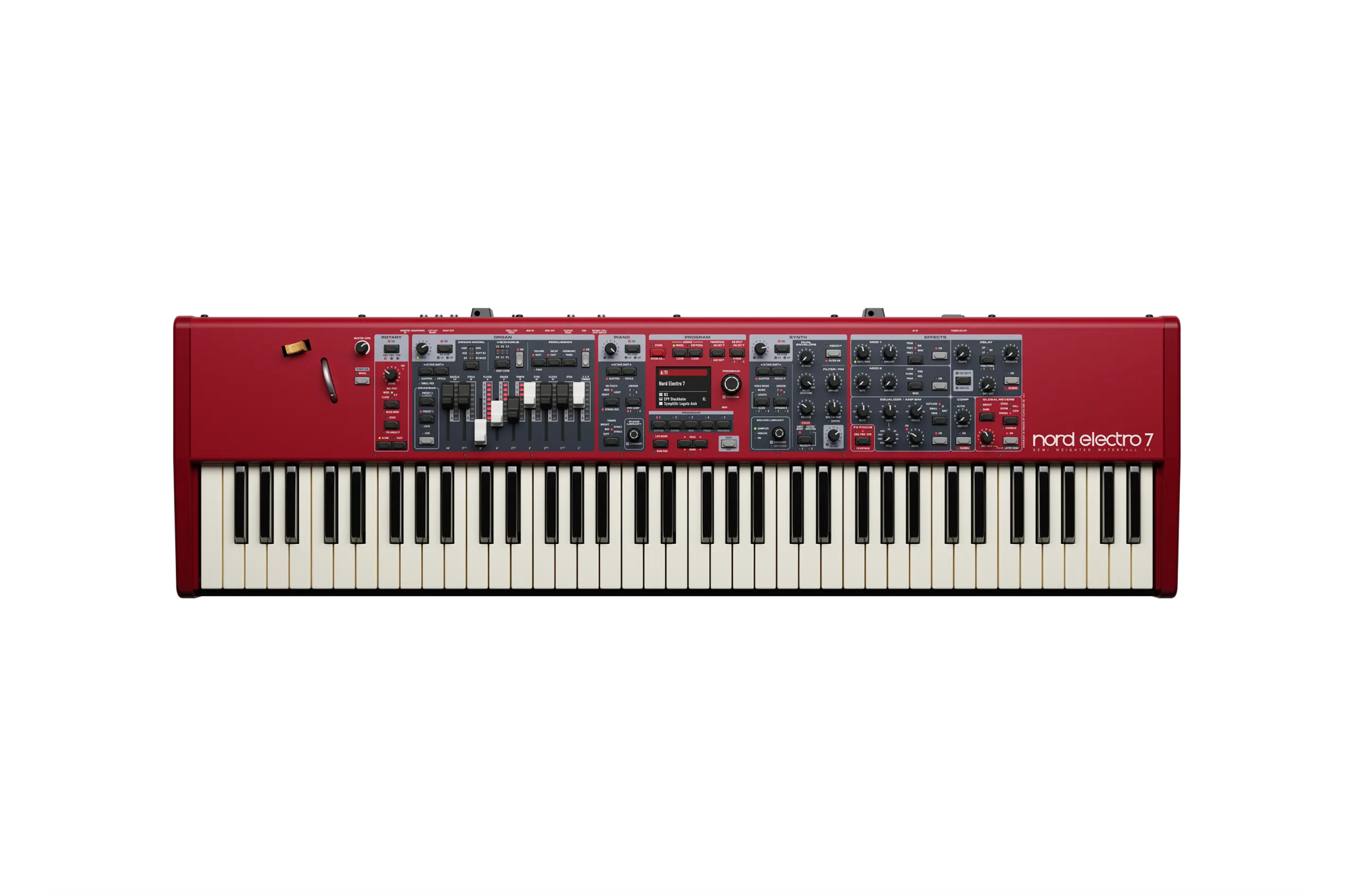
Bold in its iconic red finish, the Nord Electro is as eye-catching as ever, but my immediate impression was how familiar and easy the interface was to understand. With physical drawbars, clearly labelled sections and a large colour display, everything is right in front of you, so you can just sit down and start playing, exactly as I did. In my books, that’s the sign of a great instrument, and for one this capable, it’s no small feat.
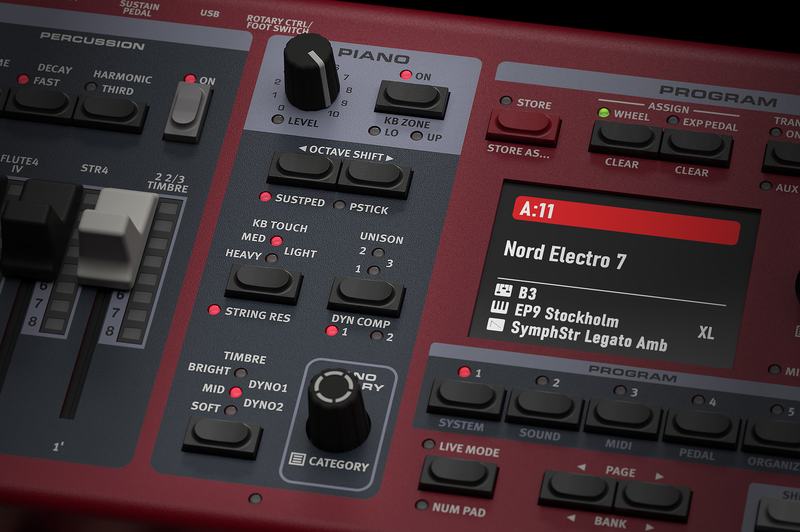
Sifting through the presets, I found plenty to work with. 500 program locations across 20 banks is a huge amount to explore. With the layout being as intuitive as it is, you’ll land on something you love pretty quickly.
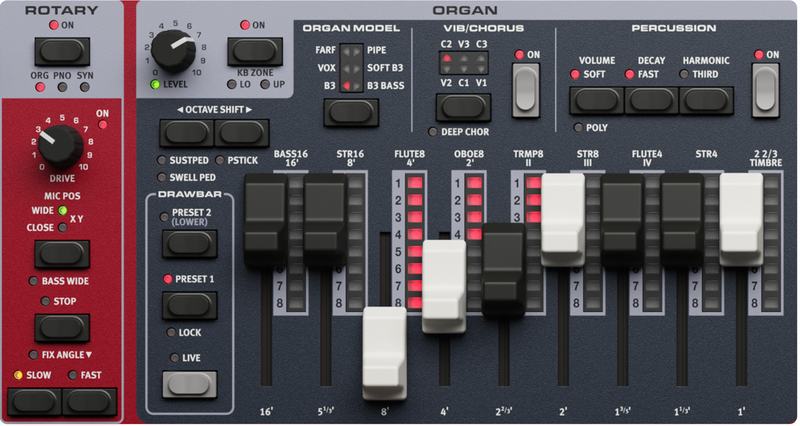
The organ section is a standout, with built-in rotary speaker emulation and a dedicated tube drive control on top. Players used to spend big money on external rotary pedals to get that swirling, spinning cabinet sound. The rotary on the Nord Electro 7 covers B3, B3 Bass, Vox, Farfisa, Soft B3 and Pipe organs, all powered by the same engine as the Nord Organ 3. Three mic positions let you shape how present or distant the rotary effect sits, from punchy and upfront to smooth and open. Playing around with it, it’s easy to understand why it’s such a headline feature of the series.
On the 73 model I played on, the wooden pitch stick was a nice tactile detail, a lot more natural and controlled to use than a plastic stick. In response to feedback, Nord added this and the mod wheel to the 73 after launch – a smart move that was very welcomed by Nord-enthusiasts. It’s worth noting, though, that the 61 model doesn’t include either, so if real-time pitch and modulation control are important to your playing, that’s something to consider before you take your pick.
The piano section covers grands, uprights and electric pianos from the Nord Piano Library, with 120-voice polyphony and controls for dynamic compression and timbre to shape each sound. Through monitors, the electric pianos had an ambient, expansive quality that you don’t often get from a standard keyboard.
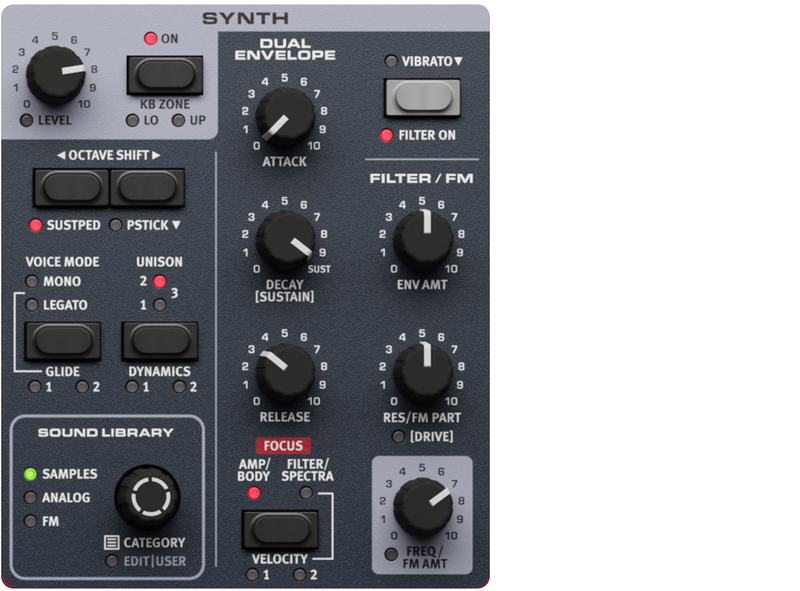
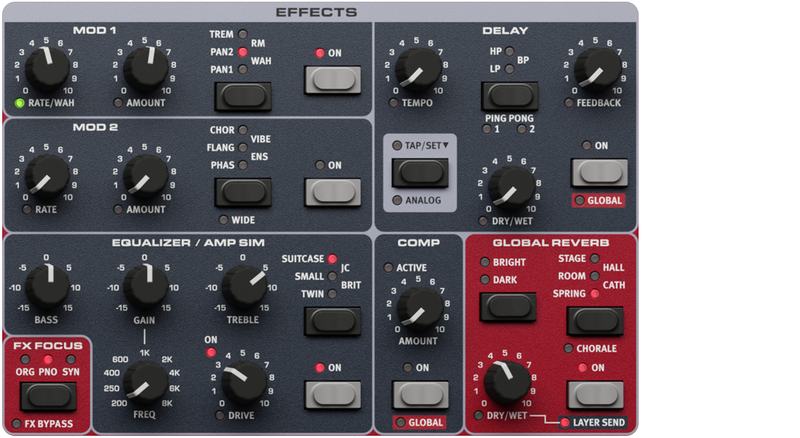
Where the Electro 6 had a sample player, the Electro 7 goes all out with the new Synth Section. Analog waveforms and FM synthesis sit alongside samples from the Nord Sample Library, with a low-pass filter, resonance, dual envelopes, unison, vibrato and mono, legato and glide modes. The FM presets are classic in character and playable straight out of the box, but customisable enough to experiment with and make your own. Each section also has its own dedicated effects section, all working independently, so there’s no need to compromise on one sound to make another work.
The Electro 7 comes in three models: the 61, 73 and HP. The 61 and 73 both feature a semi-weighted waterfall keybed, which I found to be light, responsive and natural to play. For players who prefer a true piano feel, the HP model features a Kawai hammer action, which noticeably steps up the weight and response of the keys.
Nord markets the series as being stage-ready, and it truly is. Here you’ve got an organ, synth and piano in one instrument, five dedicated live mode programs for quick access while playing, and light enough that you won’t break your back every time you lug it into a gig.
Whatever end of the experience spectrum you are, the Electro 7 will work for you. Beginners will find it approachable right away – there’s plenty to explore, but without the steep learning curve that will have you trawling through Reddit threads for answers. Experienced players appreciate its depth and how this keyboard doesn’t overcomplicate things for the sake of it. Versatile, intuitive and endlessly explorable, the Nord latest is a big step up, and definitely worth checking out.
For local enquiries, head here.