Distributor: Studio Connections | RRP: 799
We’ve certainly seen a big growth in the reamping market in the past ten or so years. From what was once deemed a dark art known only by studio engineers with magical, and often misunderstood, boxes, to a common practice in many a home recording setup. And it makes complete sense. Why worry about having the amplifier dialled in perfectly when you’re focused on achieving the perfect take? Getting your track to tape the way you want it is the most important task for the guitarist. Then, finding the tone that sits in the mix can come after, with the magic of reamping. With that, you don’t want to leave an essential process to any old device. We’re looking for overall improvement, not a total destruction of your tone. That’s where the Warm Audio Reamper comes into play.
Catch up on all the latest reviews here.
Warm Audio is all about tone, and a faithful reproduction of vintage audio signal paths with modern-day noise levels. In essence, their goal in all the products they offer is to deliver warmth without noise. And that is exactly what they have done with the Reamper. They give you the ability to capture the warmth and tonal character of any amplifier you can get your hands on, after you have recorded your guitar tracks. All the while, being conscious of not adding unwanted noise to the signal path.
What this means is that in the professional studio, right through to a home recording setup, you can make the most of your guitar tracks by feeding a dry recording back out of your DAW, through the Reamper, and into your choice of effects or amplifiers to then re-record on a separate track back into the DAW. To the uninitiated, it may sound complicated, but it’s really quite a simple process, given you have the right equipment. That being the Warm Audio Reamper.
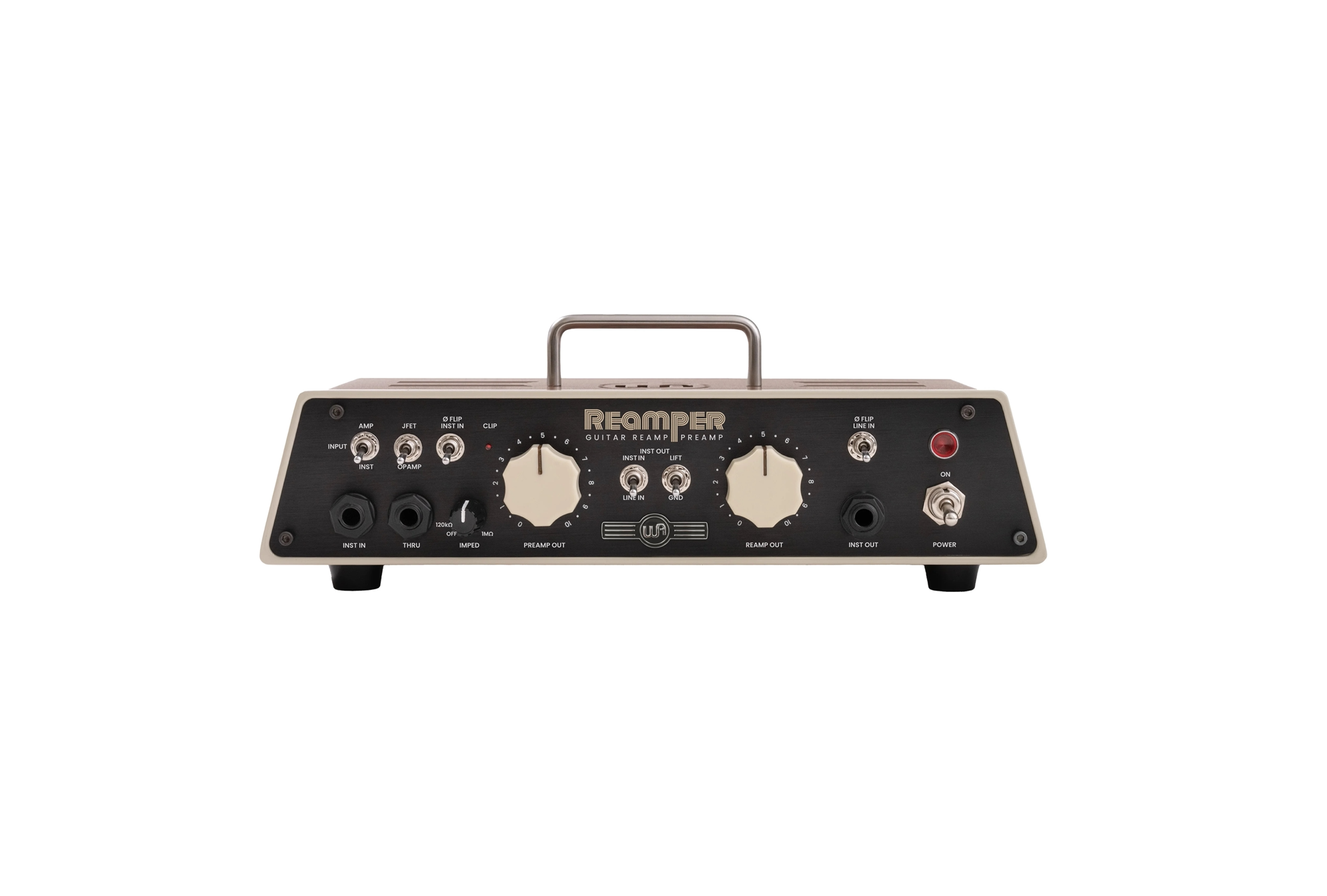
There’s a fair bit going on in this little box, which looks like it’s somewhere between a vintage preamp power supply and a direct box, which isn’t too far from the truth on both accounts. It’s a purely analog, classic design built for working with digital recording systems to add flavour, tone and character. Two fully independent signal paths – one for preamp, one for reamp – run through custom CineMag USA transformers on each input and output, keeping the integrity of your instrument signal intact whether you’re coming from a digital source, running through an amplifier, or redirecting back into your DAW. It can also be used as a preamp on the way in from the instrument directly, capturing the tone of the internal components straight from the source on the initial recording.
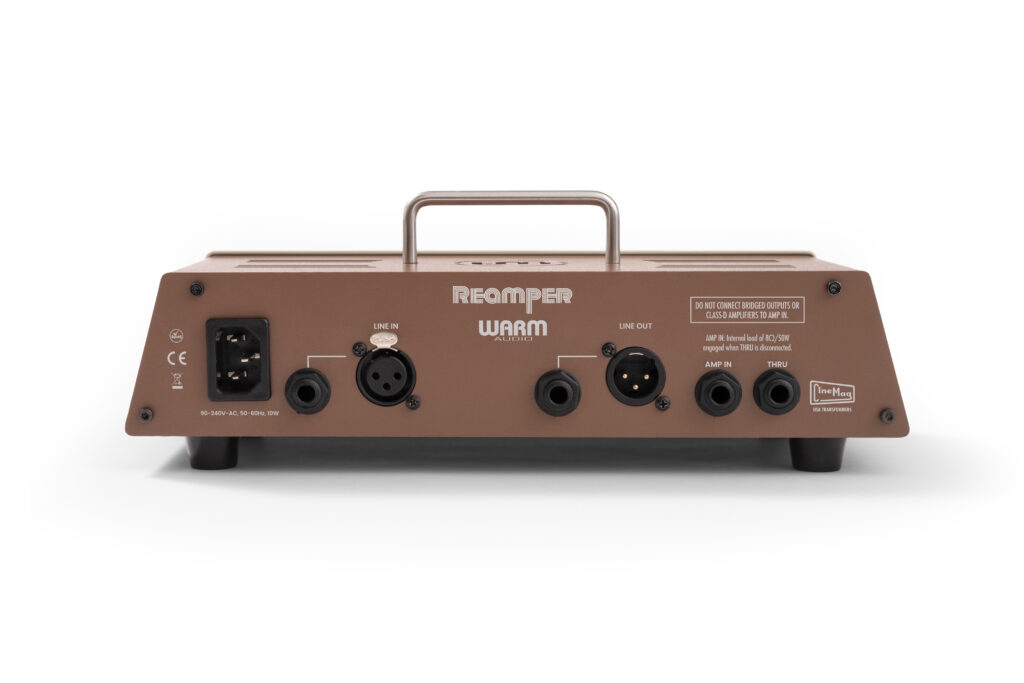
A built-in power soak is a handy inclusion. Capable of taking a 50-watt signal at 8 ohms, it lets you run valve amps hard and record silently – no speaker cabinet required, no noise restrictions to worry about. Having used this in practice, it’s a genuinely freeing experience: you can push an amp into the kind of breakup it was designed for and capture it cleanly, with the result going straight back into your DAW at line level. The speaker output of the amplifier is sent into the Amp In on the rear of the Reamper, with the input selection switch on the front set to Amp. It takes the powered load from the amplifier so it doesn’t suffer damage and converts the signal to a recordable line level.
In practical terms, this means you can feed your guitar signal from your DAW into a range of different valve amps and capture a recording from each one, without ever connecting a speaker cabinet or creating any noise outside of what’s heard through your monitors or headphones. Got a mate who owns a Matchless? Get him to drop around on the weekend and grab a recording of that same guitar track through his amp, without having to have it there when you first record. Bring as many amps as you like to your recording after the fact, then decide which you want to use when you get into the mix and edit stage.
The most important part of this whole process is that you’re not adding unwanted noise to the signal. A range of features in the Reamper address this directly. The instrument input impedance is variable from 120kΩ to 1MΩ, so no matter what input level you’re dealing with, you can match it up easily. A stepless reamp output level control handles attenuation or gain depending on what your signal needs, while a separate preamp output level gives you control on the other side of the chain. The switchable JFET Discrete or JFET Op-Amp input stage lets you choose between a warmer vintage character and a cleaner, more modern tone. Per-channel phase invert and ground/lift controls are also on hand – useful for dealing with phase issues or hum when integrating with different amps and signal chains. Balanced line-level I/O on both XLR and 1/4″ connections rounds things out, with no phantom power required.
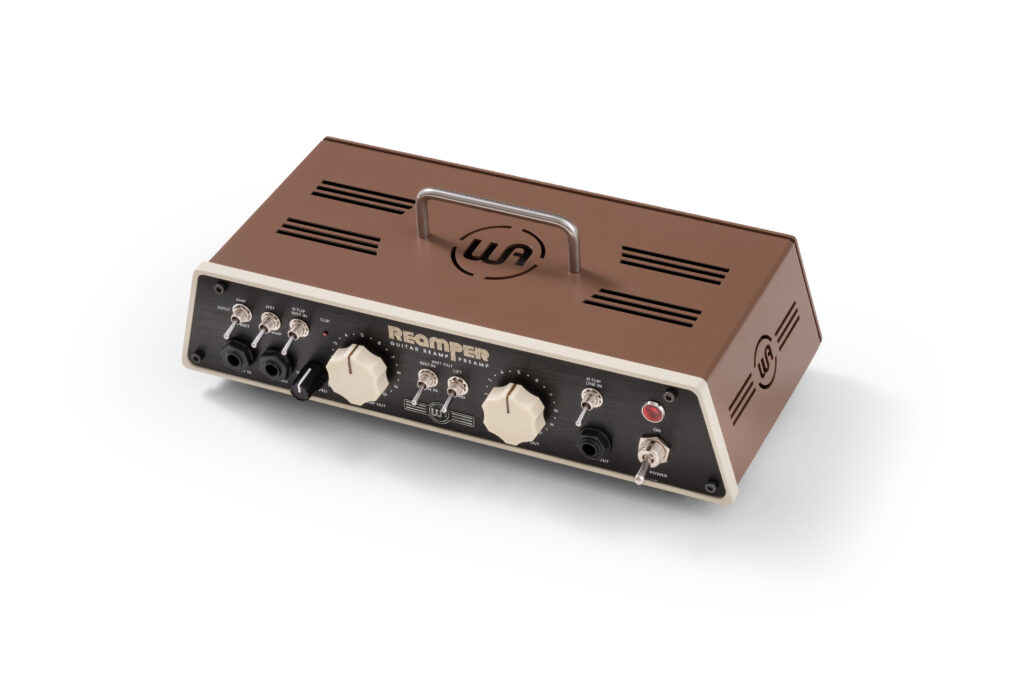
All in all, this is an extremely well-built, very well thought-out unit with the improvement of your tone as its main objective. The ability to interconnect with any amplifier or effects unit after you’ve recorded your guitar tracks takes the nerves out of getting the perfect take time and time again, letting you focus on building and layering tone instead. Just bring any classic amp or effect you can get your hands on into the equation, and the Reamper captures all its goodness without adding unwanted noise.
For the discerning guitarist who wants to take their recordings further, the Warm Audio Reamper is an essential stage between DAW and valve amp. Having put it through its paces, it delivers exactly what it promises – and then some. You can hear a range of audio samples on Warm Audio’s website, but the real proof is in your own signal chain. It’s well worth the time to try it for yourself.
For local enquiries on Warm Audio, head here.