Fender Music Australia | RRP $3699
Celebrating 75 years of the Telecaster, Fender has released a range of new and reissued Telecasters.
Since its inception, players have modified their Telecasters, adding humbucking pickups to the neck position, six-saddle bridges, and other mods. Yet one modification has become synonymous with the Telecaster: the B-Bender. Originally invented in 1968 by musicians Gene Parsons and Clarence White of Nashville West and The Byrds, it was designed to imitate pedal steel players, who can bend a note while playing a chord.
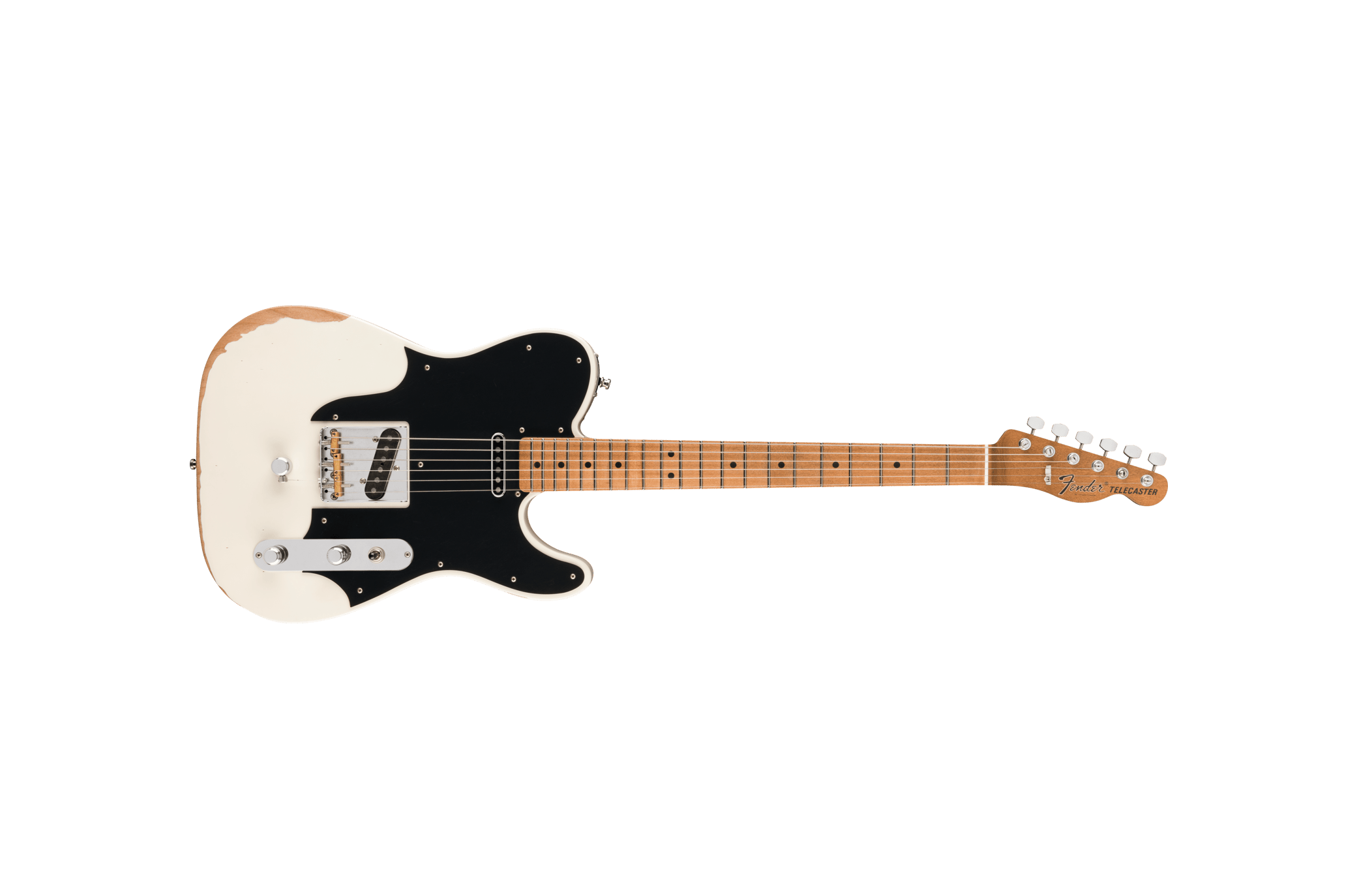
As part of this milestone, Fender has released the John Osborne signature Telecaster. While Fender has made B-Bender Telecasters over the years, the John Osborne Telecaster has generated considerable hype, as it marks the first time since the early 2000s that Fender has included a B-Bender model in its range.
Catch up on all the latest reviews here.
So, who is John Osborne? Osborne rose to fame alongside his brother T.J. in their duo, Brothers Osborne. Over their career, they have achieved multiple Top 10 hits, won seven Academy of Country Music Awards and six Country Music Association Awards. During this time, Osborne has cemented himself as one of the great modern guitar pickers in country music.
How did this guitar come to be? The story goes that Osborne borrowed a B-Bender Telecaster during the recording of Brothers Osborne’s album Port Saint Joe and fell in love with it. Upon returning home, he purchased an aftermarket body fitted with a B-Bender and combined it with the neck and electronics from his 1968 Telecaster, effectively creating what would become his signature model.
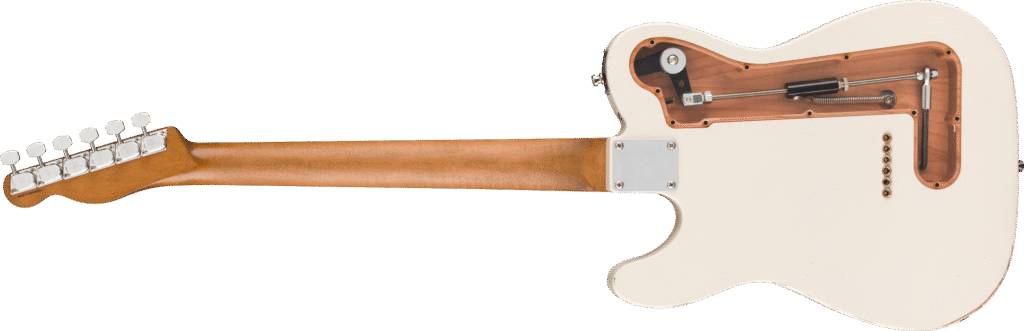
Opening the case and seeing this guitar for the first time was genuinely exciting, as it felt like I was looking at John Osborne’s own Telecaster. It appears to have all the wear and dings of the original. The back of the guitar is particularly striking, featuring a clear panel over the B-Bender mechanism, which is a marvel of engineering. Picking it up, the weight feels balanced – not too light and not too heavy.
Having followed the evolution of Fender’s Road Worn series since its inception, the John Osborne Telecaster features all the right kinds of wear and ageing.
The 1968-style C-shaped neck, featuring a maple cap, has a worn-in feel as expected from Fender’s Road Worn treatment. However, if you’re used to modern appointments, it may come as a surprise to feel a more broken-in feeling neck. The sides of the fretboard have been carefully rolled and sanded to replicate years of playing.
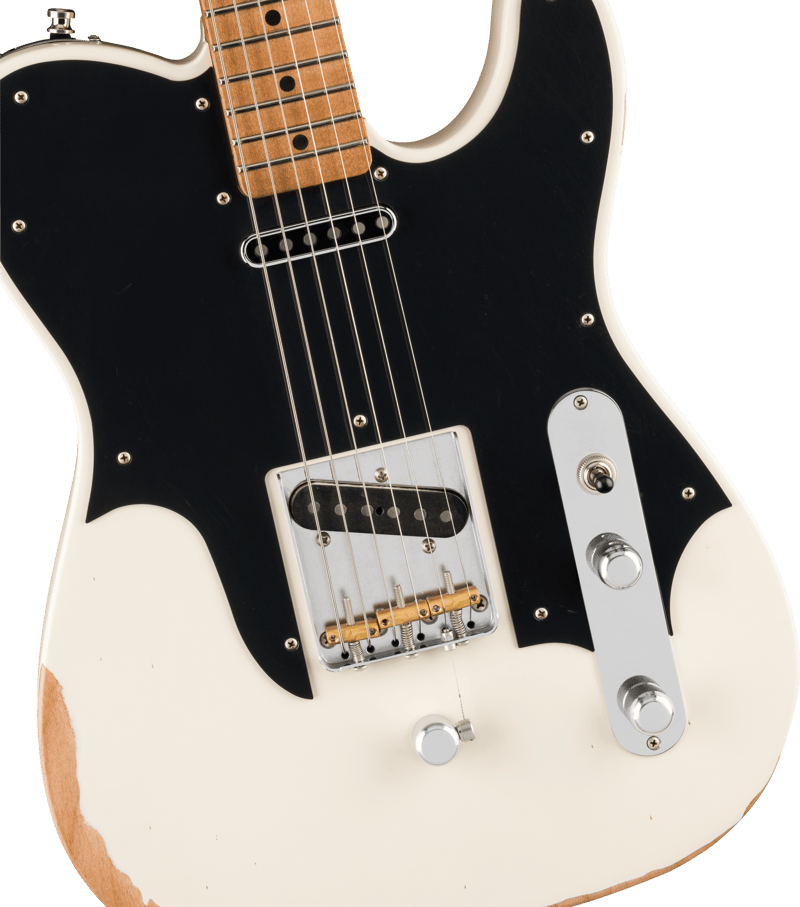
The alder body has also received the Road Worn treatment and features a nitrocellulose lacquer finish in Olympic White, along with one of the most recognisable pickguards in modern guitar design. It has become so closely associated with Osborne that fans have even had tattoos of it.
Osborne has introduced several thoughtful quality-of-life improvements to standard Telecaster hardware, including a toggle-style pickup selector switch in place of the traditional blade, and compensated brass barrel saddles. The bridge plate is string-through-body, with the exception of the B string due to the B-Bender mechanism.
The electronics follow the classic Telecaster layout: neck and bridge pickups, along with master volume and tone controls, and a three-way selector switch. The bridge pickup offers plenty of bite and responds well to adjustments in volume and tone. Rolling the tone all the way off produces a mellow, almost jazzy character. The neck pickup, with its exposed pole pieces, may appear to be a custom design, but it is simply a standard Telecaster neck pickup with the cover removed – a modification that slightly increases output.
The most exciting feature of this Telecaster is, of course, the B-Bender. The B-Bender opens up a distinct way of playing, and like any worthwhile technique, it reveals more the deeper you go. Owning a B-Bender fundamentally changes your approach to the instrument, as activating the mechanism requires a physical movement.
The physical motion is unlike anything else in standard guitar playing, which is part of what makes it such a distinctive skill to develop. Applying downward pressure to the neck while playing a note or chord can feel counterintuitive, especially for players who don’t use a thumb-over technique à la Hendrix. However, this is a small trade-off for access to a unique musical vocabulary that relatively few guitarists possess.
If you’re a fan of John Osborne and play guitar, this instrument is a dream realised, capturing all the defining characteristics of his style. For players ready to commit to the B-Bender as part of their voice, this is a considered purchase that delivers at every level. You’re getting an exceptional Telecaster with one of the most distinctive modifications available.
Check out the John Osborne Telecaster here.