CMC | $2295
I can still remember the first time I got my hands on an LMK, back in a previous decade. It was a time when we were often excited by the little things, and the Little Mark had already proven that to be the case. However, having two separate channel EQs on the one compact head was always going to get the attention of gearheads – more control and more versatility, with the only complaints coming from those few who didn’t know how to dial in one EQ, let alone two.
It was a joyous time for tone. Then it all went away, as the LMK was discontinued and became a search notification on used gear sites.
Finding one is no longer a drama, as Markbass has reissued one of their all-time favourite amp heads in the LMK 58R. That’s right, the LMK is back, and it’s had a little facelift. Those who remember the older model will instantly note the changes, and I believe these changes are for the better.
Catch up on all the latest reviews here.
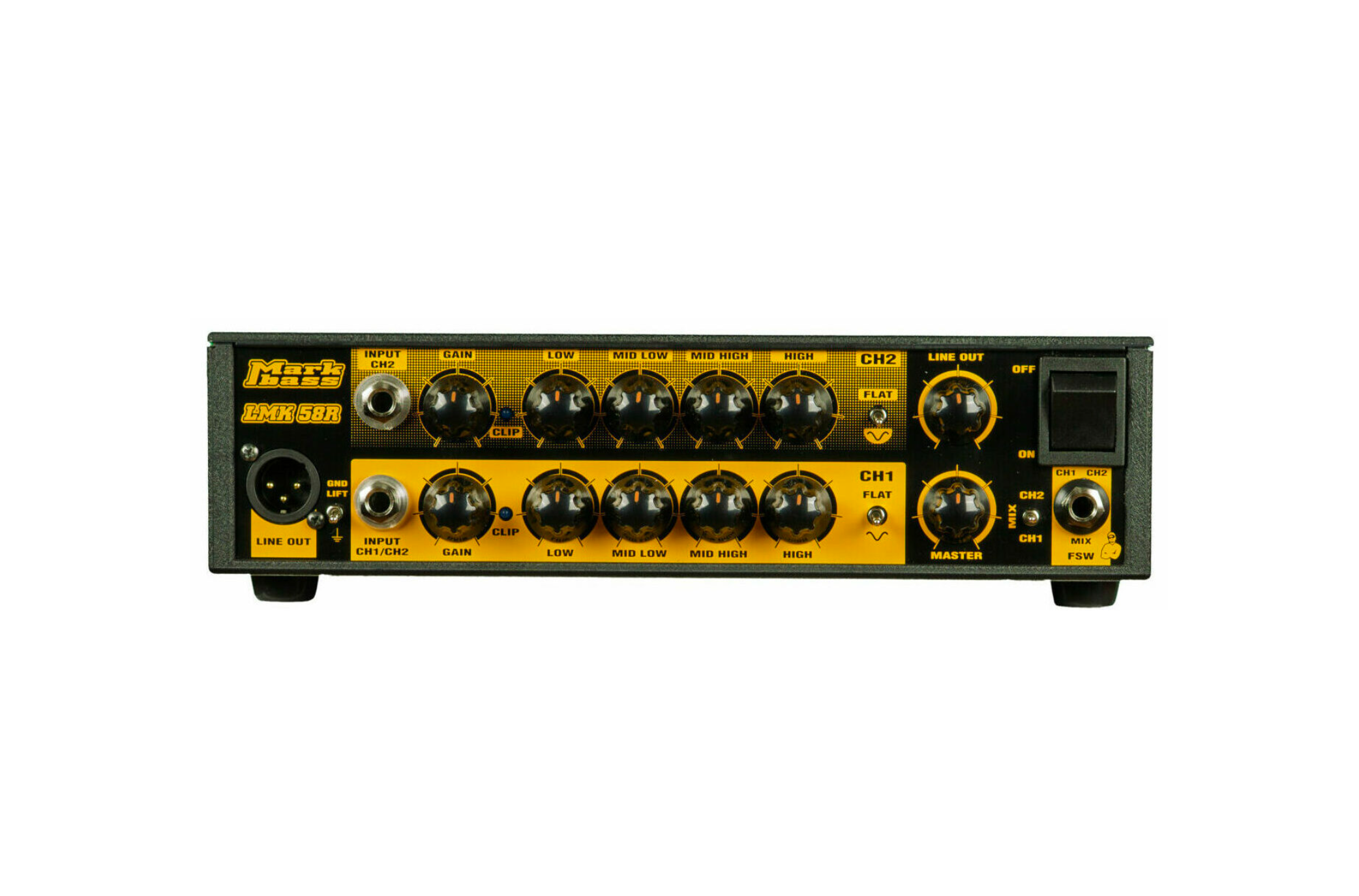
Firstly, the LMK 58R comes with a tougher build, with more rugged components. The input jacks are now metal, not the old plastic ones that didn’t always stand the test of time. The channel selection switch and EQ bypass switches are also more rugged toggles that feel firm yet easy to operate.
The other obvious change is that the LMK 58R now offers more connections on the front panel compared to the older model. That means the footswitch input and XLR line output are now accessible up front, so you don’t have to dig about with cables in the rear when it’s in a rack case. This makes setting up for gigs or rehearsals much easier, having everything right up front. The rear panel houses the IEC power cable connection and the speaker outputs on either a single Speakon connector or a pair of ¼-inch jacks.
Whilst we are talking about differences in appearance, there will be some of you who instantly notice a couple of big omissions from the front panel. That’s right, the VPF and VLE controls are no longer an option. Some of you will no doubt go straight to the forums about this change, whilst most will shrug it off with the realisation that they were often overlooked features that probably didn’t need to be in the new model anyway.
The VPF (Variable Pre-shape Filter) has now been replaced with a flat/scooped switch to kick in an easy voicing adjustment. The VLE (Vintage Loudspeaker Emulator) just seems to have disappeared altogether. But is that a bad thing? Were players really looking for a vintage tone in this amp in the first place? Probably not. In reality, this amp gained so much love from users because it allowed them to sculpt two separate sounds, rather than rely on a preset. It’s a move that is certainly a space saver from Markbass, and one that cleans up the overall signal path, so it’s no great loss.
Speaking of sculpting two separate tones, that is what the LMK 58R, like its predecessor, is all about. With two independent channels, you can use two separate instruments that require very different EQ control without having to adjust anything. It could be as simple as a P-Bass and a J-Bass combo, or a more esoteric mix of electric bass and synthesiser, or even an electric cello or an upright bass. The key is having two channels pre-dialled for the appropriate instruments so you can swap between them during a set without worrying about the tone on either.
It’s a neat little setup that will even have the guitarist slightly jealous as they add more and more pedals to their rig to balance out variations in tone from more than one guitar.
That said, you don’t have to play with two instruments. The LMK 58R doesn’t care if you’re happy riding it out with just the one – in fact, it encourages this, with the ability to sidechain Channel 2 and add it to the mix via the channel selection toggle. That way, you can create two very unique tones with the one instrument and blend them for a full, rich sound that is uniquely yours.
Individual gain, low, mid-low, mid-high, and high controls for each channel allow you to sculpt separate clean and driven tones that can be switched or mixed to your liking. The scope of these four EQ curves overlaps nicely, so you can find a lot of variety when playing around with the controls. It’s not simply a matter of more or less mid-range – as one is adjusted, the other responds accordingly, with the overlapping frequencies finding a unique balance between the two.
The same principle applies when the two channels are blended. More or less gain in each will create a unique resonance, then each of the EQs layers over the other to sculpt a sound unique to every user.
For those who want to run it hard, the newly designed bi-band limiter ensures that punchy attacks are kept in control for full expression without blowing headroom. The speed of this limiter means you don’t have to worry about it lagging to engage, resulting in a more natural response. This is backed up by the Markbass 500-watt Class D power amp, which has driven the success of Markbass for many years. It’s built from the ground up to deliver power from a very compact design without sacrificing your instrument’s tone.
When all is said and done, this is one of those great ‘set and forget’ amplifiers that allows variation at the instrument end. It’s not a bank full of preset patches that lets you choose some homogenised tone and be done with it. The LMK 58R is about the player finding their sound and staying with it.
If you want a compact bass amp with a variable, modern, clean signal path that weighs less than some effects pedals, this is the amp for you. Go on, check one out at your local Markbass dealer. It’s sure to pique the interest of even the fussiest tone snobs.
