Michael Lillis has opened presales for the portable Stage model of his hand-built resonating instrument, which turns any audio signal into shimmering, sitar-like drones.
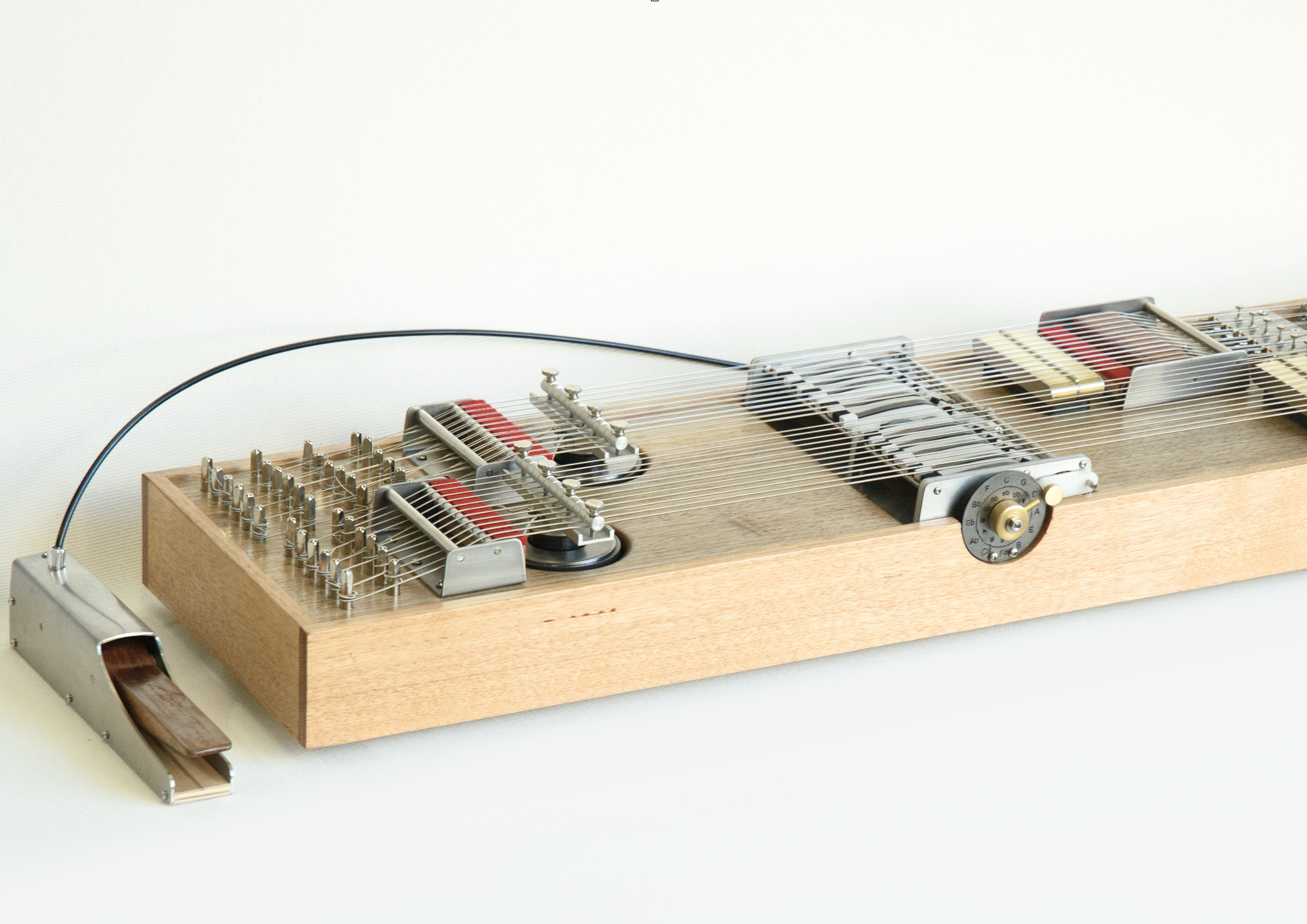
Built by hand in Melbourne, the Resonator is a new string instrument created by Michael Lillis. Made to be played by sound rather than fingers, it uses an audio signal to excite the strings through a driver bridge that works like a loudspeaker, so any string tuned in harmony with that signal begins to vibrate on its own, the same sympathetic resonance that gives a sitar or tanpura its shimmer, with custom pickups sending the resulting sound back out.
Catch up on all the latest news here.
On its own it can be played from a keyboard or another source that’s never heard directly, run as a harmonising drone under another instrument, or used more subtly as a tonal reverb that adds harmonics and overtones to a single track or a whole subgroup in the mix. Ambient production and film and videogame scoring are the obvious fits, and it already features on Leah Senior’s “People Pleaser” from this year’s Pt. Roadknight, where it was played live at the album launch.
The Resonator comes in two versions, a full studio Composer and a stripped-back Stage. Stereo, with 36 strings tuned chromatically across three octaves from C2, the Composer adds a circle-of-fifths key selector that sets which strings are free to resonate and a foot pedal that mutes them through felt bars.
The Stage keeps to mono and 14 strings across a guitar-like range from E2, light enough to mount on a board with an amp and mixer and pack into a guitar flight case. Presale orders for the Stage are open until Friday 18 September.
Both models need an amplifier to drive the bridge, which runs at 4 ohms and handles 100W RMS per side, though far less will do the job. “I personally use one of these Fosi Audio stereo amps as they are cheap, simple, compact and light weight,” Lillis says, with even a small desktop amp giving more than enough for typical playing.
Hand-carved with a curved profile borrowed from the sitar’s Ghoraj bridge, the buzz bridge disrupts each string’s natural oscillation just enough to draw out higher overtones and thicken the tone.
Learn more here.