Warm and introspective, Leah Senior's fifth studio album hones her rich, folk sound that continues to captivate us.
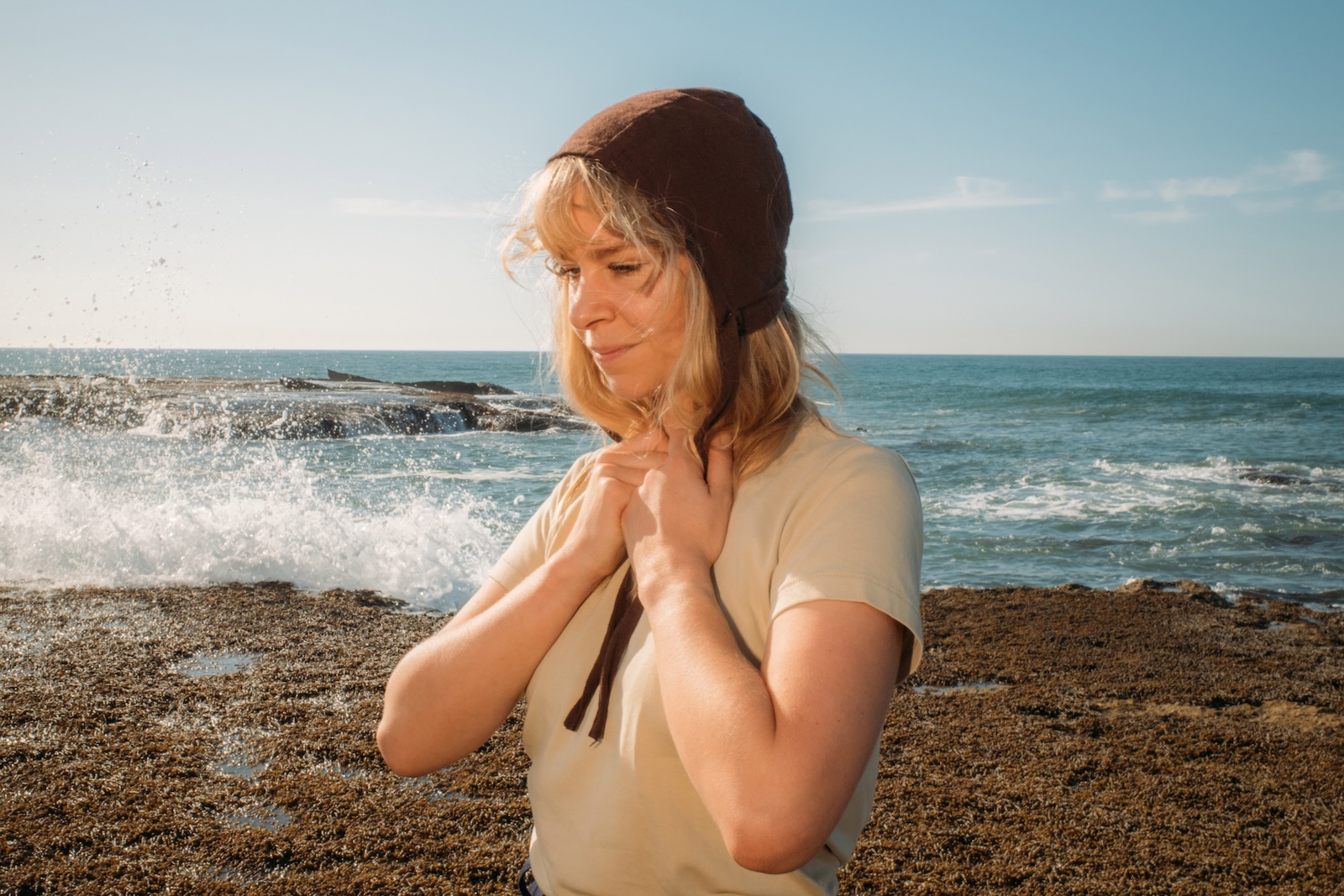
Leah Senior’s connection to nature runs deep through Pt. Roadknight, her fifth studio album. Written in a sandstone beach shack in Anglesea and recorded by a protea farm in Torquay, Pt. Roadknight wrestles with concerns of gentrification and isolation, while finding solace in a quiet, seaside town. Leah and long-time collaborator Jesse Williams tell us how the record came together.
Catch up on all the latest interviews and features here.

Photo by Jamie Wdziekonski
Hi, Leah and Jesse! Congratulations on the release of Pt. Roadknight – it’s a beautiful record. As a listener, I can really feel the pull of its namesake, especially in ‘Talk To Me’, where you write of returning to the ocean. How does this connection to the water inform your songwriting and production choices?
Leah: It’s an interesting question isn’t it, how landscape translates sonically. For me, the place is spilled across the lyrics and storytelling but it’s harder to say how it influenced the sound. Perhaps ‘Talk To Me’ feels like the sea because the opening tuning feels more expansive, yet pensive and there’s a kind of repetition and circular motion. I feel that being in a quiet, introspective place makes the music more delicate.
Can you tell us what the recording process was like? Was the album recorded in one location, or across a few different spaces?
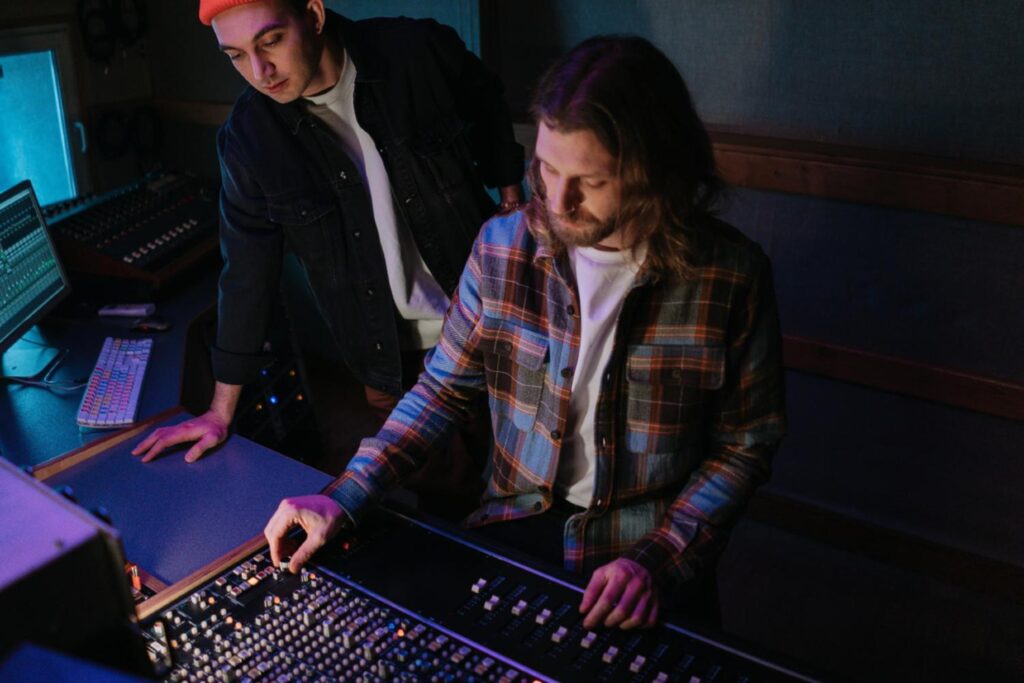
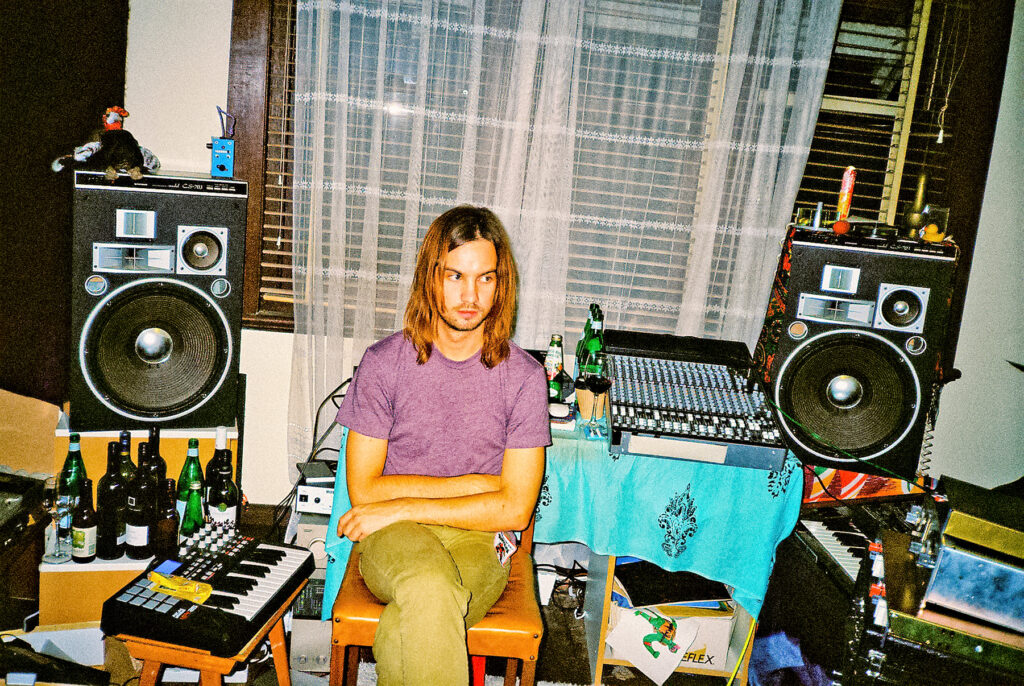
Jesse: We recorded the album in a studio space I was renting out the back of Torquay. It was mixed there for the most part until I moved out to build our new studio space, during which I had a makeshift mixing setup in our living room where we finished the record.
Leah: I loved recording this album. The studio had windows facing out to our landlord’s protea farm and was very peaceful. There was a skylight and I would lie like a cat on the warm couch and listen back to the recordings. Jesse and I had a real flow going, exchanging ideas and passing the instruments back and forth to each other.
Did you track live as a full band for any songs, or was it mostly built up layer by layer?
Jesse: Generally for the ‘full band’ songs (with rhythm section) we would record drums, bass, an electric guitar or Rhodes, a scratch acoustic and scratch vocal live to tape. Sometimes we would redo the electric or add another one. We would replace the scratch acoustic and vocal with a take of Leah singing and playing her acoustic part together as it often would lose something if we split those up. The exceptions are ‘Blossoms Of Spring’ and ‘Talk To Me’, where we did the opposite, starting those with acoustic/vocals and layering the other instruments before adding the drums/bass. Anything additional was overdubbed after the fact.
Leah: I am always in favour of playing live as a band and with my solo songs as I think you end up with a performance that is more dynamic and musical.
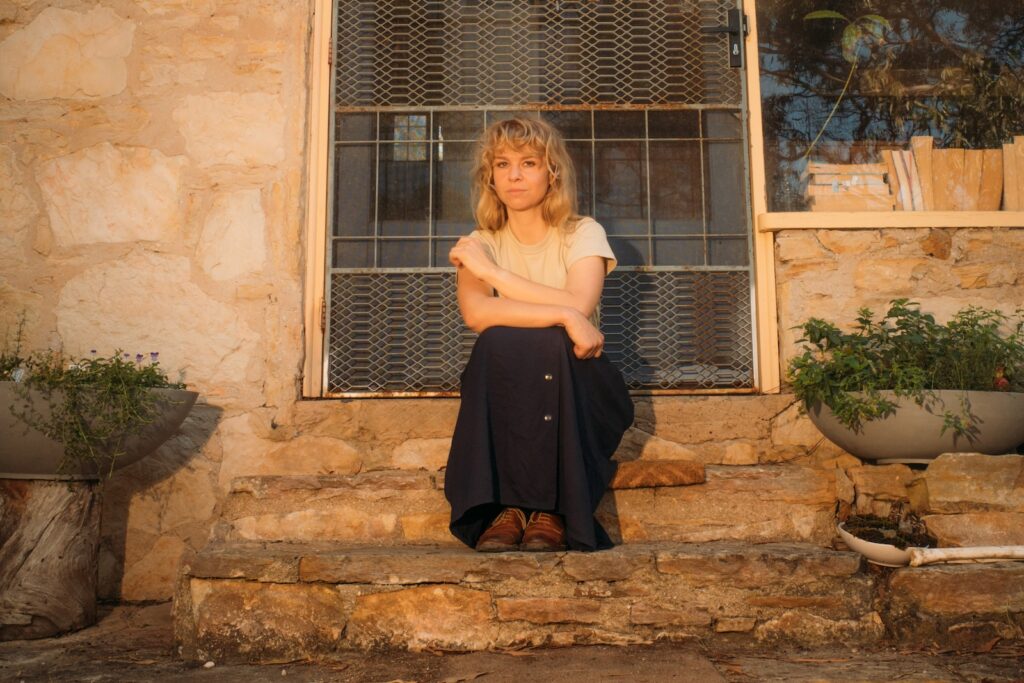
Photo by Jamie Wdziekonski
Jesse, you recorded and mixed most of the album, with ‘Two Weeks’ recorded separately by Glenn Van Dyke. What led to that one track being recorded differently?
Jesse: We were on tour with Glenn’s band ‘Kairos Creature Club’ in America and Glenn offered to record a song in her studio when we finished the run in her hometown Jacksonville, FL. She loved the ‘Two Weeks’ song which Leah had been performing at the shows. It was really fun to see someone else’s home studio and get insights into different recording approaches. We liked how the U87 mic Glenn used on Leah’s voice sounded and it sorta set a tone for the rest of the album and as such I used my OPR U87 for a number of the songs on the rest of the record.
How much of the arranging happened before you got into the studio versus being worked out in the room?
Leah: A bit of both! I arranged the orchestration for ‘Part Of The Crowd’, ‘Mothersong’, ‘Zoe’ and ‘Softly Once Again’ before we got into the studio. The other parts were mostly improvised or worked out together with Jesse in the studio. I will often get melodic ideas while I write and then transfer them to instruments.
Between both you and Jesse, the instrument list is huge, with acoustic and electric guitar, piano, Rhodes, synth, autoharp, harmonica and MIDI. How did you and Jesse divide things up in the studio, and was there a go-to setup you kept coming back to?
Leah: We would just chip away at the songs together and whoever had an idea would sit down and record! There was a lot of back and forth.
Was there a particular piece of gear that ended up shaping the character of the record?
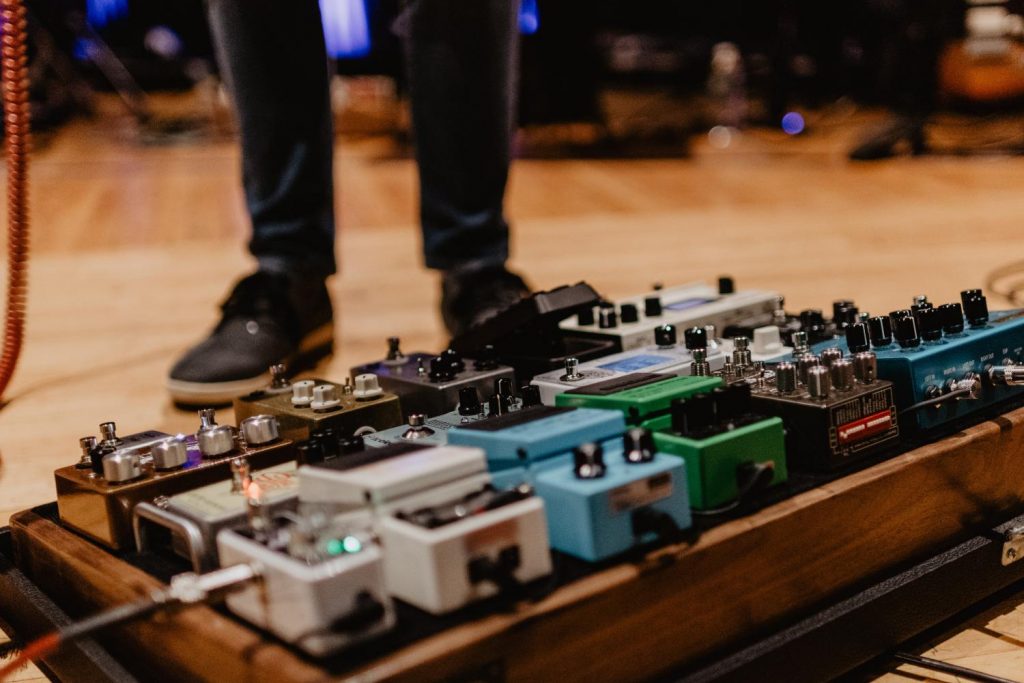
Jesse: We used a lot of DI’d acoustic on this record strangely enough, it’s quite unnatural sounding in some ways but gives the guitar a clarity when blended with a mic. We also ran a DI acoustic (sans mic) through an echo for a sort of a John Martyn-inspired lead sound on ‘Winter’ and ‘Talk To Me’.
Also! We used the Lillis Instruments Resonator on ‘People Pleaser’. Mike had contacted me about trying the instrument and it was the perfect sound for the song. I think it was the first song recorded/released to feature the new instrument.
What guitars were favoured across the album?
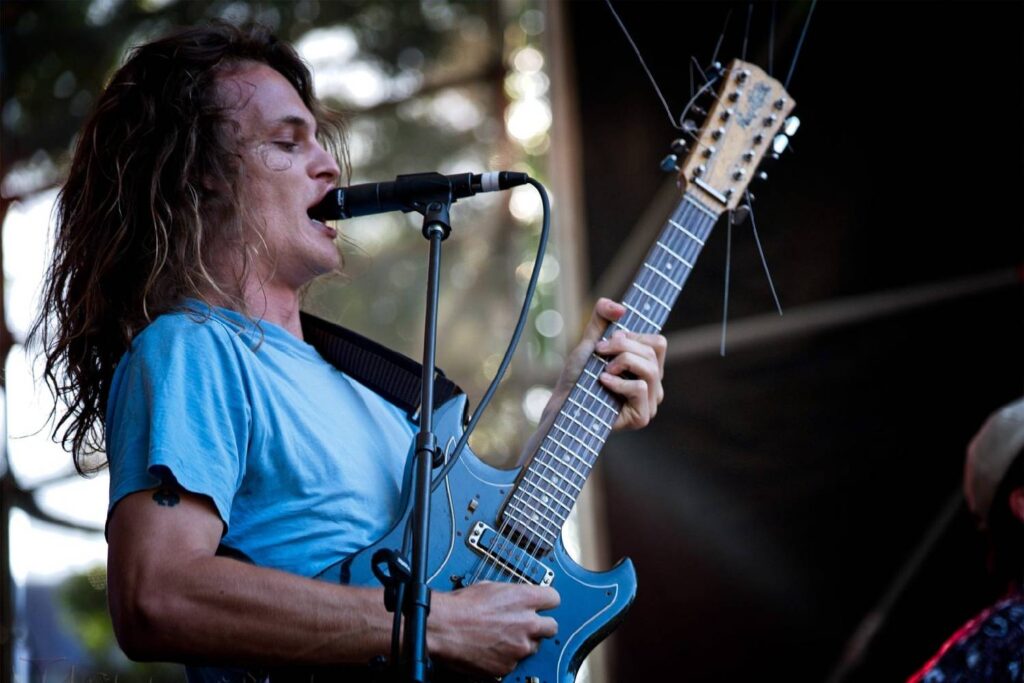
Jesse: Leah played our favourite S.Yairi dreadnought for all of her acoustic parts. I used that guitar for my acoustic parts & played a Telecaster or a 12-string Danelectro (‘Part Of The Crowd’) for the electric parts. I think there is also some doubling of acoustic parts with a Nashville-strung guitar when we needed extra shimmer.
The vocals throughout are so gentle and articulate. What mics did you use to capture the vocal takes?
Jesse: For Leah’s lead vocals we used an OPR U87 clone for at least half of it, a beyerdynamic M88 on a few songs & also our favourite Soyuz 017fet on a song or two (definitely ‘Winter’ from memory). I think backing vocals were done with either the M88, Soyuz or SM7B.
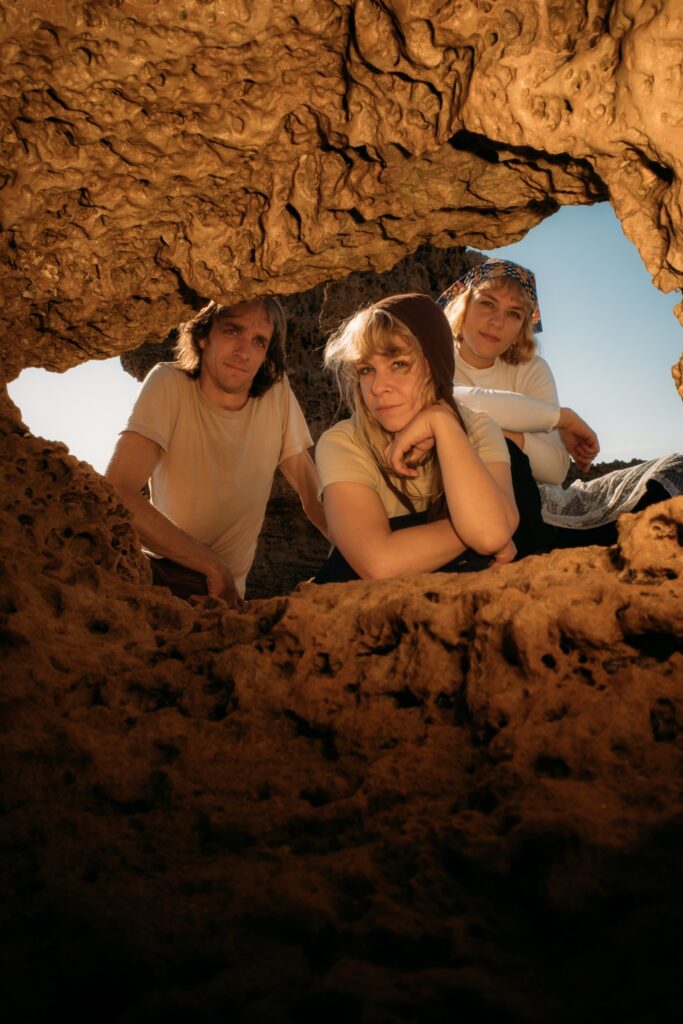
Photo by Jamie Wdziekonski
There’s a real baroque folk quality throughout the record, with flute, flugelhorn and violin. How were those parts recorded, and was there a challenge in capturing orchestral elements?
Jesse: Those listed instruments were recorded with beyerdynamic mics, either the M88 for flute or M160/M130s for the others. We recorded them with varying degrees of distance from the mic and used some reverb to get them in the zone. The strings were the hardest to get sitting right and sounding full. We blended some MIDI instruments and mellotron to thicken the orchestration.
Was there a deliberate focus on vintage gear or tools to get that ’70s Brit folk sound, or did it come together more instinctively?
Jesse: We have a few things that would be considered vintage but a lot of what we use is new. I’ve had lots of older bits break in the past so I tend to try and find things I like the sound of which are currently available. I think a lot of the sound comes from the performances and arrangements for the most part.
Pt. Roadknight feels wonderfully minimal, yet it’s so rich and warm. Do you take on a deliberate less-is-more philosophy, and how did you know when a song was finished rather than adding more?
Jesse: I think we both have a bit of an automatic ‘less is more’ philosophy which we find hard to get away from! Though I think we would say that this album is one of our fuller and more arranged efforts, haha.
Leah: I tend to write songs that are fully formed and so any part added really needs to be doing something important to warrant it being there.
‘Mothersong’ has that Pentangle-esque guitar and flute quality, while ‘Softly, Once Again’ leans into more Beatles-inspired pop. Are there specific artists or producers from that era who directly shaped your approach, or is it more a case of absorbing the sounds and letting them come out naturally?
Jesse: I think for the most part we have absorbed lots of things and we let them happen naturally. I probably have lots of unconscious biases towards how I like things to sound based on what I’ve listened to.
Leah: I had been singing the Shirley Collins’ version of ‘Murder of Maria Marten’ before I wrote ‘Mothersong’ and felt like this inspired me to try something rockin’. Otherwise a lot of the songs just came out of little guitar instrumental ideas in lots of different tunings.
With so many friends and collaborators across the record, how do you approach capturing “the moment” in a session with that many players, as opposed recording alone?
Jesse: When we bring extra players into the studio I guess we just try and keep it fun and get them to bring their special quality which they can contribute! All the additional layers/orchestration were done on separate days with separate players. When it came to the mix we just sorta favoured whatever was feeling strongest for the particular song.
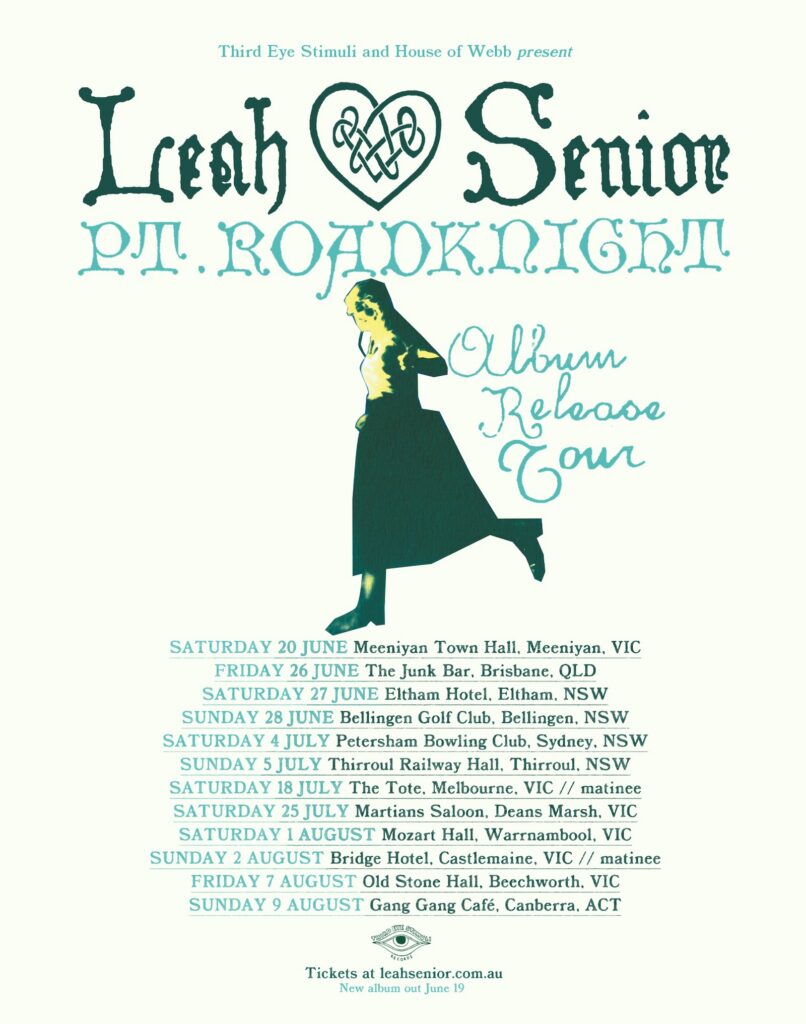
Pt. Roadknight is out now via Third Eye Stimuli. Catch Leah Senior on tour by heading here.