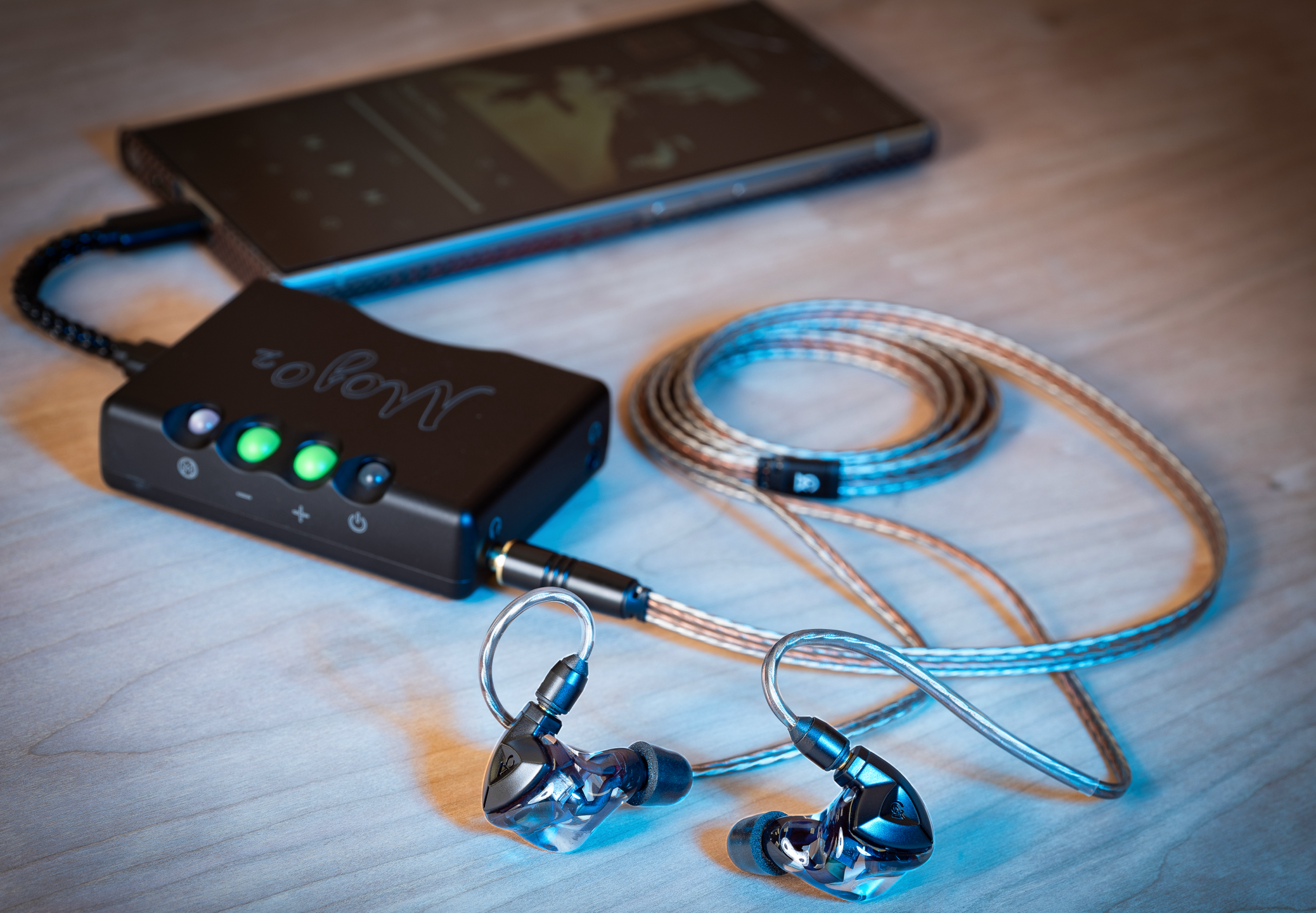
Portland-based IEM maker Campfire Audio is weighing in on what the shift to wireless audio has cost listeners, and why wired listening is seeing renewed interest among both professionals and everyday music fans.
Wireless audio may have won the convenience argument, but Campfire Audio thinks what got traded away is worth talking about.
The Portland-based earphone manufacturer is adding its voice to a growing reassessment of listening priorities, pointing to the technical limitations of Bluetooth transmission. They’re making the case that wired listening still holds a clear performance advantage.
Catch up on all the latest news here.
Bluetooth audio compresses a signal into data packets, transmits it and reconstructs it through onboard digital-to-analogue converters and battery-powered amplification. Each step introduces potential limitations. A wired connection skips that chain entirely – the ceiling on fidelity is set by the source file and the quality of the playback system, not the transmission format. “On a fundamental level, the ceiling of fidelity with a wired connection is significantly higher than with any wireless system,” said Chris Halasz, Product Specialist at Campfire Audio. “By using wireless, you are placing a hard cap on the level of sonic performance.”
That gap is particularly potent in professional environments, where wired IEMs remain the standard for stage monitoring, critical mixing and mastering, low-latency recording and reference listening. For musicians and engineers, resolution, spatial accuracy and dynamic range are essential. “There’s a reason professional musicians and engineers continue to rely on wired monitoring,” said Ken Ball, Founder of Campfire Audio. “When performance is critical, they choose the format that gives them the highest possible ceiling.”
Campfire Audio isn’t dismissing wireless outright. Halasz acknowledges it serves a real purpose in mobile or active listening situations. The distinction, in his view, is context – wireless for convenience, wired when performance is the priority.
The broader point the company is touching on is less technical: intentional listening. In an attention economy built around multitasking and constant distraction, sitting down and really listening to music is more important than ever. “For many users, hearing true hi-fi for the first time resets what they thought was possible in audio performance,” Halasz said. “It changes their perception of what great sound can be.”
Campfire Audio designs and assembles its earphones in Portland, Oregon, combining proprietary driver technologies with precision acoustic tuning.
For more information, head to campfireaudio.com.