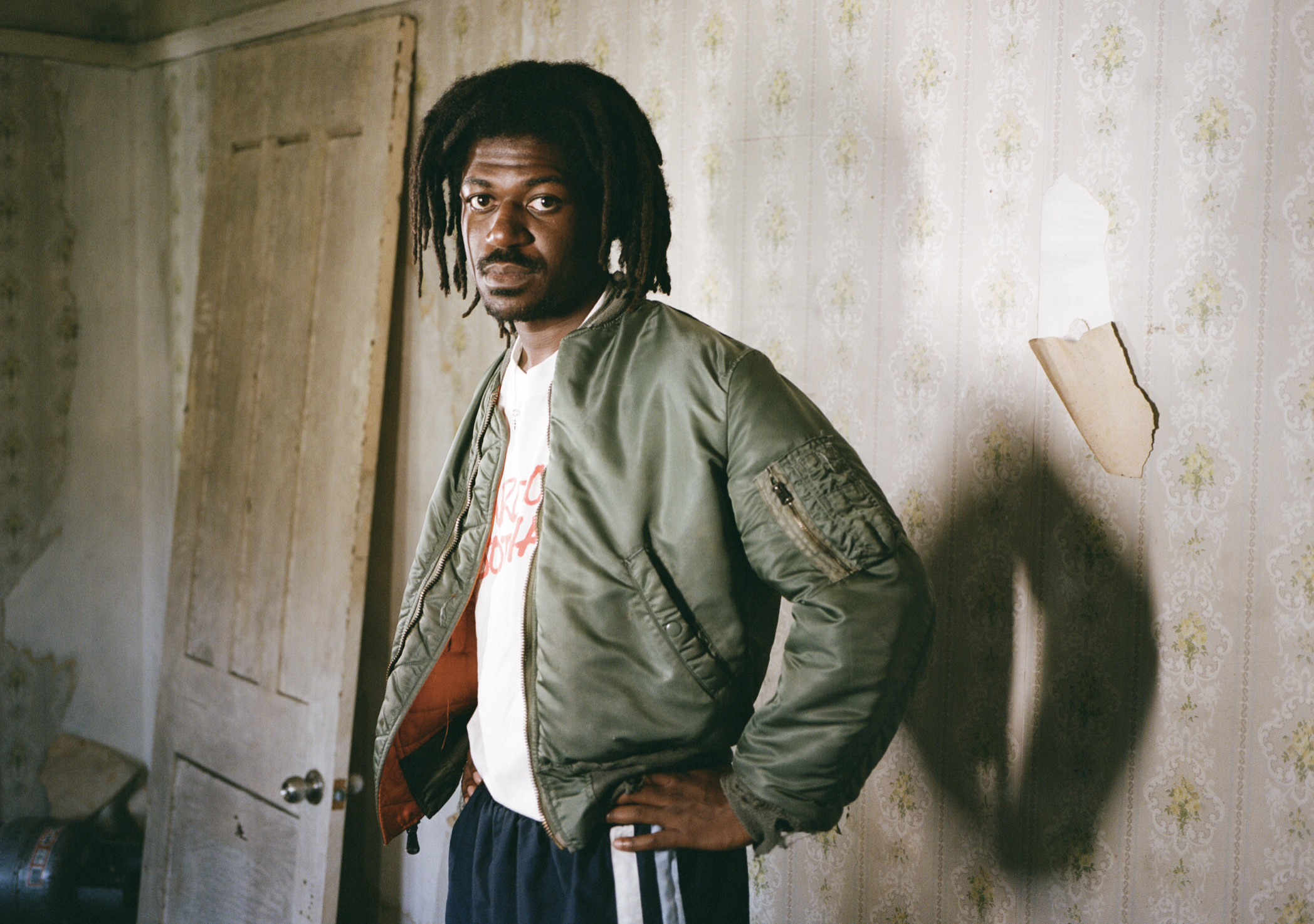
Sydney producer FRIDAY* has released his latest EP rituals, made entirely in the box on Ableton Live. We chat with him about how the EP came together, why he no longer believes in demos and recording voice memos when he’s overstimulated.
Feels great. I’ve sat with those songs for quite a while, so it feels good to clear the cache and move on to the next. It’s been very fun seeing people’s reactions to the music!
How long have you been in the world of production, and an Ableton Live user?
I’ve been messing around with production for over a decade at this point. Initially I didn’t really know I was “producing” – I was just messing around on GarageBand for a bit. I’ve been using Ableton for maybe seven or eight years? The Ableton era is definitely where I started claiming the producer title, haha.
Where does a track usually begin for you? A melody, a beat or a sample for instance? How much of the songwriting process is made in the box?
I think every song I’ve made has started in a different way. From voice memo ideas to samples to melodies to drum beats. I can say everything on the rituals EP was started and finished in the box.
Catch up on all the latest interviews and features here.
Do you create demos in Ableton, and then build on that same demo, or start from scratch?
It’s evolved over time, but essentially I don’t believe in demos anymore. When I started out making songs, I would record my vocals over and over again – for no reason other than thinking that was the way things work when you make pop music.
I don’t track live drums or anything, I don’t really replay any stems – I just make the instrumental and then sing or rap over it.
With this project, PJ, who did the mixing and mastering, encouraged me to keep a lot of the first vocal takes because they sounded good already. The vocals in the title track are all recorded on my iPhone. A lot of my production ethos came from 2010s – 2020s hip hop, because those are all pop songs constructed on a laptop.
These days I try to get as many things right in the first session. For the songs on my next project, I didn’t bounce anything until it was a ‘finished’ track.
Do you write in Session View, jamming and launching clips, or go straight into Arrangement?
Straight into Arrangement, always. I have a friend that writes in Session View and I think it’s sort of psychotic. It freaks me out not being able to see what’s going on, but I guess it would make you lean on your ears a lot more. Maybe I should give it a shot.
Any custom racks or chains you go for every time?
God, I wish I had more racks and chains, you feel me? Hahaha sorry.
I’m bad at remembering to make custom racks but I have a vocal one that I always use. I need to redo it though, it’s not hitting anymore.
How much of the record is Ableton’s stock effects vs. third-party plugins?
I genuinely have no clue. There’s probably a healthy amount of both, but I’m confident the whole thing would feel exactly the same if it was all stock.
How do you program your drums? Do you find the process tedious?
On this EP, it’s a mixture of separate audio tracks and MIDI triggering. I’m using the Drum Rack a lot more these days on the new stuff though – it’s way easier and once you get the workflow down it makes the mixing process way simpler too.
Programming drums could never be tedious. I love the drums, it makes me dance. If drum programming gets tedious for anyone it’s because their drums don’t smack. On ‘just you’ I wrote the swing pattern for the drum groove manually because I am stubborn and refuse to look things up. I probably wouldn’t do it that way again. We got there in the end, anyway.
The beginning of ‘just you’ has two people speaking. Is this something you recorded randomly, with the possibility of it fitting on a track one day, or do you record intentionally while working on the song?
Randomly. I hit record on my iPhone like a creep whenever I hear something funny or compelling. Or when I’m overstimulated. When there’s too much noise around you, it’s always good to hit record because you’re bound to get some good texture or foley.
Do you integrate hardware into the process?
For rituals, no – unless you count the little red Focusrite interface or electric guitar. I made most of the project on my laptop, sometimes with headphones, and then my bro had an extra pair of studio monitors that he wasn’t using, so that’s when I started making some songs with harder bass – like ‘pretty round face’. I went in and tweaked a lot of the songs after those monitors came into the picture. Saved my life. I have my own monitors now. I don’t see myself getting any of those hardware compressors or EQs or anything unless I get dumb rich. The plugins sound the same.
PJ mixed and mastered rituals – how much do you mix yourself while working? Do you find it helps you to really visualise the final track?
I’ve learnt to mix better over the course of my musical journey. For rituals I would naturally mix as I produced the songs and then PJ would take the sessions and tweak things so that they were way more pop-ready and less muddy. With the next batch of music, I’ve mixed it all myself, and then gone to him for an extra ear. He’s kind of like Yoda in the sense that he’s encouraged me to lean on my own instincts and trust my ear more. Mixing as I go definitely helps me visualise the final track. In my head, I see producing and mixing as the same thing the more I sharpen my skills. The world you want to create is all in the sound selection and the treatment of those sounds, as much as it is in the writing.
I always love a nod to the word “rituals”, as I feel it’s such a big part of being a creative person. Where did this title come from, and how does it fit into the sound? Do you have any rituals when it comes to creating?
I feel like the word rituals has a bit of a weight to it – there’s of course cultural and religious connotations attached to it. My goal sonically for the second EP was to make more afro-pop music influenced by dance genres, which to my ears is a lighthearted world. Pasting the word “rituals” against those sounds felt very fun and compelling, especially thinking about how electronic the EP is. It reminded me of D’Angelo naming his sophomore album Voodoo – it added a smoky layer of spirituality to the music. I feel like it definitely opened the channel for me to explore what “rituals” meant, subject matter wise, in regards to family, faith and friendships. The word also evoked the idea of drum circles and African rhythms in my mind – so that’s what led to a lot of the overlayering of the drums.
Do you get in a hyperfocused, flow state when producing? It’s pretty easy to lose yourself in it for hours.
Yeah for sure. That is what led to all of this.
Is there a track on rituals you’re proudest of?
‘braid’. Every song on rituals was me finding the production language as I made them, but since it was written and produced last, ‘braid’ is the one song on the project that was made using the language I had created.
Anything you learnt through the process of making rituals, whether from the production or creative process?
Less is more, but more can be really fun sometimes. Always trust your instincts. In art, rules are supposed to be broken. Also, the song is done when you decide it’s done.
How do the tracks on rituals translate to a live set?
We did the rituals live experience with a seven-piece band last month – drums, electric bass and guitar, synthesisers, samples, saxophone with effects, keys, congas and miscellaneous percussion – the whole shebang. My vision for the EP was to contrast the grid and electronic aspects of the production with a more feel-based, groovy, live instrumentation palette for the concert. That meant no click and a lot of jamming. I wanted there to be a clear difference between the computer and real life, whilst retaining the euphoric essence of the songs. The goal is to run that show a couple more times.
Try Ableton Live 12 for free here.