Launching on Kickstarter, the MDFX Delay and Reverb pair brings dedicated Reverse and Freeze buttons, auto-BPM detection and USB audio recording to the booth.
MDFX has launched two dedicated processors: a BPM-synced tape delay and a plate reverb, both built for live DJ use. The pair hit Kickstarter on 1 July and sit alongside the existing MDFX ISO3 and HPF/LPF in the same compact form factor, with magnetic snap mounting that attaches to the side of any mixer without drilling or rack space.
Catch up on all the latest news here.
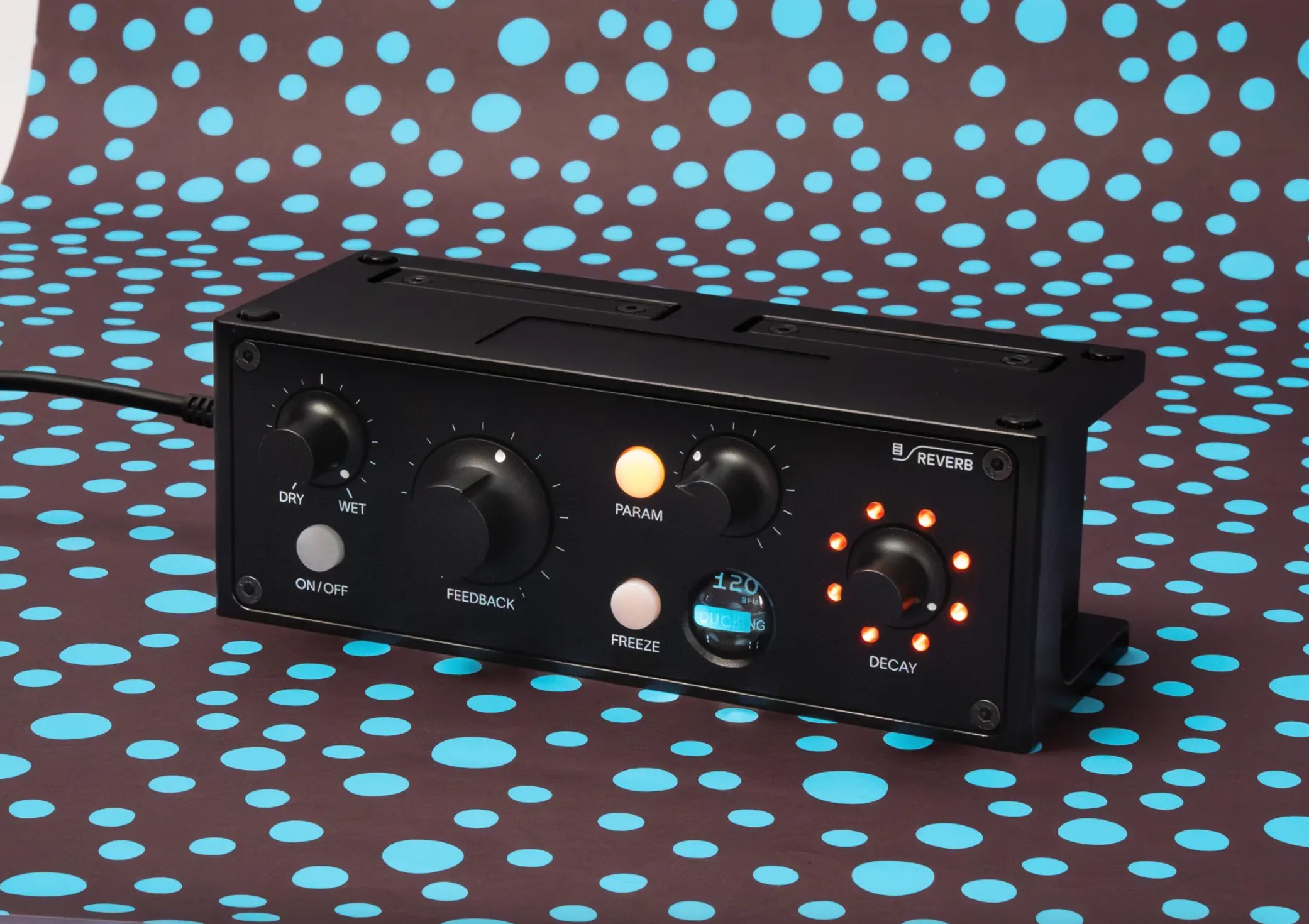
Both units run their algorithms at 96 kHz / 32-bit – the delay using a tape simulation with adjustable wow, flutter, saturation and dropouts, the reverb running a dense plate algorithm with shimmer, damping and BPM-syncable tremolo. Auto-BPM detection reads tempo directly from the incoming audio, displayed on a large round readout legible from across the booth.
The controls are surface-level so they’re suitable for live use. The delay has dedicated Reverse and Freeze buttons for transitions, with eight musical subdivisions from 1/8 to 4/1 and a single knob that sweeps tape character from clean digital to warped 70s saturation. The reverb’s Freeze button holds a tail mid-air for build-ups and blends, while Shimmer feeds an octave-pitched signal back into the reverb tail to build slow pad textures under a breakdown. Both units include adaptive ducking, which pulls the wet signal back while the music is playing and lets it bloom in the gaps.
Deeper parameters – filter routing, stereo spread and pitch on the delay; hi-pass, lo-fi character and tremolo depth on the reverb – sit in a secondary menu.
Each unit also includes a class-compliant USB audio interface at 48 kHz / 32-bit, switchable between the dry mix and the wet effected signal, and works driverless with iOS, Mac and Windows. Full MIDI over USB means every parameter is automatable from a DAW. The units connect to any mixer via master insert or send/return and are USB-C powered.
For more information, head here.