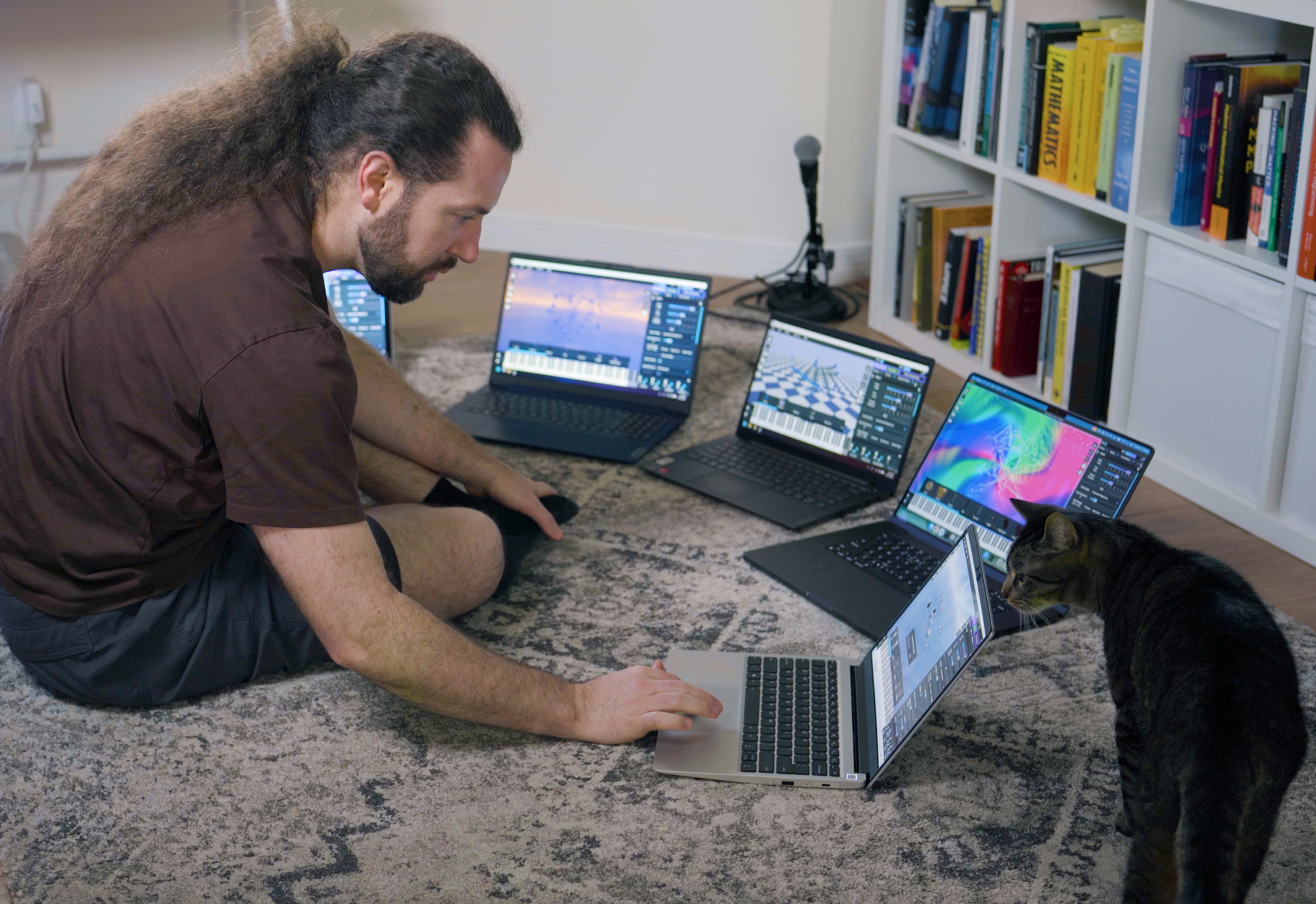
Former Google engineer Evan Mezeske spent a decade developing the instrument, which generates audio through real-time 3D object interactions rather than traditional synthesis parameters.
In Anukari, you build virtual mechanical systems and listen to what they sound like. Drag and connect masses, springs, LFOs and envelopes, position microphones within the simulation, and the physical interactions between those objects produce the audio. The analogy Mezeske reaches for: stretching a rubber band and playing it like an upright bass, then building an entire instrument around that instinct. It runs as a standalone instrument or DAW plugin, and also works as an effects processor for external sources like vocals or guitar.
Catch up on all the latest news here.
Founder Evan Mezeske – a musician and former engineering lead at Google – spent over a decade developing it from a side project into a fully released instrument. The origin was a simple mass-and-springs game he built in his spare time. “Once I built it, I wanted to see if it could generate audio. It did and the sounds were really neat.”
The 3D visuals aren’t a front end bolted onto an audio engine. Mezeske is explicit about this: “Lots of people assume Anukari is an audio engine with a cute visualizer on top, but the reality is it wouldn’t work without the graphics. The 3D visuals make the audio happen, not the other way around.” Those visuals are also fully customisable – environments range from atmospheric sunsets to bit-crushed vaporwave landscapes, and the whole thing is shareable on socials.
Mezeske’s background shaped both the concept and the execution. Growing up around machinery in his grandfather’s autoshop fed directly into the instrument’s tactile logic: “Chips or transistors are very abstract, but with 3D graphics and physics, you see what it’s doing in real time, it’s tactile. ‘It’s jiggling like this and making a sound.'” His work coordinating large-scale distributed systems at Google informed how the plugin handles parallel processing without losing stability.
“I want people to push it, try to break it, and to see what surprises emerge in the process,” says Mezeske. For producers and sound designers after something outside the standard synthesis toolkit, it’s an intriguing invitation.
For more information, head here.