Distributor: CMC Music | RRP: $2150
Thumbing through some old guitar pornography recently, I was struck by the fact that there were no baritone guitars pictured. Or even mentioned. Ditto my vintage copy of Gruhn’s Guide to Vintage Guitars.
This certainly showed me that the baritone guitar is in a niche of its own – but it’s certainly been making a comeback. These days, most guitar manufacturers, including acoustic builders, have at least one baritone in their catalogue, and some have several at different price points. In the last year or so, at least half a dozen new models have emerged.
Catch up on all the latest reviews here.
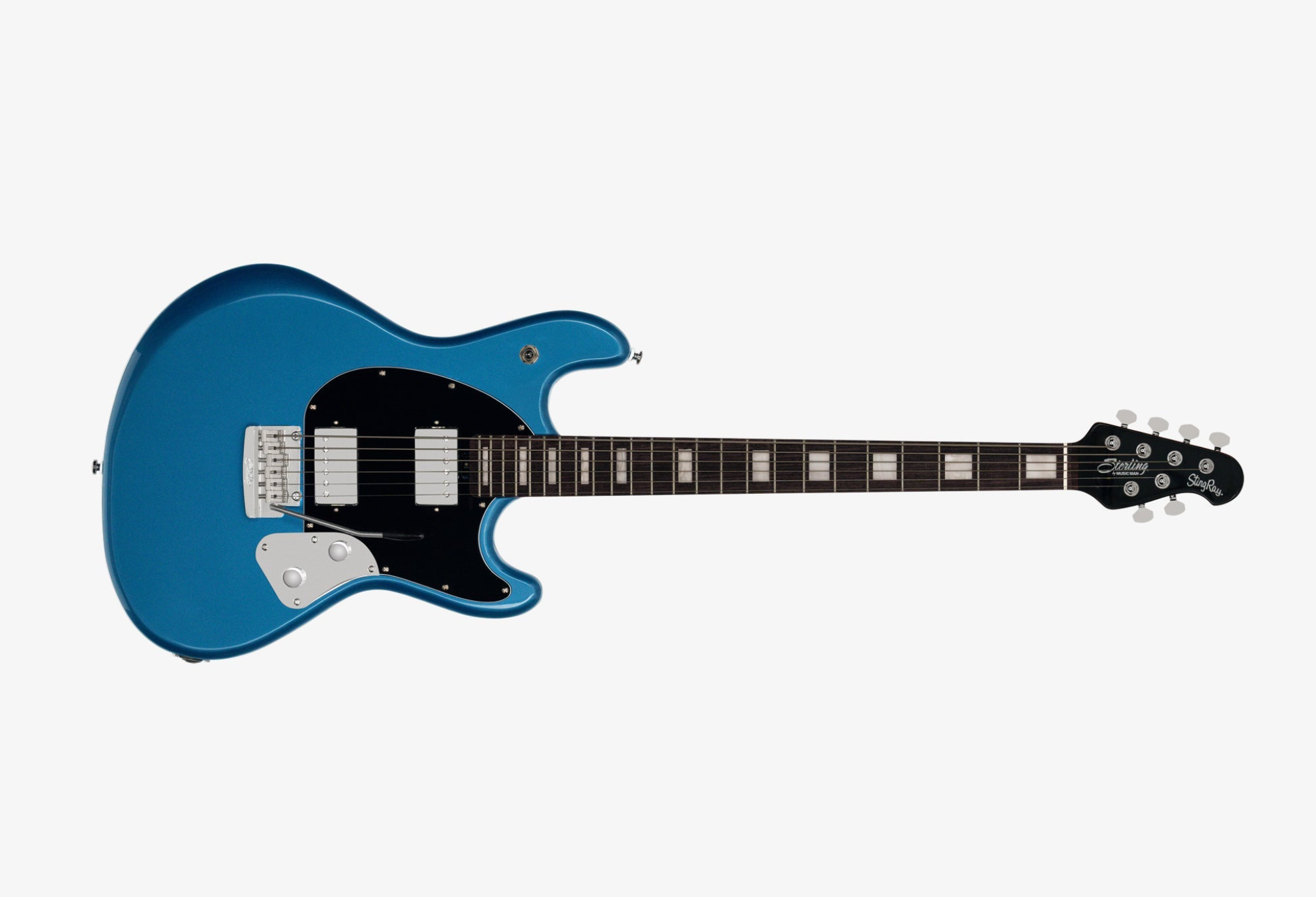
The Sterling by Music Man StingRay Baritone is one of the more recent additions to that growing field, and a first for the brand – though it has antecedents at the limited edition higher end of the Music Man range. I’ve often admired the Music Man aesthetic: they all look attractively rounded and, well, desirably playable.
The baritone history is quite interesting, but not well historically delineated. Glen Campbell’s famous solo on Wichita Lineman was often thought of as a baritone, but it was in fact a six-string Danelectro Bass, borrowed from fellow session player Carol Kaye. A contemporaneous TV appearance shows Campbell playing a Fender VI. Ditto Duane Eddy, who is considered to have played a baritone on some of his early twangy albums, but not too many years ago, Gretsch presented him with a signature six-string bass built on a 6120 frame, which obviously suggested a bass was his instrument alongside his standard guitars. The Fender VI was introduced in 1961, following the concept of the Danelectro six-string bass released in 1956 and a baritone around the same time.
Despite this obscured history, the six-string bass and baritone differ. A bass guitar, even one with six strings, is basically a standard guitar tuned down an octave, with thicker strings and a longer neck around the 34-inch mark. On the other hand, a baritone is somewhere between a standard guitar and a bass, both in terms of string gauges and neck length, typically 27.5 to 30 inches (although a short-scale bass can fall into that size). The StingRay sits in the sweet spot at 27.5 inches. It’s long enough for low-end but still familiar enough to pick up and play like a standard guitar.
A big difference is that a baritone is tuned a fourth or fifth below standard tuning – B–B (BEADF#B), A–A or a major third lower C–C.
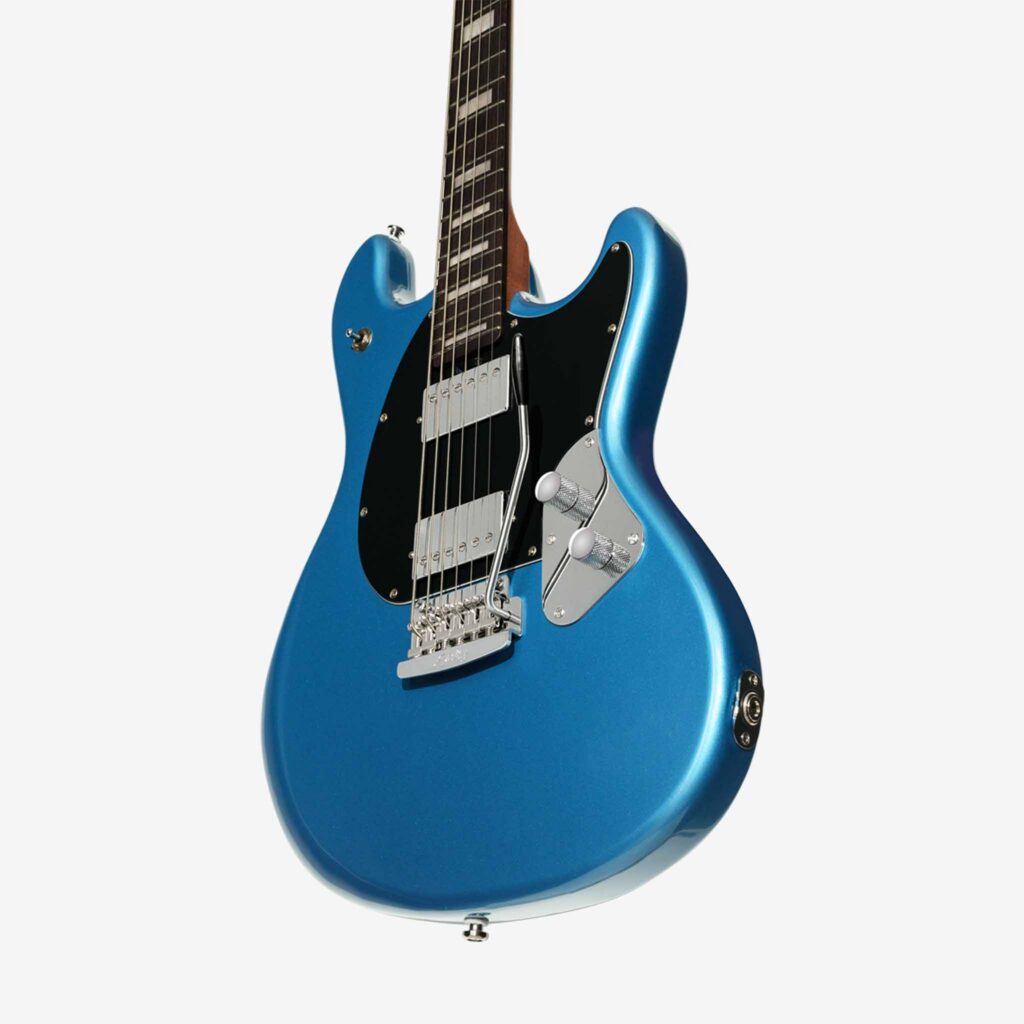
Out of the box, the StingRay baritone is tuned to B, with – surprise, surprise – Ernie Ball 6-String Baritone Slinkys, 3-72 gauge, the top two strings unwound. A baritone’s playability is not far from a standard guitar, and its depth of sound makes it a colourful choice across most genres.
Baritones are considered to be tauter and more muscular than a standard-tuned guitar but more articulate than a bass. Besides providing more string tension and better intonation, a baritone’s longer scale yields a quicker onset and a longer decay, almost piano-like, than a detuned standard. The StingRay’s 27.5-inch scale and dual-action truss rod are well-suited to exactly that.
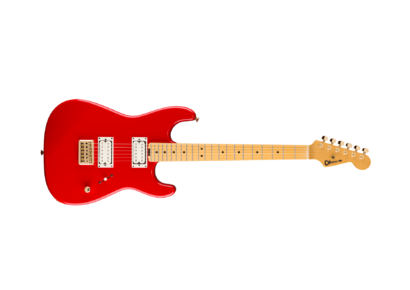
This guitar has a contoured poplar body, a roasted maple neck and a rosewood fingerboard with white pearloid block inlays. Its scale length is 27.5 inches (69.85cm), neck radius 12 inches (30.5cm) with 24 medium frets. Locking tuners in a four-two head array give tuning stability alongside a vintage tremolo. The electrics are two ceramic humbuckers in an HH configuration with a three-way toggle pickup selector. Single knurled volume and tone knobs are mounted on a chrome plate and turn smoothly. The neck attachment is a solid five-bolt pattern with a dual-action truss rod.
At this pre-release stage, there is a body colour choice of Toluca Lake Blue with a black pickguard and black headstock.
Many guitar companies have looked to Asia to construct their less expensive lines, and this guitar is Indonesian-built. In fact, Sterling by Music Man began as an import budget brand in 2009. Let me follow that by stating I would never have picked this as a budget guitar because I have absolutely no quibble with the build: it’s all class. Frets and fret edges are smooth.
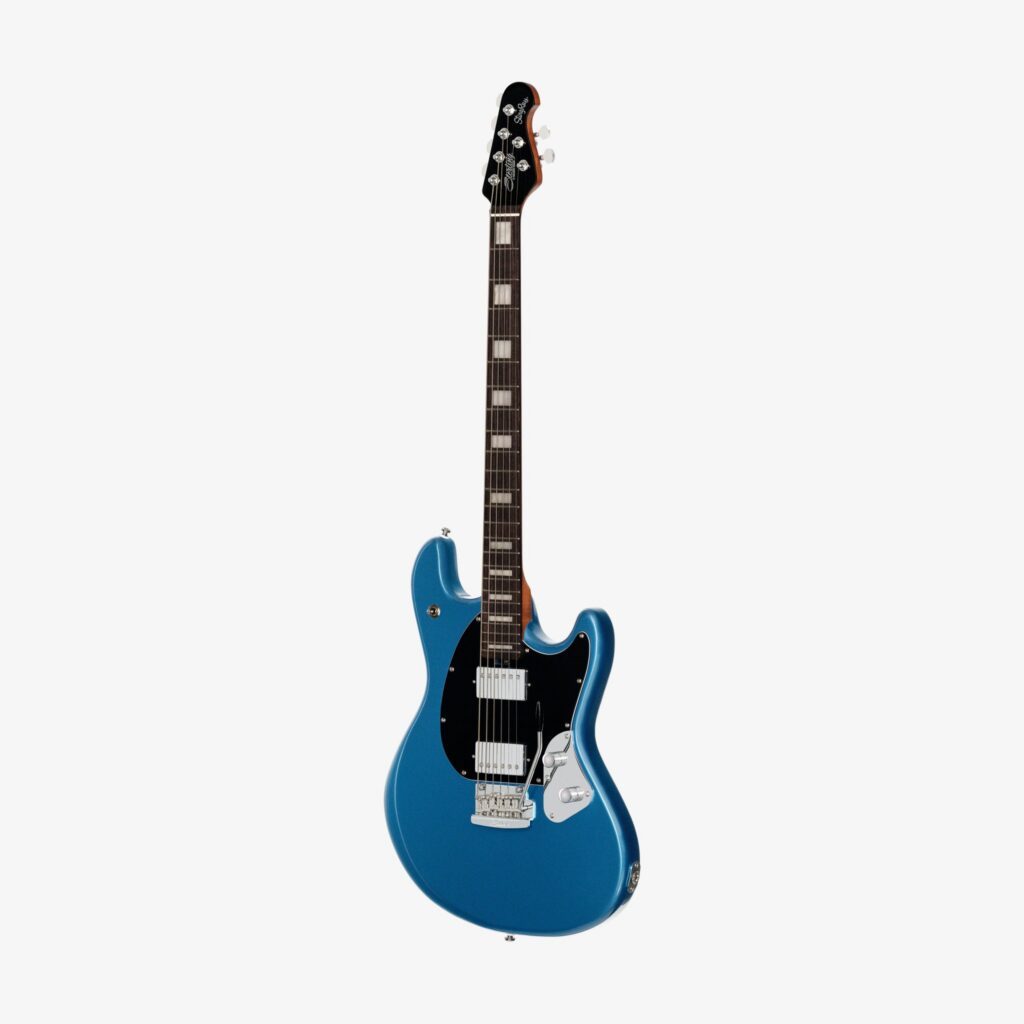
Pick this up, and you feel a comfortable weight with the neck solid in the hand. Its acoustic sound is round and full, which I love in a solid body, and this is reflected by the humbuckers when plugged in. The sound is rich and deep, and the playing is easy all the way up the neck. The three pickup settings are all very musical. The whammy bar fits neatly into the bridge and is highly effective. I’m not sure you’ll get big twang out of this or special jazz tones, but many other genres will be catered for. Hit those powerchords, crank the pedals, and book your passage to Mordor, Metalheads!
Where does the ‘Sterling’ in the name come from? Well, Ernie Ball’s son was a bass player who had helped develop and test the Music Man basses and ultimately owns Ernie Ball Music Man to this day: that’s Sterling Ball. His son Brian is currently CEO. Luckily, they decided on ‘Sterling by Music Man’ – ‘Brian by Music Man’ doesn’t quite have the same ring to it.
A good name for a good guitar, as it turns out. Baritones have been hiding in plain sight for decades, and the StingRay makes a great case for why that’s changing.
For local enquiries, head here.