Gretsch guitars have been an aspirational purchase for as long as any of us can remember: the company was already 40 years into its existence when it began producing guitars in the 1920s. Gretsch guitars power the music that shapes our lives. Chet Atkins. Cliff Gallup. Duane Eddy. The Beatles. Buffalo Springfield. The Cramps. AC/DC. The Stray Cats. The Cure. The Cult. The Living End. Fall Out Boy. Soundgarden. Frankly, this list could just keep going and going, and we’ll run out of space.
Catch up on all the latest reviews here.
Suffice to say that there’s a certain cachet that comes with playing a Gretsch. It tells the audience something about you, and that thing is that you’re one coooool cucumber.
Gretsch has always been aware that players have wanted more affordable versions of their guitars, and the catalogue has contained all sorts of ‘student’ and budget models, all still released under the proud Gretsch name. No sub-brand here: every Gretsch is a Gretsch.
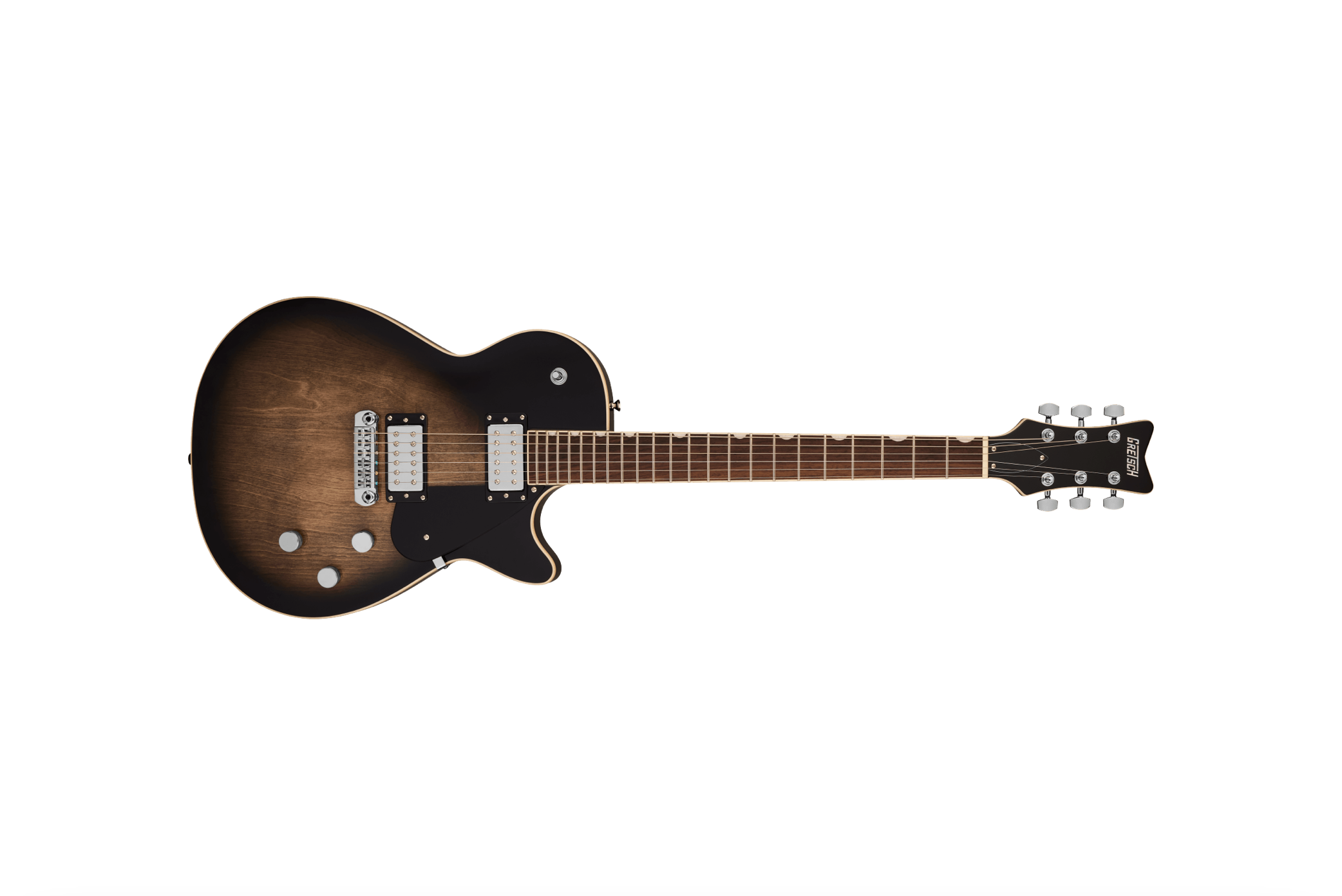
This brings us to the Electromatic Jet, a streamlined name for a very direct, no-nonsense guitar designed to sit at that budget level where the Gretsch name can inspire newer players, or give a more seasoned player a reliable backup.
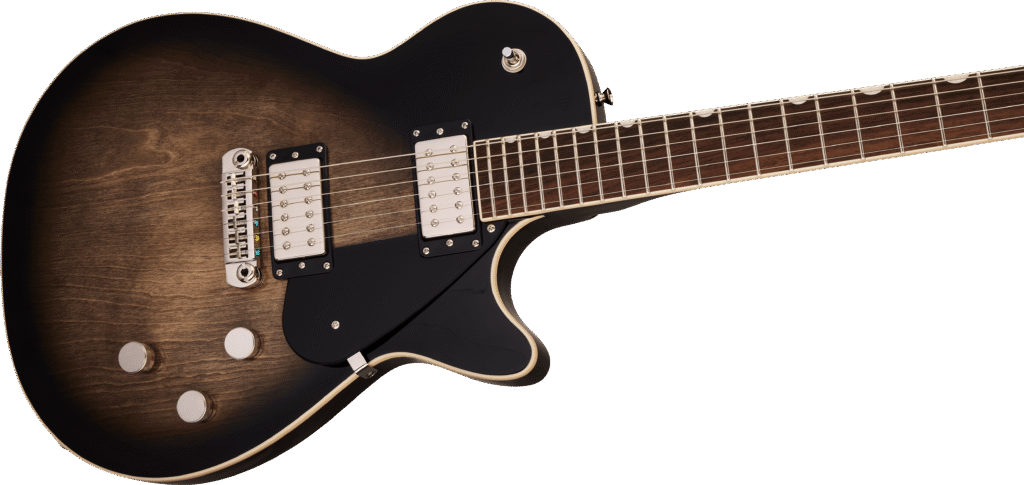
What we have here is a single cut instrument with a 22-fret neck, 24.88″ scale length (a little longer than a Les Paul, a little shorter than a PRS Singlecut), two humbucking pickups and a wraparound tailpiece.
We have a chambered mahogany body with a bound, carved maple top and a set mahogany neck with bound rosewood fingerboard (remember when rosewood was scarce because of the CITES regulations? If not, look it up. It was a dark time).
The neck is Gretsch’s Performance “C” shape, which is one of those ‘pretty much every guitarist can get along with this’ neck shapes – not too fat, definitely not too thin, just a great all-rounder. The 22 medium-jumbo frets and a relatively flat 12″ fingerboard radius are designed to make for comfortable, clear lead playing all over the neck (ever try to do a three-semitone bend on a round 7.25″ radius board? Doesn’t always work huh). Neck hardware includes a Graph Tech NuBone nut and sealed die-cast three-a-side tuners.
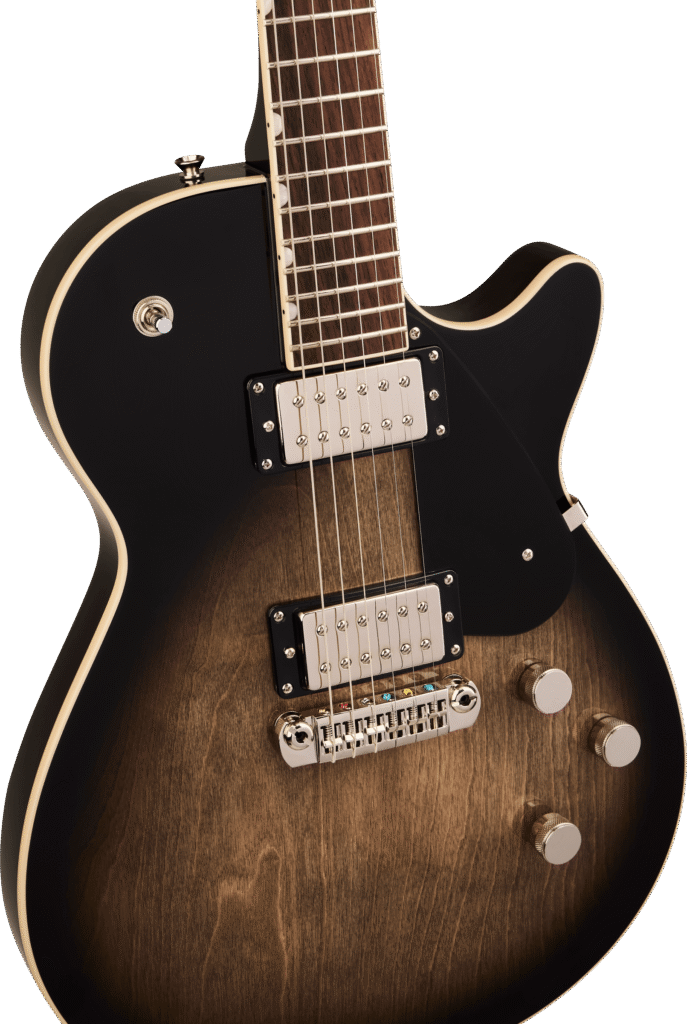
The pickups are a pair of PureVolt Twin Six humbuckers with adjustable pole pieces on each coil under a nickel cover. It’s a slightly aggressive look to my eyes, just a little bit hot-rodded. Very cool. The bridge pickup has an Alnico V magnet with coated wire, while the neck pickup uses Alnico IV and plain enamel wire.
Each pickup has its own coil-split to turn it into a single coil, and there’s a treble bleed capacitor on the volume control to maintain the sparkling high end when you roll the volume back a bit. Each pickup has a dedicated tone control. You may wish to upgrade the pots and switch after a while because they do feel a little ‘budget’, but that’s something to think about further down the track. They’re certainly fine to do the job straight out of the box. The bridge is a single, all-in-one wraparound version with intonatable saddles, which feels pretty tough and well-engineered.
So how’s it sound?
Pretty much however you want. Gretsch has carefully voiced these pickups to have chime and sparkle when run clean, but they handle dirt exceptionally well. It sounds warm and full, but with a clarity that allows every note of a chord to sing clearly. The neck pickup has a round, juicy quality, the kind of pickup that sounds especially great when you dig in hard with the pick, and I found myself dwelling on that neck pickup a lot more than I would have expected. I wouldn’t have expected to spend more time soloing on this guitar than blasting out big ringing riffs, but here we are. It’s a guitar that encourages you to play.
The bridge pickup is higher output than a typical Gretsch pickup: it’s not designed to sound like your great-grandpa’s Gretsch but rather something more modern, although the chambered body helps to impart some of that classic Gretsch tone. You can definitely get heavy on this guitar if you want to, and it’ll handle high gain exceptionally well, but the voicing of the pickups, particularly the bridge one, really favours clean and overdriven tones. You want jangle? This thing will jangle for days.
It’s surprising how ‘zippy’ the single coil modes sound. It reminds me of a ’50s style Stratocaster: lots of ‘string sound’ and plenty of articulation. And I really appreciate that there are individual coil splits for each pickup, allowing you to mix and match, particularly with clever use of the individual tone controls too.
Some players might be less enthused about the wraparound bridge: even when this kind of bridge comes with an intonation feature, they can be a little fiddly to set up, especially for novices. But an all-in-one unit seems to add a punch and immediacy to the sound, and I often wonder how much of this is due to the absence of that length of string between bridge and tailpiece on a conventional Tune-o-matic/Stopbar setup.
The Electromatic Jet is a brash, confident little axe that feels like it belongs in a higher price bracket than it does. It’s very versatile, very, very playable, and has that unmistakable Gretsch mojo.
Head to Gretsch to learn more.