Built in partnership with real, credited and royalty-paid musicians, ACE Studio 2.0 is an AI vocal and instrument platform that puts creative control firmly in the hands of the producer, not the algorithm.
If you’ve spent years sharpening your ear and taste through real human performances, the idea of a synthetic vocal standing in for the real thing likely doesn’t sit well. That’s a fair response – authenticity has always come at a cost, and producers who’ve earned that instinct know it. But what activates this reflex?
Catch up on all the latest reviews here.
Much of the tension around AI’s arrival in music is rooted in something very human: the nagging feeling that the limitations which shaped our creative instincts are being quietly handed around for free. Still, I concede that I leap between worlds – acoustic guitar in one hand, MIDI controller in the other.
ACE Studio gives me reason to double-take, partly because it seems to know whose shoulders it’s standing on. What might read at first as just another AI vocal tool turns out to be a more considered endeavor to join the conversation.
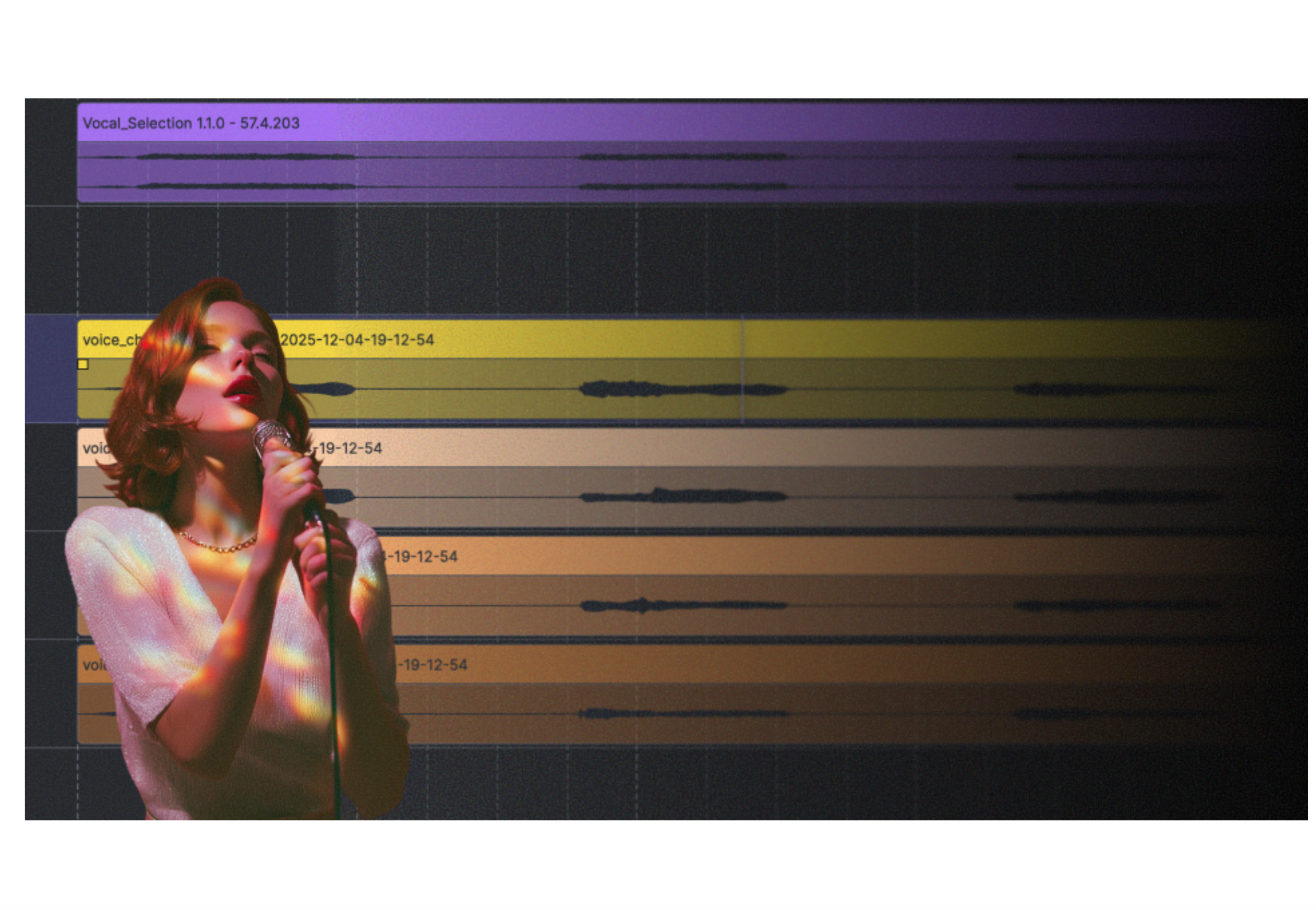
ACE Studio, now at version 2.0 from developer Timedomain, is not a one-click song generator. It’s a well-trained songbird disguised as a utilitarian DAW (digital audio workstation) with arrangement view, MIDI piano roll, basic track FX. It also assumes you’ll treat it like one, so most shortcuts translate.
The Bridge plugin (VST3, AU, AAX) connects directly to your primary DAW via ARA, keeping playback synced and cutting the need to bounce and reimport stems. There’s even hardware acceleration with ‘Turbo Mode’, utilising your existing investments to cut down on generation times.
VOICE MODELS
Open the voice library and you’re looking at 140 professional voice models with adjustable languages and ranges, shimmering with powerful controls over phrasing and expression. This is the most hypnotising area; a voice engine that holds up under scrutiny in ways that matter to those who know what they’re listening for.
Six expressive, automatable parameters – Formant, Energy, Tension, Falsetto, Air and Breath – give you micro-control sitting somewhere between pitch correction and full performance direction. Used deliberately, the results can mask synthesis, pass a Turing test and climb out of the uncanny valley. Ten minutes in, I had a fine-tuned vocal line with some seriously fluid inflections.
Your own vocal recording can be analysed for lyrics and timbre before swapping voices. If it doesn’t quite hit the mark, convert it to MIDI, punch the lyrics back in, and reload it into the voice model. Once you’re happy, throw a few more models into Choir Mode, and fill your soundstage with a swarm of distinct voices. What if that vocal melody better suits a cello?
INSTRUMENT MODELS
The instrument models are beautifully orchestral in character, and carry a level of detail that holds up. Again, there’s genuine consideration for quality and behaviour.
A sustained MIDI note intuitively triggers a bow change where spliced, with a slight martelé draw, and shorter spiccato passages are expressed with expected sharpness. Simplified parameter controls imply that the instrument models can handle complex phrasing, and convincingly so in ensemble mode!
GENERATIVE AI FEATURES
Beyond modelled vocals and instruments, version 2.0 adds AI generation from MIDI, a generative kit suite for layering and enhancement, an astoundingly capable stem splitter, and voice cloning.
These features trade moves with the current competition but feel far less novelty-driven in the wider context of the application. However limited – or carefully selected – the data pool is, the cross-compatible workflow here is refreshingly forward-thinking compared to the prompt-and-pray model most generative tools rely on.
Remember, we were prompting each other long before AI turned up. It’s just never been more important to lead by example.
USE CASES
The combination of ACE Studio’s genetics allows it to travel further than mere convenience. Sync producers, session arrangers, and songwriters are the obvious flock – but the sky is a big place. Dungeon Masters can generate character themes on the fly. Foley artists can chase or emphasise a particular sound. Game developers can stretch a melody across shifting themes without losing coherence.
For me, I can finally separate the stems from the masters of my earlier catalogue, resurrecting projects that were buried inside a broken hard drive. The longer you play with the tools, the more use cases will be realised.
ACE Studio 2.0 demo track
FINAL THOUGHTS
I find no joy in generating an entire track in five seconds just to find out the vocals don’t match my vibe. Thankfully, that’s not the selling point. The difference is intentionality – and ACE Studio leaves that entirely in your hands.
ACE Studio gives me control over the elements of those ideas, in service of a genuine arrangement. What really matters is the preservation of intention, which usually gets chewed up by other AI interfaces. Here, it stays transparent at every human-paced step.
For a platform this deep, it expects you to know your way around a DAW. That said, the learning curve is relatively short for anyone with DAW experience, and the interface is intuitive enough that most producers will find their footing quickly. Generation times vary depending on your connection and hardware, though Turbo Mode helps considerably. It’s a platform built with a clear purpose in mind, and it stays in that lane deliberately. ACE Studio isn’t waiting to be told what to do – it’s built to grow alongside the people using it.
ACE Studio’s voices and instruments were built in partnership with real musicians – credited, paid royalties, and generously gifted lifetime access to the platform. A massive ethical cherry on top of an already impressive level of control. And if you didn’t already care about that, you’ll at least appreciate a more reliable result from a consensual and collaborative performance.
The goal is not to save time by replacing real musicians. That’s just a by-product of invention. If it were, we’d be guilty of buying it since the dawn of MIDI anyway.
Head here to learn more.