Fluid Audio’s 8″ coaxial monitors bring precise imaging and DSP room tuning to the home studio.
Fluid Audio is a stronghold within the modern pro audio landscape, spearheaded by Kevin Zuccaro, who combined knowledge from his time working as a product designer for industry giants such as JBL, M-Audio and Cerwin-Vega with what he learned from years as a working audio engineer to bring the brand to where it is today.
Catch up on all the latest reviews here.
Fluid is anchored in the philosophy that powerful audio tools should be intuitive and accessible to professionals at all stages of their career. Regardless of whether you are working from an established pro studio or cutting your teeth in the bedroom, Fluid doesn’t just want to force-feed the consumer with a banquet of specs on paper. The priority is to provide tools that help people create, mix and monitor their productions with the utmost confidence.
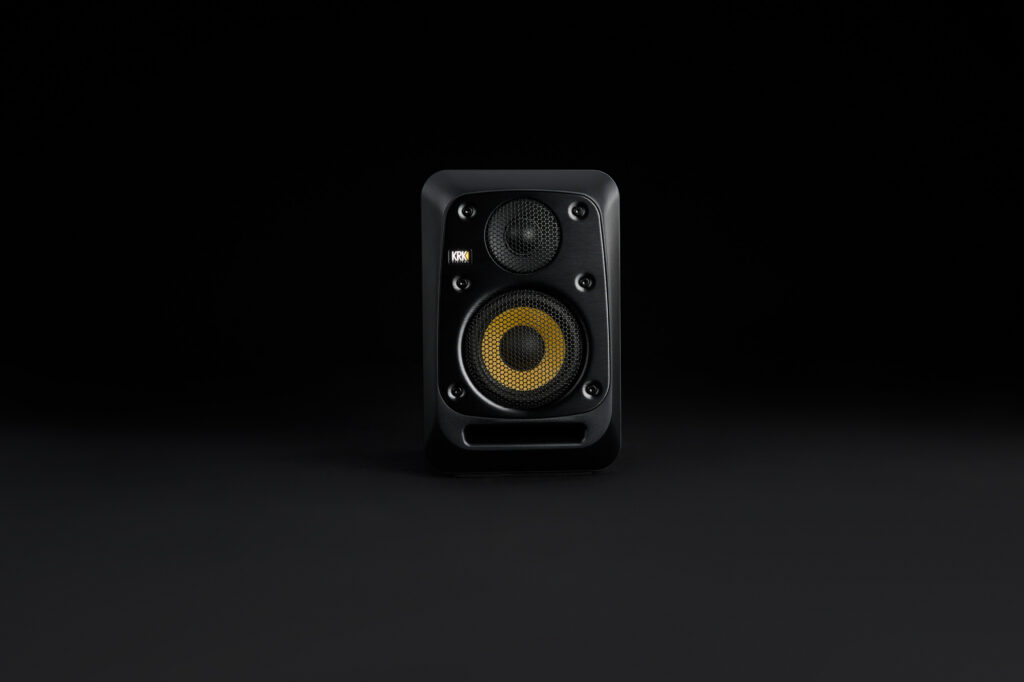
The FX80 V2 8” Coaxial Studio Monitors serve as an embodiment of this mission.
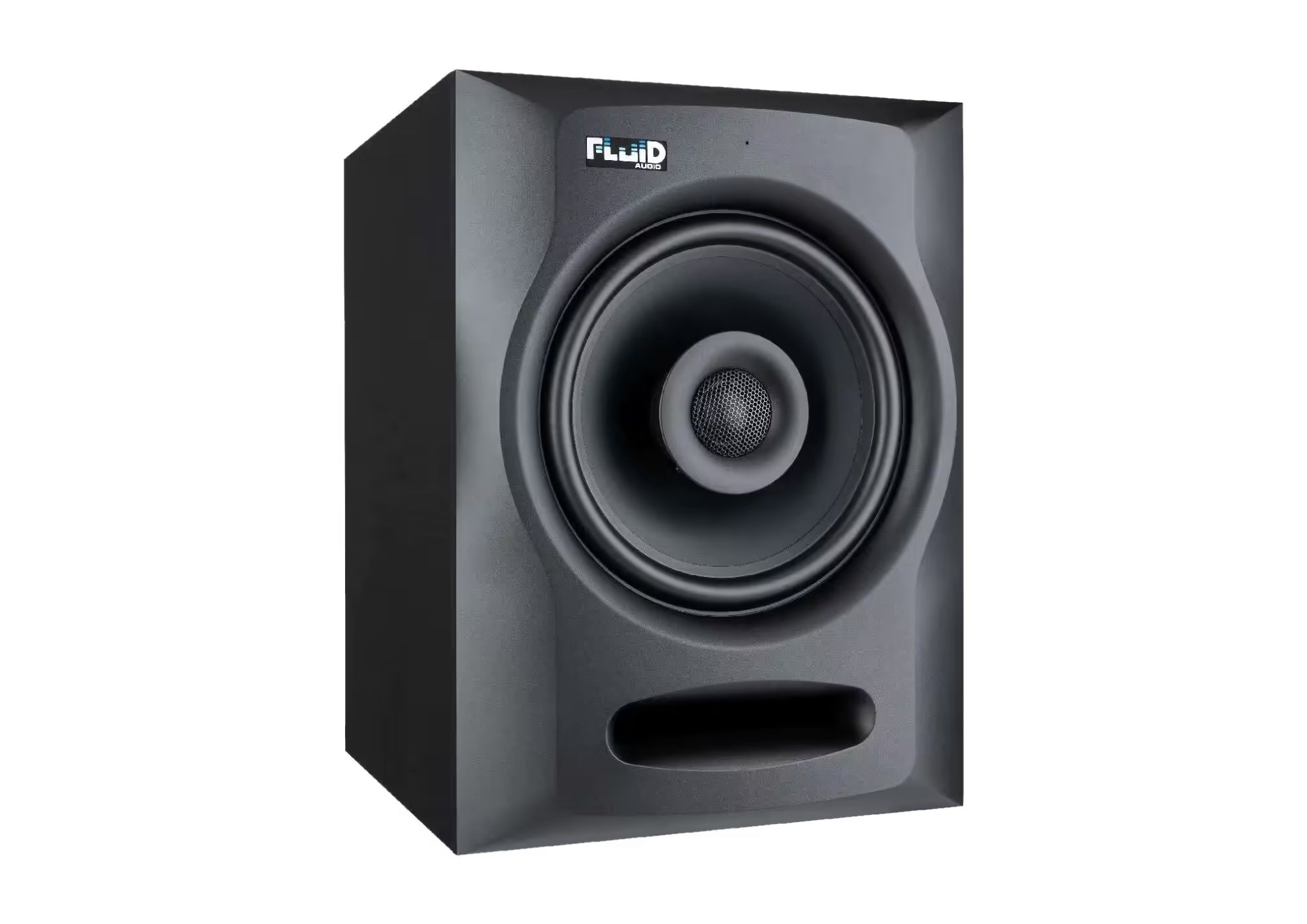
Upon first unboxing and setting up the monitors, the amount of care implemented in their design by Fluid is immediately noticeable. The FX80 V2 sport an aesthetic that looks both modern and professional. Each speaker weighs in at a healthy 7.9kg, immediately quelling any doubts regarding their build quality.
An 8” Bi-Amped Coaxial Studio Monitor boasts a frequency response range of 32hz – 22khz with a 2.4khz crossover, the FX80v2’s target demographic is musicians, producers and content creators who are working out of home studios and project rooms. The goal here is to provide precise imaging, a constant listening position, and strong low-frequency extension without the need for an external subwoofer.
One of the many things that makes the FX80 V2 stand out from its competitors is its woofer/tweeter layout. Fluid has gone to great lengths to design a cabinet that mounts both drivers on the exact same acoustic axis. This imparts a bounty of benefits to how the monitors perform, especially in relation to their phase coherence, off-axis consistency and stereo imaging.
The 8” woofer encompasses a cutting-edge composite paper cone with a high-temp voice coil and dampened rubber surround. This handles the low-frequency foundation for medium to large home studios, with the FX80 V2’s woofer extending far down to an impressive 35hz, making the prospect of incorporating a sub into your monitor array a mere afterthought.
The upper frequencies are handled by a specially designed 1.2” silk dome tweeter with 110W of Class D amplification powering both drivers: 50 watts dedicated to the high-frequency driver and the remaining 60 watts implemented by the low-frequency driver.
The FX80 V2’s Coaxial architecture enables it to operate more like a single point source throughout its crossover religion. Fluid has achieved this by placing the tweeter in front of the Woofer, whereas other monitors traditionally mount both drivers in line within the cabinet’s body.
Additionally, Fluid has incorporated DSP-controlled rear panel switches to aid in fine-tuning the monitors for your workspace. The handy alignment LED made for a very quick and easy setup, while the front-ported design meant that I could place the speakers closer to the wall than I could with others. A feature that will be no doubt advantageous for anyone working in the confines of a tighter workspace.
Lastly, those looking to incorporate the FX80 V2 into an immersive monitoring system will be pleased to hear that Fluid have incorporated integrated M6 mounting points, allowing for easy ceiling or wall installation. This makes the FX80 V2 an immediate contender for any consumer looking for a modestly priced speaker cable for rear, side, and overhead channels in Dolby Atmos and other immersive systems.
In practice, the FX80 V2 provide an excellent experience when it comes to critical listening. I found stereo imaging to be accurate even in an untreated room, while the incorporated DSP frequency controls made it easy for me to tailor the monitor’s frequency response to the space I was testing them in. Fluid’s coaxial design did provide a noticeable difference when it came to phase coherency among a variety of other details.
Not only did this all boil down to me making informed decisions during the tracking and mixing process, but I also found that my finished mixes were translating better than those that I had done in the same room on other monitors. Whilst I would always get the end result I was after, the FX80 V2 resulted in fewer tweaks after the first bounce.
All in all, Fluid Audio has knocked it out of the park when it comes to their new 8” Coaxial Reference Monitors. I could recommend a pair without hesitation to anyone in the market for a pair of studio monitors catered to the intermediate-to-pro-level home studio demographic.
For local enquiries, head here.