Studios 301 has been part of the Australian music landscape since 1926.
Now based in Surry Hills, Sydney, it remains the country’s longest-running professional recording studio, and one of the few still operating at a genuinely world-class level. We sat down with the team to talk about the move, the new space, the engineers behind it and what it takes to run a hundred-year-old studio in 2026.
Catch up on all the latest features and reviews here.
Studios 301 has been operating since 1926, which makes it Australia’s longest-running professional recording studio. What does that legacy mean to you, and how do you carry it forward day to day?
When you’re looking after a studio that’s been going for nearly a hundred years, you’re not running a business so much as looking after something that belongs to Australian music. Every artist who’s walked through 301’s doors since 1926 left a bit of themselves in the place, and the job is making sure the next hundred years of artists get to do the same thing.
Day to day, it shows up in the small stuff. The standard we hold every session to. The engineers we bring through. The care we put into archives we digitise for labels and institutions. Legacy isn’t a plaque on the wall, it’s a daily decision to be worthy of the name.
What’s striking is that 301 has reinvented itself in every decade it’s existed, even from the same address. The studio has had five Sydney homes across a hundred years: Homebush (where 301 began in 1926 as a subsidiary of the Columbia Graphophone Company, later part of EMI), 301 Castlereagh Street, Mitchell Road in Alexandria, 3B Ellis Avenue, and now Surry Hills. Each was a response to what the industry looked like at the time, but most of the reinvention happens inside the rooms. New engineers, new gear, new ways of working, same standard.
There’s a nice symmetry to where we’ve landed, too. The Surry Hills room is the old Big Jesus Burger, the studio that produced records by Silverchair, The Presets, The Temper Trap and a heap of others through the 2000s. Two Australian recording lineages now living under one roof. We’re the studio artists come to when they want their work to sound like it matters.
The studio recently moved to Surry Hills, just ahead of the 100-year milestone. What prompted the move, and what does the new space offer?
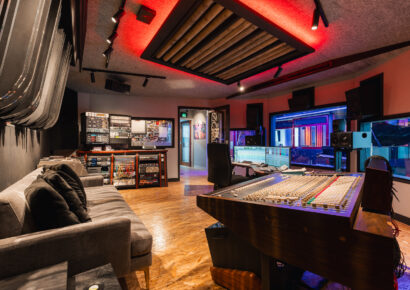
The move into Surry Hills was a deliberate creative reset. We looked hard at how artists actually work in 2026, the pace, the way collaboration happens, the kind of room that sparks great takes, and we built the space around that instead of trying to retrofit an old model.
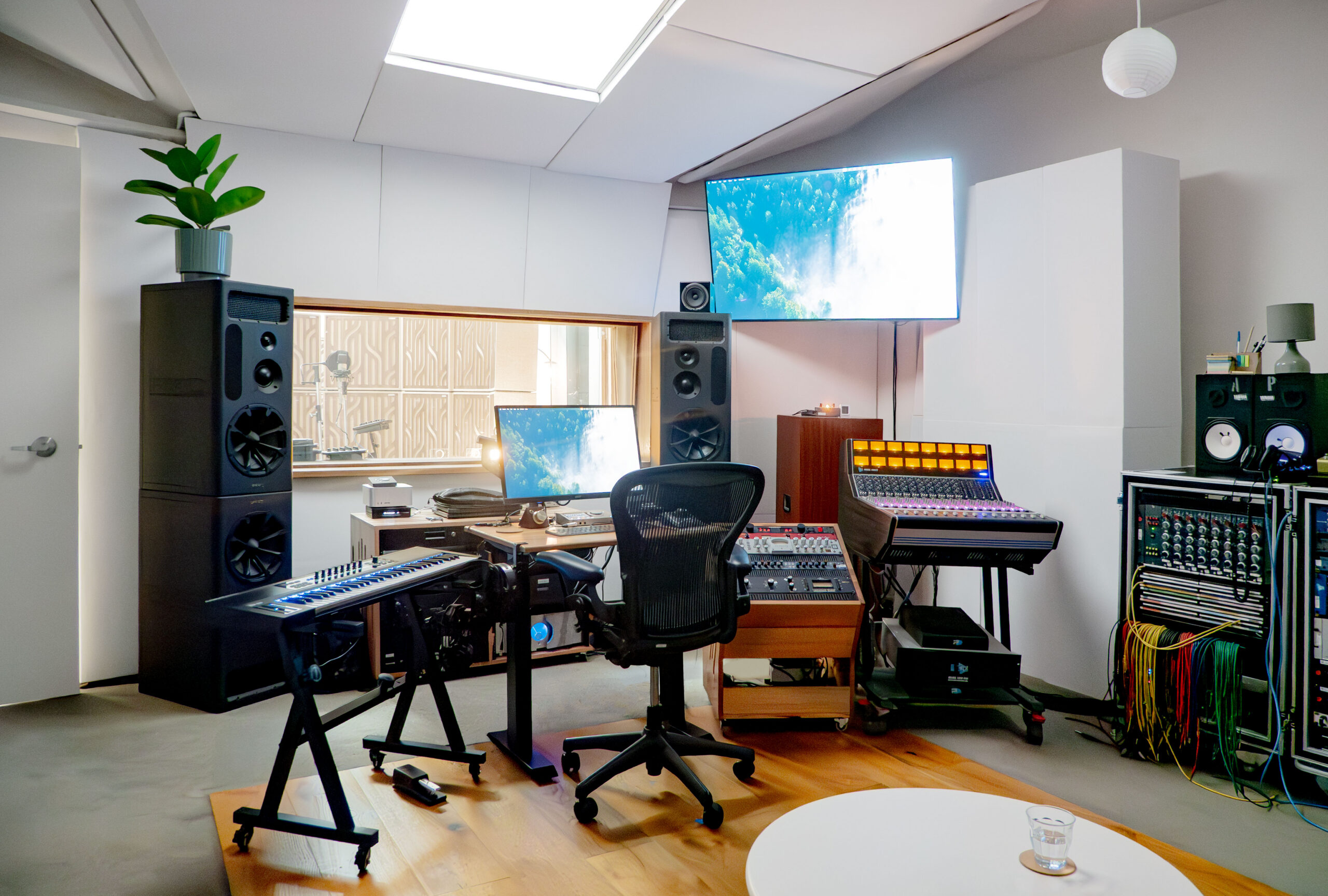
It’s a right-sized, purpose-built studio. We did it in collaboration with SDP LA, who are the team behind acoustic design for Trent Reznor, Billie Eilish and Finneas, and Zedd. So while the footprint is smaller and more intimate than where we were before, the room itself is doing the same job as some of the best private studios in the world.
Surry Hills puts us right in the middle of Sydney’s creative corridor. Artists can walk in from a writing session, track something, grab dinner around the corner and be home an hour later. That kind of proximity matters more than people realise. The best sessions happen when there’s no friction in the way.
The space is built around speed, vibe and results. That’s the actual brief we gave ourselves. We kept the things that make 301 301, the mic cabinet, the signal chains, the engineering standard, and stripped back everything that was getting in the way of the music. It’s lean in the right ways and world-class in the ones that count.
It was also designed specifically around the engineers working in it day to day. Simon Cohen, whose vocal production credits include Justin Bieber’s “Love Yourself,” Masked Wolf’s billion-stream “Astronaut in the Ocean,” Genesis Owusu’s four-time ARIA-winning Smiling with No Teeth, Thelma Plum’s Better in Blak and records for Jessica Mauboy, Illy and many more, worked closely on the vocal and production spaces so they’d support the way he actually tracks artists. Stefan Du Randt, recording and mixing engineer whose credits include Mac Miller’s Circles, Kimbra’s A Reckoning, Budjerah’s ARIA-nominated “Therapy,” Balu Brigada, Brad Cox and over 150 Atmos mixes, shaped the mixing side and the live room, with input from other engineers on 301’s roster. Because records like Circles were tracked with a full band in the room, the live space was configured for ensemble tracking properly, not just treated as a vocal booth. Building the room around the people who use it is the whole point.
The reality is that the way records get made has changed a lot in the last few years, and the room you need to make them in has changed with it. Surry Hills is our response to that. It’s a studio built for how artists actually work now, not how they worked ten years ago.
View this post on Instagram
Can you walk us through the studio’s setup and the key gear you’re working with right now?
The Surry Hills space is our creative hub for writing, vocal production, recording and mixing. We’ve kept that room focused on what it does best. The more specialised services (Atmos, mastering, digitisation and maintenance) run out of purpose-fit environments across the network.
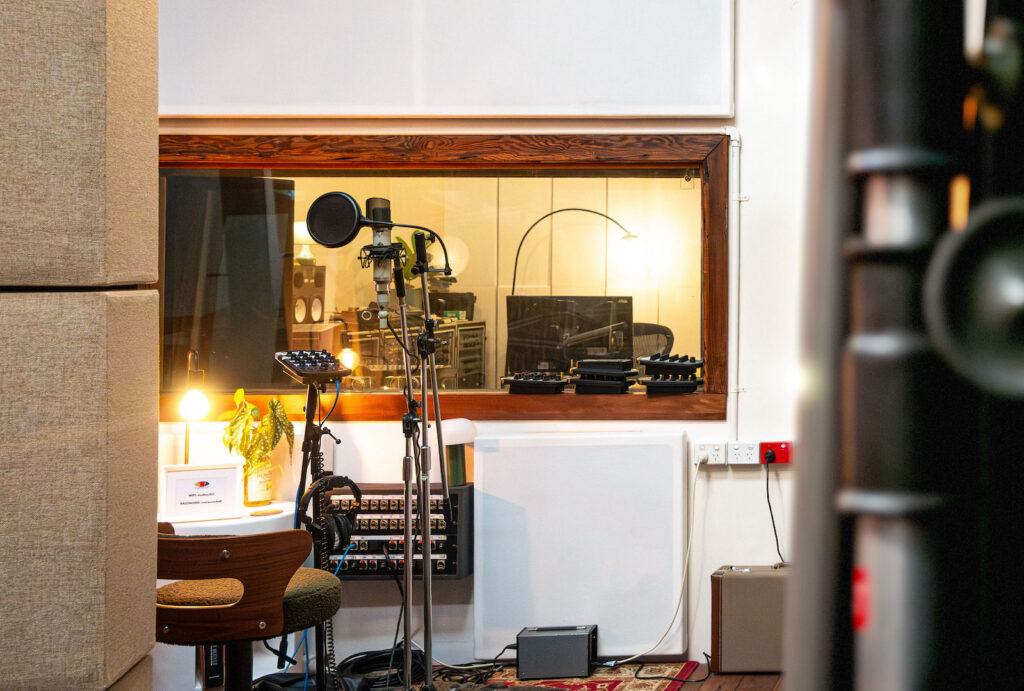
In the control room, we run an API 1608 sidecar with curated outboard chains. Simon Cohen’s signature vocal chain lives in the rack at his right hand, ready to go the moment an artist steps up to the mic. Monitoring is on PMC MB3 XBDs. They’re a no-compromise reference system and genuinely one of the best-sounding monitors on the market, with the kind of low-end resolution and midrange honesty you need to make decisions that translate everywhere. The room is calibrated for critical work but comfortable enough to live in for days at a time. The live room is treated for vocal and ensemble tracking, with an upright piano and a flexible setup that handles everything from solo vocal sessions to small bands. Drums sound incredible in there, and that’s not an accident. That’s the Big Jesus Burger heritage talking. We didn’t just inherit a building, we inherited a room with a sound.
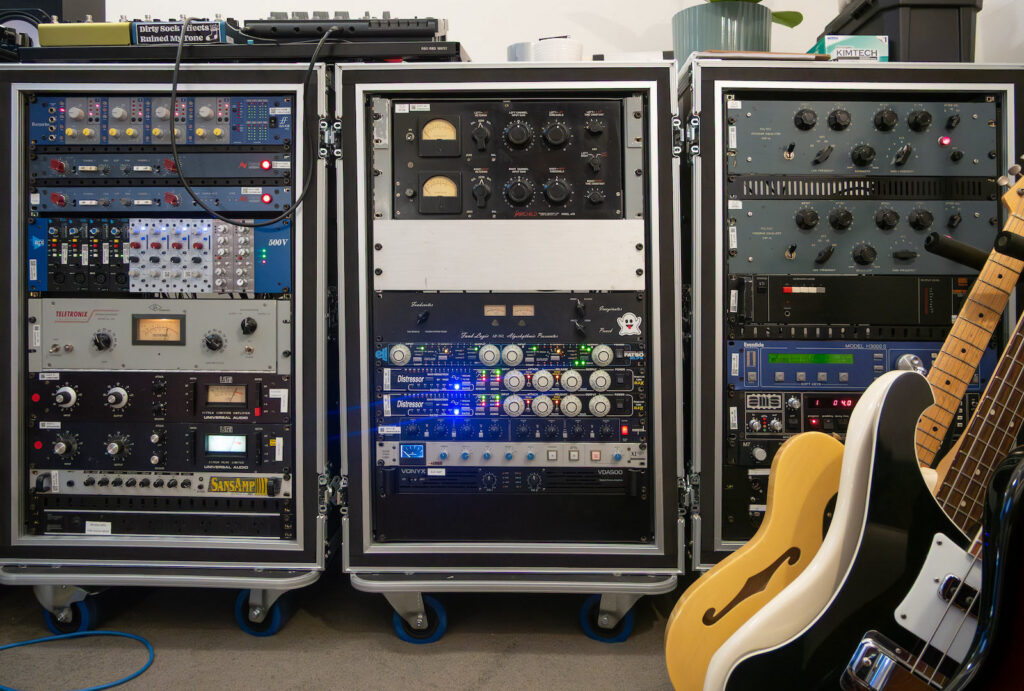
The mic cabinet and outboard rack is where our heritage really shows up. On the mic side we’ve got vintage Neumanns, RCAs and a Telefunken 251. On the outboard, there’s a Fairchild 670, Pultec EQP1As, an AKG BX20 spring reverb, a working AMS RMX16 (that one’s a rarity), eight vintage Neve 1084s that sound unreal on drums, and a whole lot more. All of it has been on countless Australian and international records, alongside the modern workhorses. Every piece has been chosen because an engineer actually reaches for it during real sessions.
Studios 301 has hosted everyone from David Bowie and U2 to Flume and Charli XCX. What’s a moment or session from the studio’s history that stands out?
There are so many moments it’s hard to pick just one. But the Coldplay residency in December 2016 is up there. The band took over Studio 1 for a week during their Australian tour, working with their long-time producer Rik Simpson. The room had a 72-channel Neve 88R at the time, and they used every input and output of it. “Something Just Like This,” their collaboration with The Chainsmokers, got its finishing touches in the room and went on to spend months in the global top ten. 301’s Owen Butcher was on the session and recalls how generous the band were throughout. At one point, Chris Martin handed seventy-five free concert tickets to a writing camp that was using the studio’s other rooms at the same time.
The wider history runs deep. Bowie, Prince and Elton John in the older eras. Cold Chisel and Daniel Johns on the Australian side. More recently Lizzo, Katy Perry and Lana Del Rey. Leon Zervos and Steve Smart have been mastering records that shape what Australian music sounds like for decades.
What runs through all of it isn’t really the building. It’s the engineering standard and the people who carry it. Every artist who comes through 301 is adding their record to a hundred years of that.
Stefan Du Randt has been leading the Dolby Atmos work at Studios 301, including designing the studio’s first custom spatial audio mixing suite. What does that process look like for an artist coming in for an Atmos mix?
Atmos has become a streaming-platform standard in just a few years, and a standard deliverable for major label releases alongside the stereo master. It’s also one of the most misunderstood formats in music right now. A lot of “Atmos mixes” out there are basically stereo mixes with reverb pushed up into the height channels. That’s not what we do. We treat Atmos as its own format and rebuild the mix spatially from the stems, rather than just bouncing the stereo version into a surround renderer.
Most of the Atmos work 301 does is for major labels. They send through the stereo master and the mix stems, and they expect the Atmos version back mixed well and delivered fast. That’s the reality of the format in 2026. The volume is real, and being good at it means being efficient without cutting corners.
The mix is built spatially in the custom Atmos suite Stefan co-designed and shares with Bob Scott, an ARIA-winning engineer who specialises in immersive formats and has produced with the Australian Chamber Orchestra and Richard Tognetti. The room is calibrated, so the mix translates to what a listener will hear at home, in a car, or on headphones with spatial enabled.
Stefan has now delivered over 150 Atmos mixes across pop, electronic, hip-hop, classical and film, and the process is tuned for that kind of throughput. When an artist or producer wants to be in the room for the mix, that option’s open, and it’s where the more creative conversations happen. Where do you want the listener to be? Inside the band, watching from the stage at a massive festival, in their own head? But for the bulk of the work, the stems arrive, the mix goes out, and the turnaround is the point.
For artists with a back catalogue, 301 also delivers Atmos remixes of previously released tracks. Kimbra’s A Reckoning and Jet’s “Hurry Hurry” are a couple of recent Atmos projects from the 301 roster.
What does a typical session at Studios 301 look like and what can artists expect when they come through?
The honest answer is there’s no typical session, and that’s kind of the point. A day might start with a pop vocal tracking session, move into an Atmos remix at lunchtime, and finish with a small ensemble in the live room. What stays constant is the standard.
When you walk in, the engineer has read your brief before you arrive. For vocal sessions, the signal chain is patched and ready to go the moment you step up to the mic. Band and ensemble setups take longer, but you’re working with engineers who know every corner of the rooms and don’t waste time getting things right. The workflow is designed so that the technical side disappears as much as possible and you can focus on the performance.
Beyond the session itself, you’re working with engineers who’ve made records that have charted globally, won ARIAs and been Grammy-nominated. Across the whole 301 team, you’ll find four MPEG awards in the last three years alone. Leon Zervos took Mastering Engineer of the Year in 2024, Stefan Du Randt took Mixing Engineer of the Year in 2024 and 2025, and Simon Cohen took Engineer of the Year in 2026. That kind of credit depth on one roster is rare in Australia, and that experience shows up in small ways. The mic choice you didn’t think of. The arrangement note that unlocks the bridge. The vocal comp that suddenly makes the chorus land.
And because we cover everything from first take to mastered Atmos delivery, you can stay inside one creative ecosystem for the whole project instead of handing your record between four different studios.
Studios 301 has expanded beyond Sydney in recent years. What’s driving that, and how do you think about consistency across a network?
The expansion thinking is artist-driven. The conversations we keep having with European clients, and with Australian artists who spend half the year writing in different parts of the country, both point to the same way. Music-making isn’t tied to one address anymore, and the studios that serve artists best are the ones that show up where the music is happening.
The way 301 approaches that is less like a franchise and more like a creative family. Any room that carries the 301 name has to meet the same standard. Engineer-led, purposeful, no compromises on the craft. The gear might vary from room to room, but the result, the 301 sonic signature, stays consistent because the people making the records do.
Online mixing and mastering has also changed the geography question entirely. An artist in Berlin or LA can work with a 301 engineer from anywhere in the world and get the same result as if they were standing in the room. That’s quietly been one of the biggest shifts in how a modern studio operates, and 301’s online platform has been a major part of the last few years.
The music industry has changed enormously over the past decade. How has Studios 301 adapted, and what does a world-class studio need to offer in 2026 that it didn’t ten years ago?
Ten years ago, a world-class studio needed a great live room, great mics, and great engineers. That’s still true. But it’s now the price of entry, not the differentiator.
What a world-class studio needs now is flexibility, spatial audio capability, and a genuinely global reach. Artists don’t live where the studio lives anymore. They write on a laptop in Berlin, track vocals in LA, mix in Sydney. Our online mixing and mastering platform means you can work with a 301 engineer from anywhere in the world and get the same result you’d get standing in the room. That wasn’t really viable a decade ago.
Second, Atmos. Spatial audio has gone from a curiosity to a streaming-platform standard in under three years. If a studio can’t deliver Atmos properly, it can’t deliver the full value of a release.
Third, and this is the unglamorous one, a world-class studio in 2026 has to be operationally tight. The industry doesn’t tolerate bloat anymore. Artists want speed, clarity and results. We’ve spent the last couple of years focusing 301 around exactly that. A leaner operation with the budget pointed at the rooms, the gear and the engineers, instead of at overhead. That focus is why we’ve been able to invest in the new Surry Hills space and the craft side of the business at the same time as planning what comes next.
The studios that survived this last decade are the ones that stopped behaving like real estate companies and started behaving like creative partners to artists. That’s the shift we’ve made, and it’s working.
What’s your vision for the studio over the next few years, especially with the 100-year anniversary on the horizon?
Simple to say, hard to do: make 301’s second century as influential as its first.
Concretely, that’s three things. One, being the home for real, human-made music in an AI era. The tools are changing fast, and a lot of what gets called “music” in 2026 is being generated rather than performed. 301 is doubling down on the opposite of that. The room where a singer actually sings, a drummer actually plays, and an engineer who’s spent twenty years learning the craft actually captures it. That’s not a nostalgic position, it’s a commercial one. Real performances are becoming a point of difference. Two, continuing to meet artists where they are, whether that’s in Sydney, online from anywhere in the world, or through the network as it grows. Three, deepening the engineering roster and bringing through the next generation. The studio is only as good as the people in the rooms, and we’re committed to giving emerging Australian engineers the training and the gear to make world-class records.
The 100-year milestone is a checkpoint, not the destination. What we want people to say when we hit it is, “Of course they made it to a hundred. Look at what they’re doing now.”
Is there anything exciting coming up for Studios 301 that you can share?
A few things we can hint at:
- The centenary in 2026 will include some special projects involving alumni artists and engineers. More on that soon.
- New upcoming collaborations with engineers, industry brands and industry titans, rolling through the Surry Hills rooms in the year ahead.
- Rebuilding the community around the studio. 301 has been at the centre of Sydney’s music scene for a hundred years, and a big focus for us is making the rooms a gathering place for artists, producers and engineers again. Slowly but surely.
Honestly though, the most exciting thing is the everyday stuff. We’re a hundred-year-old studio that feels like a brand-new one right now. The energy in the building is the best it’s been in years, artists are booking in saying the new space is exactly what Sydney needed, and we’re making records we’re genuinely proud of. That’s the real headline.
Visit Studios 301 here.