Mixdown travelled to Vienna as guests of Sennheiser to witness the largest ever deployment of Spectera at Eurovision 2026 – the first time the technology has been used at the world's biggest live music broadcast.
Vienna welcomed me with warm and sunny weather. Warmer than my phone, knower of all things, had predicted, and considerably warmer than the chilly London morning I’d left behind. I’d swung through to play a couple of gigs with an old band mate, Andrew, but that’s a story for another time – as Robert Plant once said, one can always “ramble on”.
Getting to the hotel, a cool arty spot in the Museum District, was easy enough, but while searching for lunch, the weather turned, and it poured with rain. Four seasons in one day, just as the Finn brothers say – turns out Vienna and Melbourne have something in common.
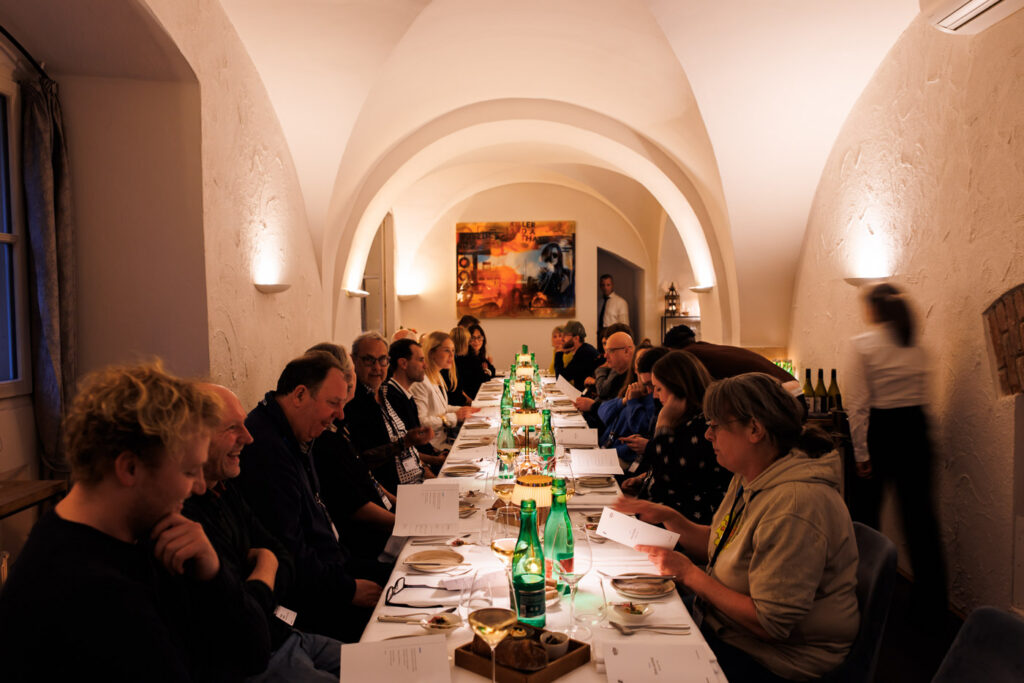
Day became night, and it was still light. I headed up to the hotel’s eighth floor bar – open until 3am most nights – and I was greeted by kindred spirits, in that we work in and within the threads of music and arts. We went out to dinner, the conversation flowed, and new friendships were well underway.
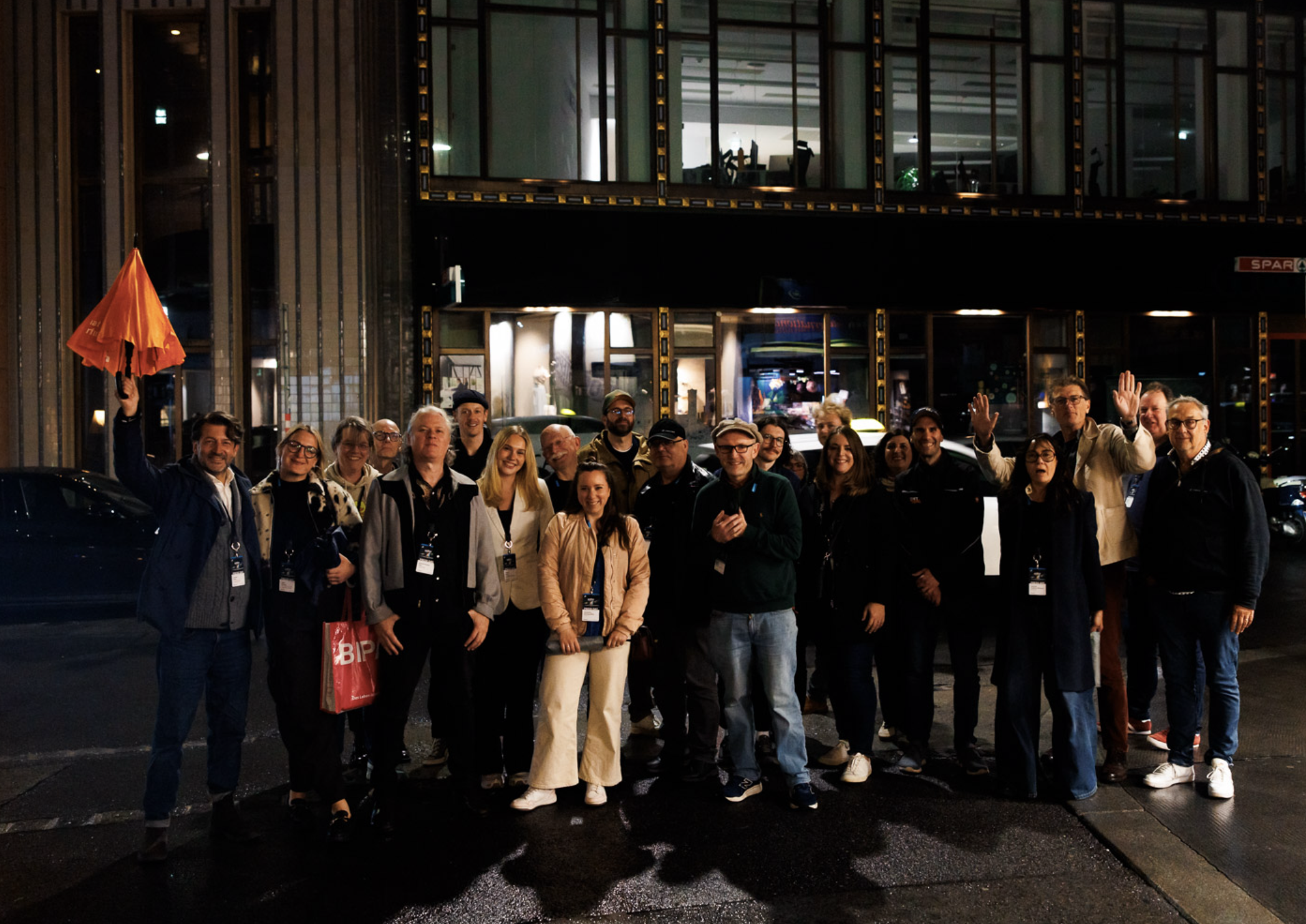
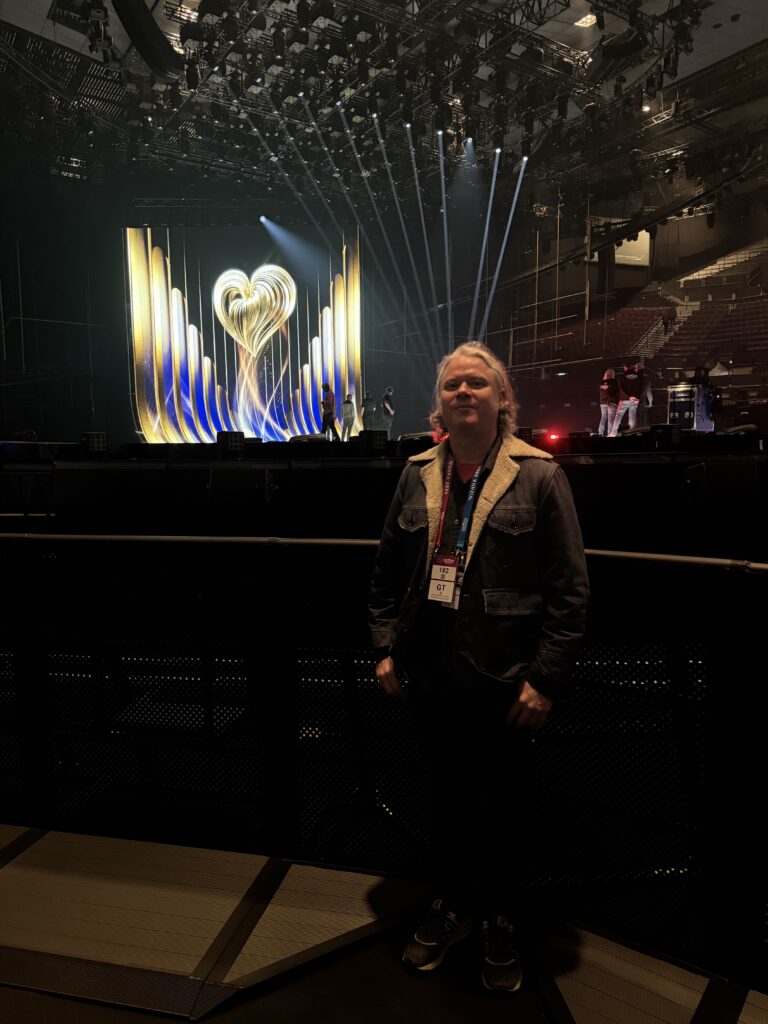
The next day was the big one, a full schedule from 8am. I took it easy the night before and skipped the eighth floor. Gotta get a good sleep when you’re on the road. That morning, around ten or so journalists from across Europe gathered with the Sennheiser team and we headed to the Wiener Stadthalle for a backstage tour of the Eurovision Song Contest 2026 production.
Afterwards, the group piled into a convoy of electric cars that looked like small Rolls-Royces for a tour of the city. Our guide mentioned that Beethoven lived in an impressive number of Vienna homes over his lifetime, mainly because he kept dodging the rent. Mozart, it turns out, lived in at least one of the same spots. Ah, the life of a musician. Has much changed? We stopped for a walk and a coffee at the Mozart Café before heading back to the hotel to get changed for ESC hospitality and the Eurovision first semi-final.
Photo by Adrian Almasan
Catch up on all the latest features and interviews here.
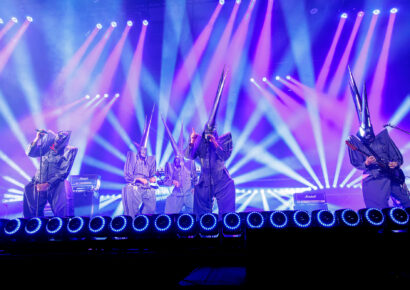
The comparison that comes to mind for a Eurovision semi-final is the Grand Prix. The show’s production was next level – world class and precise in every sense, and a vivid reminder of what music can do when it brings people together. Getting to see Sennheiser’s team in action behind all of it made the whole trip.
With fifteen countries, one stage, and a production crew with just 45 seconds to reset everything between performances before the next act goes live to millions of viewers around the world, the whole experience is fast, efficient and overwhelmingly impressive. There’s no margin for error and no second takes.
A production of this scale demands technology that can keep up with its enormity – microphones, speakers, lights, pyrotechnics, smoke, wind machines, props and a camera crew all operating simultaneously in one of the most RF-hostile environments imaginable.
Sennheiser’s Spectera is the world’s first wideband, bidirectional digital wireless ecosystem – a single system that handles microphone signals, in-ear monitors and control data across one RF carrier. Where most wireless setups require a performer to wear two separate devices – one to transmit their microphone signal to the desk, and another to receive their in-ear monitor mix back – Spectera collapses that into a single bodypack that does both, running everything through one RF channel. The central hub takes up just one unit of rack space but handles up to 64 channels simultaneously. Because the system broadcasts across a wide slice of the radio spectrum rather than a narrow one, it has built-in insurance against dropouts. If interference hits one part of the band, the rest of the signal carries it through. In an environment like Eurovision, where there is no fallback and no second take, that kind of resilience isn’t a luxury – it’s utterly essential.
For this deployment, their largest to date, Sennheiser also brought a pre-release version of their upcoming SKM handheld microphone to the event, fitted with Neumann KK105 capsule heads. The KK105 is a large diaphragm condenser microphone, the kind typically associated with studio recording rather than loud live environments, so it understandably turned a few heads when it was proposed for a venue this size.
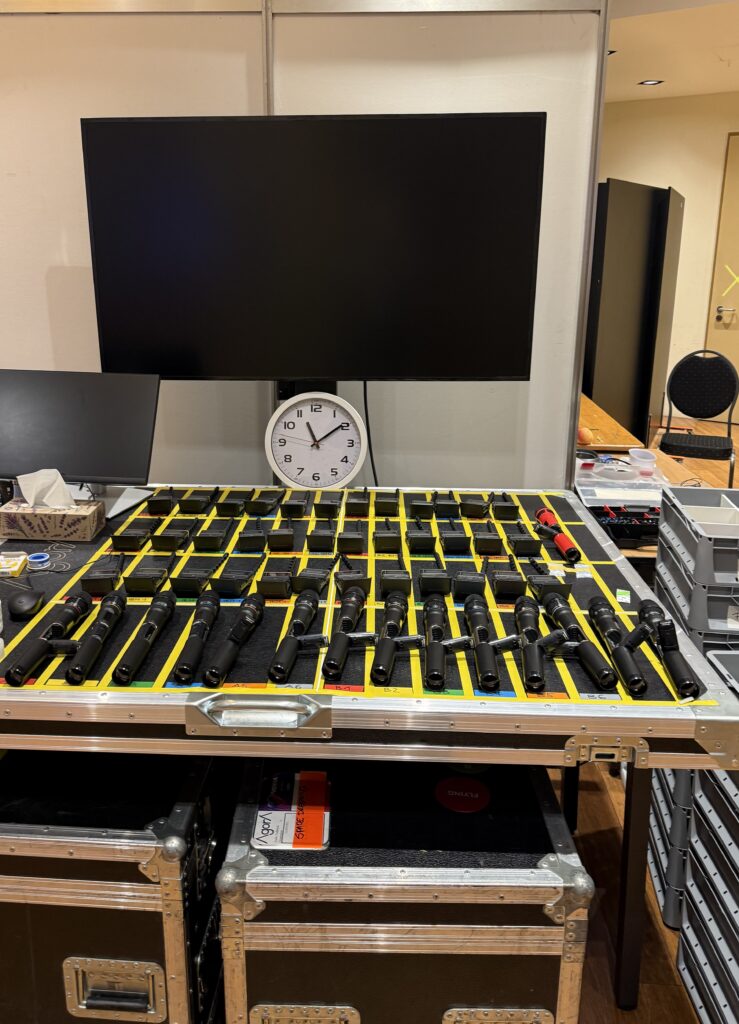
Eurovision presents a set of RF challenges that would stress-test any wireless system. With up to six performers on stage at any one time, and 15 countries cycling through in quick succession, the team was constantly rotating two full sets of six handhelds, six in-ear monitor packs and six bodypack setups – all of which needed to be ready, checked and handed off in under a minute between acts.
The antenna setup was built with the same safety-first thinking. The team started with two antennas – one on stage right, one by the green room on the left – and it worked perfectly across the whole arena. But working perfectly isn’t enough for Eurovision. They added two more antennas per base station, ending up with four active base stations spread across four TV channels. Beyond that, a separate dedicated device runs a non-stop scan of the RF environment around the clock, watching for interference. Then there’s a base station on standby as a first spare. And beyond that, a spare of the spare. Every possible failure point has a backup behind it.
As Volker Schmitt, Sennheiser’s Manager of Technical Application Engineering, said: “Why are we doing this? Because we can.”
Eurovision is known for its larger-than-life performances – including its costuming. Transmitter placement on an artist’s body depends entirely on what they’re wearing, and the costumes don’t tend to prioritise practicality. One advantage Spectera brings here is a 50% reduction in the number of devices required. Each bidirectional bodypack handles both the microphone signal and the in-ear monitor in a single unit, making the dressing and undressing process considerably simpler. When it comes to elaborate stage costumes, that’s not a minor detail.
Schmitt explains how, recently, a performer reported they couldn’t hear themselves on stage. On a conventional wireless system, that would mean someone running on stage to investigate blind. With Spectera, the engineers could see the issue immediately on their monitoring screens – a headphone cable had simply come unplugged from the IEM socket. A calm message to the liaison manager, a quick fix, and the situation was resolved before it became a problem.
“Nobody is in panic mode,” Schmitt noted. “Everything is calm.”
That shift from reactive to proactive is significant in any live environment, and especially on a Eurovision scale.
“Historically, we could only adjust something when the talent on stage is telling us, ‘hey, it’s bad,'” Schmitt explained. “Now we see that the data is getting worse, and we understand – hold on, we can improve this. It’s not critical, obviously, because the talent didn’t say anything, but we see on the data that we’re heading in a direction that is not good for us.”
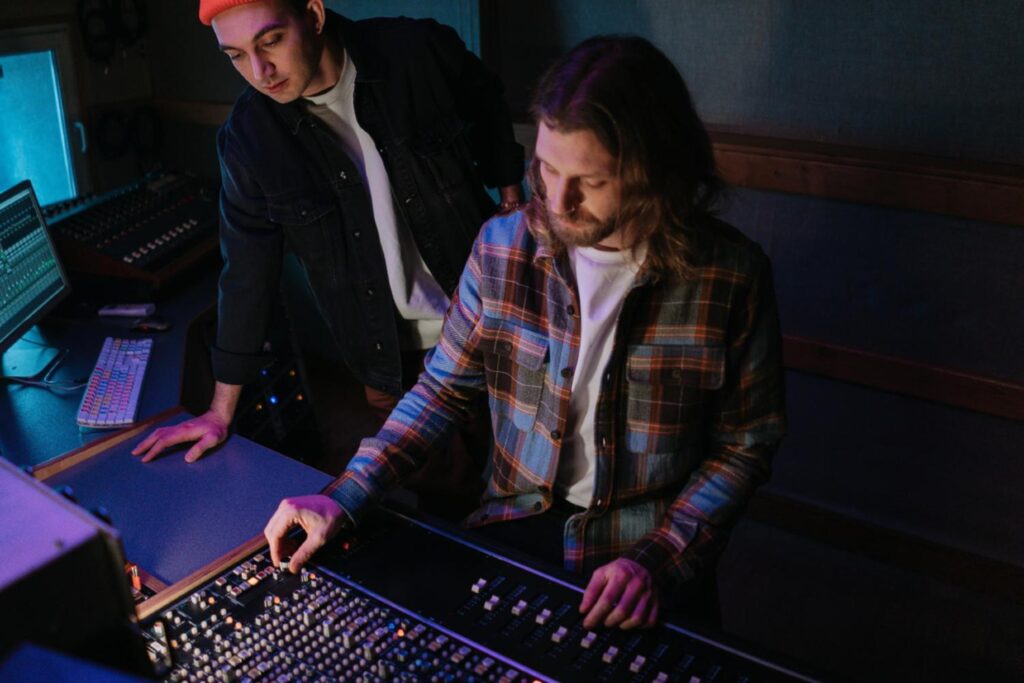
The monitoring side of the show runs on two completely separate mixing desks, with a dedicated engineer on each. They’re not there as backups for one another – they’re two independent operations running side by side.
As for the microphone choice, the KK105 condenser heads drew some scepticism. Condenser microphones are generally considered better suited to quieter, controlled environments than a large, loud arena. But any doubts were put to rest on the night.
As Schmitt said: “Obviously, we were all somewhat sceptical – in a big venue, with a loud PA and a large condenser microphone – but it’s brilliant. People are saying it’s a really good-sounding setup.” Alongside the KK105 handhelds, Sennheiser’s HD 4 cardioid was used as a headset microphone for performers wearing bodypacks – and that combination held up without issue across the entire semi-final.
Sennheiser served as an official audio supplier to Eurovision alongside rental company Agorà, and the decision to deploy Spectera at this scale – including pre-release hardware – reflects a total confidence in the technology.
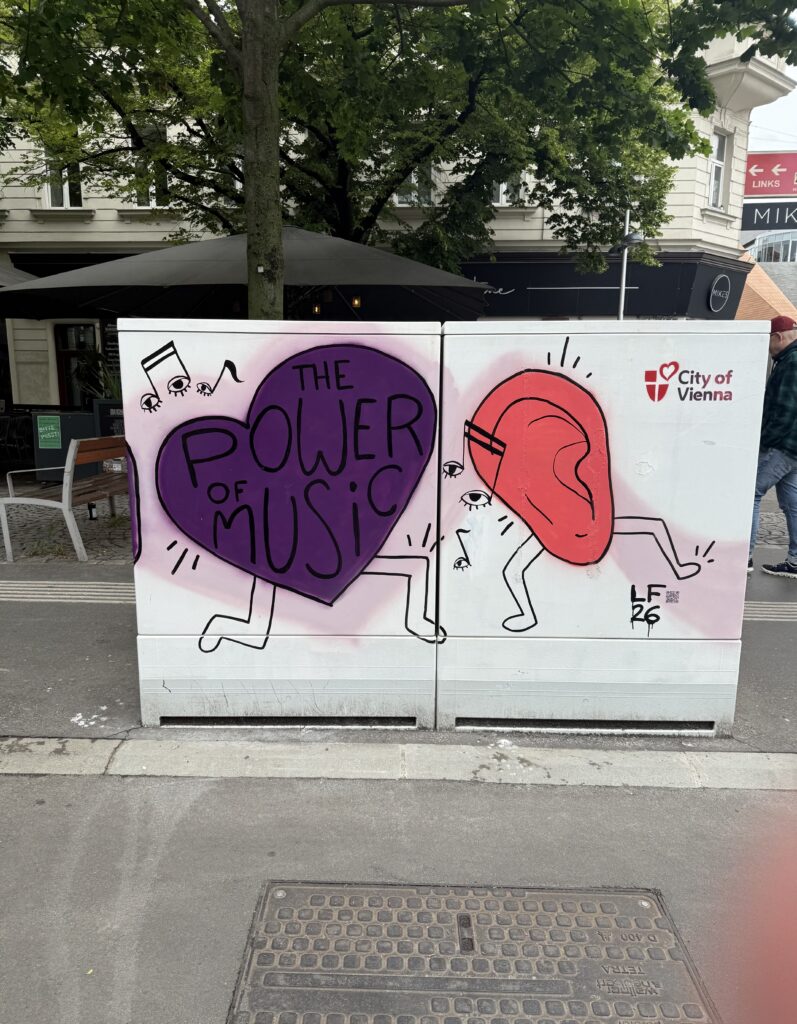
Music, we know, has the ultimate power to connect. Eurovision’s tagline is “United by Music”, and Sennheiser’s part in that isn’t incidental. The system is what physically connects the performer’s voice to the people in the arena, not to mention the millions watching at home. The importance of music from around the globe reaching the screens of those from every corner – seamlessly and completely uninteruppted – can’t be understated.
Eurovision 2026 represents a landmark deployment for Spectera – the largest to date, in the most demanding broadcast environment in live music. For production professionals watching where wireless technology is heading, this is a significant data point. Watching the future of wireless audio do its job, quietly, seamlessly and without fuss, at the world’s biggest live music broadcast was something to behold.
Find out more about Sennheiser Spectera here.