The Fender Bass VI has found its way into jazz, surf, rock, post-punk and alternative music since its 1961 debut – here are six players who used it to carve out their own unique style.
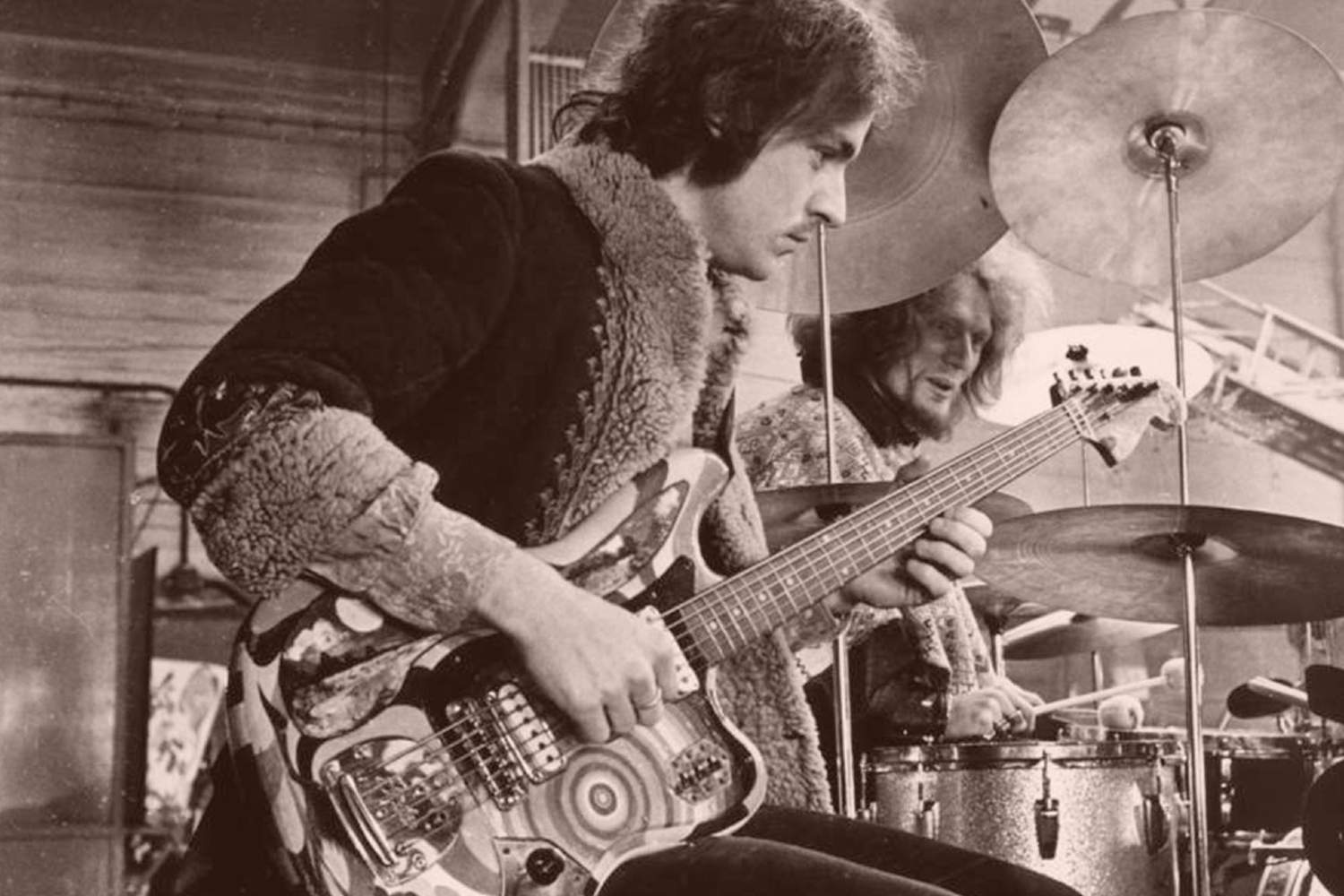
The Fender Bass VI occupies a space no other instrument quite does. Released in 1961, it borrows from across Fender’s range – an offset body, a 30″ scale length, six strings with conventional string spacing, tuned an octave below a standard guitar. Too low to be a guitar, not quite a bass, it sits in a register that gives players access to tones most instruments can’t touch without sounding muddy or thin.
That ambiguity is exactly why certain players have gravitated to it across every decade since.
Read all the latest features, columns and more here.
Jet Harris – The Shadows
Jet Harris was one of the coolest cats of the early 1960s. Working primarily with The Shadows before moving into solo work, Harris made great use of the Bass VI’s bottom-heavy tone – his cover of the “Main Title Theme” from the 1955 film The Man With the Golden Arm is a strong example of the instrument’s unique playability in full effect.
Wes Montgomery
Montgomery’s catalogue is a masterclass in jazz guitar phrasing. On his recording of “Body and Soul”, he brings the Bass VI into a dark, spacious arrangement that leaves room for the subtle brush work of his drummer – the Bass VI providing low-end weight while keeping the recording open and unhurried.
Joe Perry – Aerosmith
The Bass VI isn’t always about subtlety. Joe Perry used one to lay down the central riff of “Back in the Saddle”, where it adds a percussive, low-tuned attack that sits somewhere between a guitar riff and a bass line. Perry’s blues and funk instincts come through clearly, even without his usual Les Paul in hand.
Robert Smith – The Cure
Robert Smith has always chased unusual textures, and the Bass VI suited him well. Rather than using it for bass-register melodies, Smith strums slow, modulating chords on tracks like “Pictures of You” – the instrument sitting in a synth-like space between the bass guitar and the shimmering lead guitars, carving out its own lane in The Cure’s dense arrangements.
Steve Kilbey – The Church
The Church took a similar approach, with Steve Kilbey moving between single-note lines and loose chord strumming as songs build and swell. The Bass VI gave the band a way to shift textures mid-song without changing the fundamental lineup – a simple addition that expanded their sonic range considerably.
Brian Molko and Stefan Olsdal – Placebo
Placebo were one of the defining alternative acts of the late 90s and 2000s. On “Slave to the Wage”, Brian Molko runs a Bass VI through a fuzzy, distorted tone that fills the mids of the arrangement without competing with the bass guitar below it. The result lands somewhere between both instruments without sounding like either.
Honourable mention: Duane Eddy
Eddy deserves a mention, even though his instrument of choice was a six-string bass rather than a Fender Bass VI specifically. His Gretsch Duane Eddy G6120TB-DE, with its 30.3″ scale, filled a similar role – percussive, melodic and deeply rooted in his Western-influenced approach to country and rockabilly.
The Bass VI has never been a mainstream choice, but that’s part of what makes it compelling. Every player on this list used it to find a sound they couldn’t get anywhere else.
Keep reading about the history of the instrument here.