Pedal geeks Josh Scott and Daniel Danger were researching information for what became their book Made On Earth For Rising Stars: The Electro-Harmonix Story in 2021 when they stumbled upon an interesting discovery.
There in the workshop of Bob Myer was a loose sheet of paper with a hand-drawn schematic for an alternate take on that classic pedal’s circuit, reimagined with two Op-Amps, newer technology than the transistors used at the time. Scott brought the design to EHX, and the two collaborated on bringing it to life. The pedal was never actually built until Scott got to tinkering and immediately found that the design was unique compared to the later Op-Amp Big Muff released in the late 70s and designed by Michael Abrams. It had a different clipping arrangement, an extra gain stage and a few other elements that made it unique.
Catch up on all the latest features here.
The original Big Muff is known for its violin-like sustain, but the Myers Op-Amp circuit made for a more aggressive, biting, edgy tone, still recognisably ‘Big Muff’ but with sharper teeth and noticeably more lower midrange. EHX and Scott released their version of the Big Muff Pi 2 to much fanfare, but EHX is never a company to sit back and say ‘Well, we did that now’ and move on, and that brings us to this, the Big Muff Pi 2 with Tone Wicker, which takes the newly-celebrated fuzz design and turns it into something even more unique.
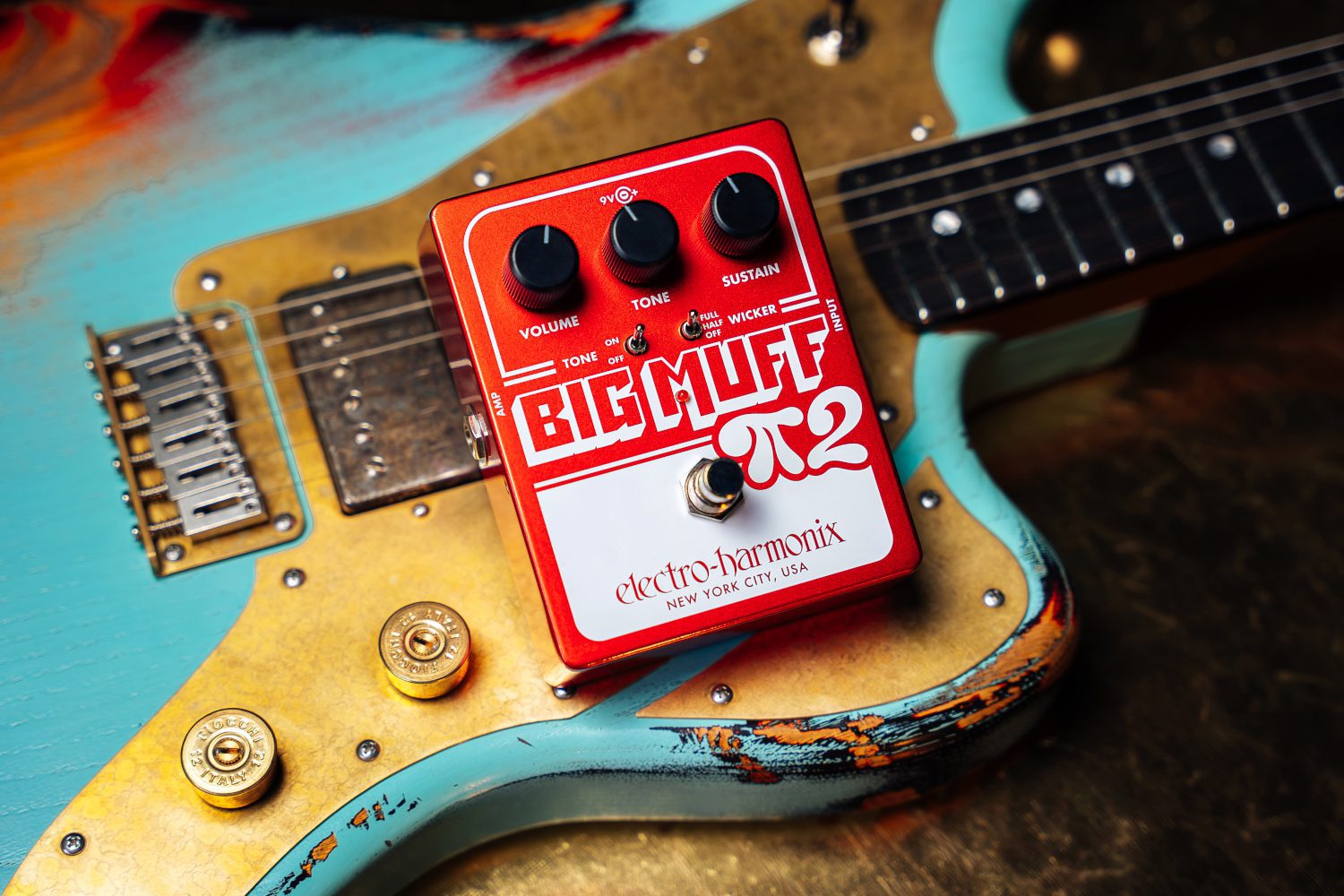
Let’s start with the familiar. This pedal has the Volume, Tone and Sustain knobs you would expect to find on a Big Muff pedal, and which were present and accounted for on the initial Big Muff Pi 2 release. The tones, finally freed after 50 years trapped in a notebook, are aggressive and angry and biting, and can be used for everything from a mean edge on a slightly dirty tone to an absolutely monstrous Doom Metal roar. But this version wants to give you more.
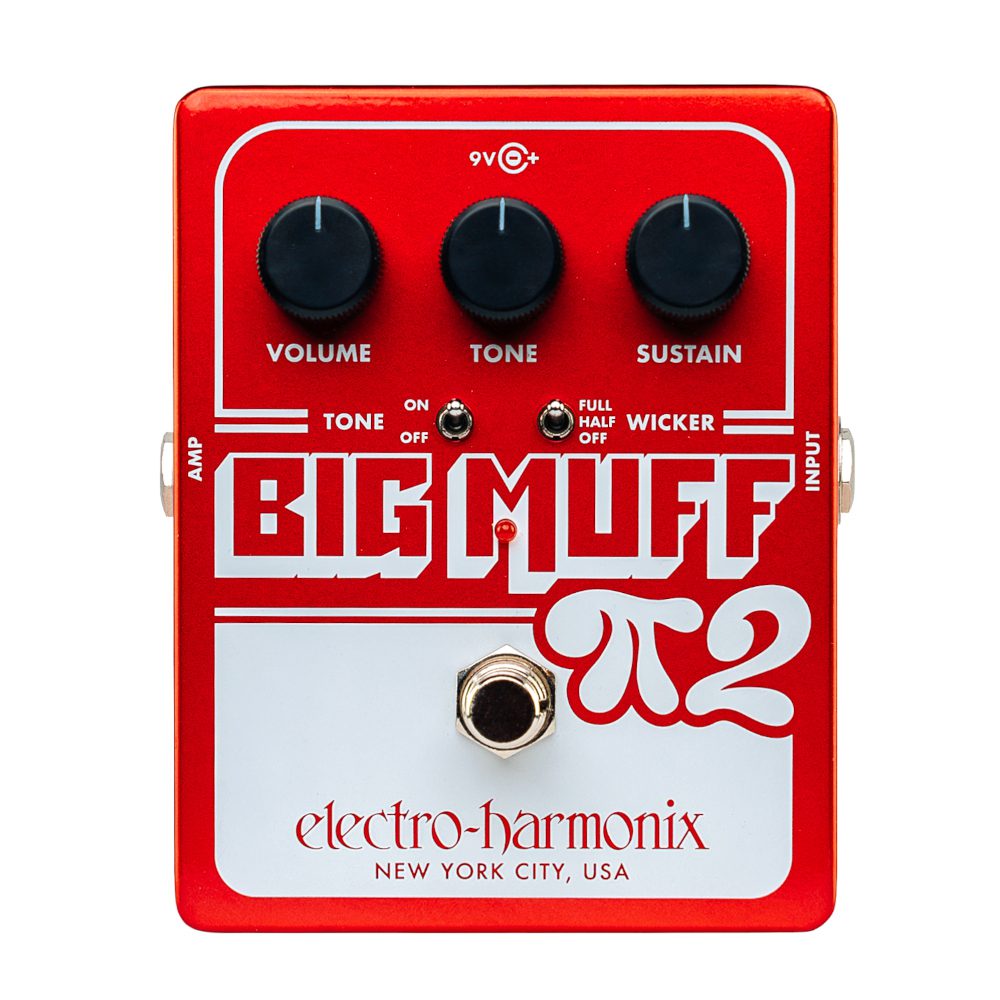
The first interesting little circuit hack found in the Tone Wicker pedal is the use of a Tone bypass switch. It removes the tone knob from the circuit completely to give you nothing but unfiltered, uncensored, full-powered FUZZ. This is akin to guitars with ‘blower’ switches that send the pickups directly to the output jack, giving you a more immediate, full-range, unrefined option for when you need it. It’s also handy for calibrating your ears when dialling in a tone, letting you toggle between EQ’d and non-EQ’d voicings much like turning a filter off when editing a photo.
But this is not the Big Muff Pi 2 With Tone Bypass, it’s the Big Muff Pi 2 With Tone Wicker. What’s a Tone Wicker, you ask? It’s a selection of high-frequency filters acting upon the circuit to give you two additional levels of high-end. I guess when Scott, Danger and EHX started exploring the increased brightness and clarity of the Op-Amp design they got inspired and wanted to see what else could be teased out of the circuit. The Tone Wicker is especially noticeable at lower Tone settings, where it lets you bring in other flavours of treble instead of cranking that Tone knob all the way up. It helps you bring more detail out of darker-sounding pickups or give more cut to a clean-ish tone that might otherwise get lost in a mix. The results can give you a dry, desert-rock kind of fuzz. If it were a flavour, it’d be salted caramel.
This pedal uses a soft-touch footswitch, which can operate in both latching and momentary modes: simply click it like you normally would for latching (one tap on, one tap off) mode, or press and hold the switch to engage the effect only when you’re pressing down. This is great for emphasising particular phrases, licks or riffs with an additional burst of fuzz, or for ‘previewing’ your big fuzzed-out guitar solo moment with a few well-placed phrases between lines during a verse.
Of course, one of the most fun things about using a fuzz design that hasn’t already been hammered into the ground with six decades of music history is that there’s no subconscious bias or expectation here. It’s a fresh flavour that doesn’t carry the weight of all the iconic recordings it’s been used on. You’re not going to have David Gilmour or Billy Corgan or Robert Fripp or J. Mascis in your head when you step on this one. You’re going to have you.
For local enquiries, head here.