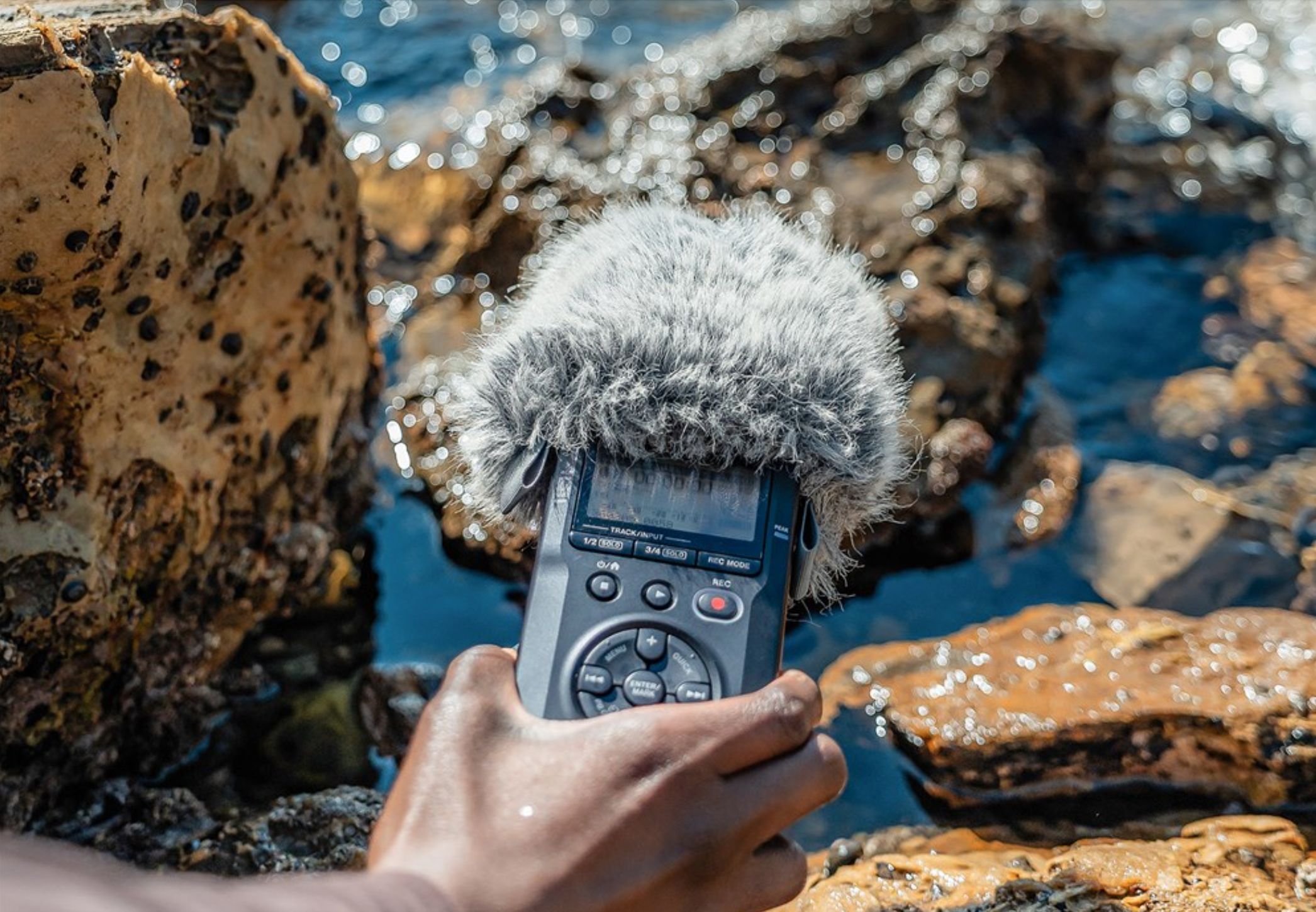
Built around 32-bit float recording and TASCAM's HDDA preamp design, the DR-40XP takes the guesswork out of gain staging in the field.
There is a singular, universal kind of frustration that haunts every musician, field recordist, or producer: the moment you play back what you were certain was a career-defining take, only to find it clipped, distorted, or buried in noise. You set the gain, you thought you nailed it, but the performance is punished for straying beyond your predefined Goldilocks zone of expression. Lucky for us, TASCAM’s DR-40XP is engineered to forgive where permission is often denied.
The DR-40XP is the successor to the well-regarded DR-40X, loaded with the antidote for gain staging headaches: 32-bit float recording. It’s not a buzzword, but maybe it should be. It’s such a fundamental solution to many of the issues shared by musicians, videographers and field recordists.
Catch up on all the latest features here.
32-bit float and why it matters
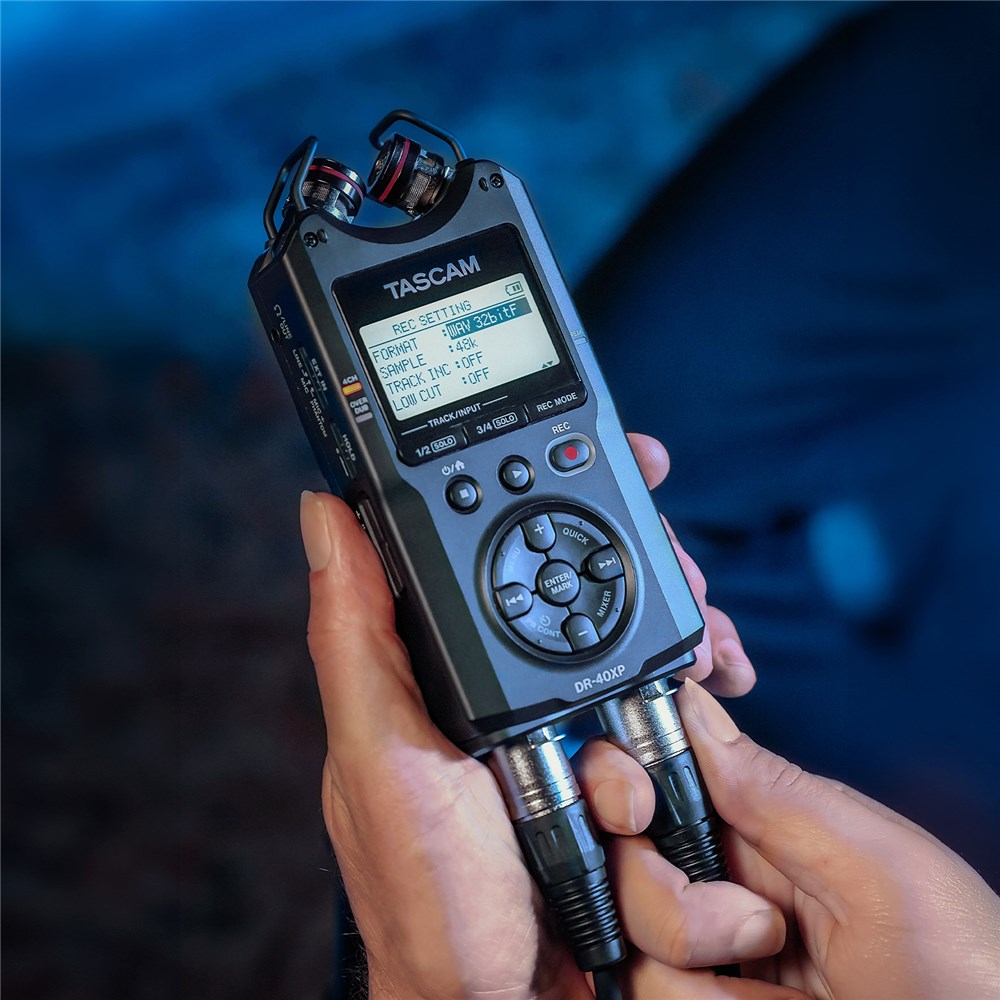
To understand what a 32-bit float actually delivers, you need to understand what it eliminates. In traditional recording, if your input level is set too low, you get noise; too high, and you get clipping. While some can tolerate, or even celebrate the presence of either, clipped audio is unsalvageable in most professional cases. Thus, every recording session involves a careful negotiation between headroom and noise floor. 32-bit float removes that negotiation altogether.
Just as an HDR camera captures the full dynamic range of a bright sky and deep shadow simultaneously without committing to an exposure, 32-bit float encodes audio so far above and below what any microphone or speaker can physically reproduce that clipping and noise floor cease to be practical concerns.
Just hit record. The DR-40XP’s built-in condenser capsules handle up to 125 dB SPL, meaning everything from the quietest pin drop to a jet engine passes through without distortion. The 32-bit float data holds enough information for post-production recovery, making it worry-free recording in the truest sense. There are a few portable competitors featuring this high-resolution capture, but TASCAM has thought considerably about what to build around it.
Format, features, microphones
The heart of the device is TASCAM’s proprietary HDDA (High Definition Discrete Architecture) microphone preamplifier, delivering an equivalent input noise (EIN) of –126 dBu. A preamp this clean and sensitive settles the difference between capturing sound and capturing nuance. Think overtones in an acoustic guitar’s body, the breath before a vocal phrase, or the subtle character of a rehearsal space.
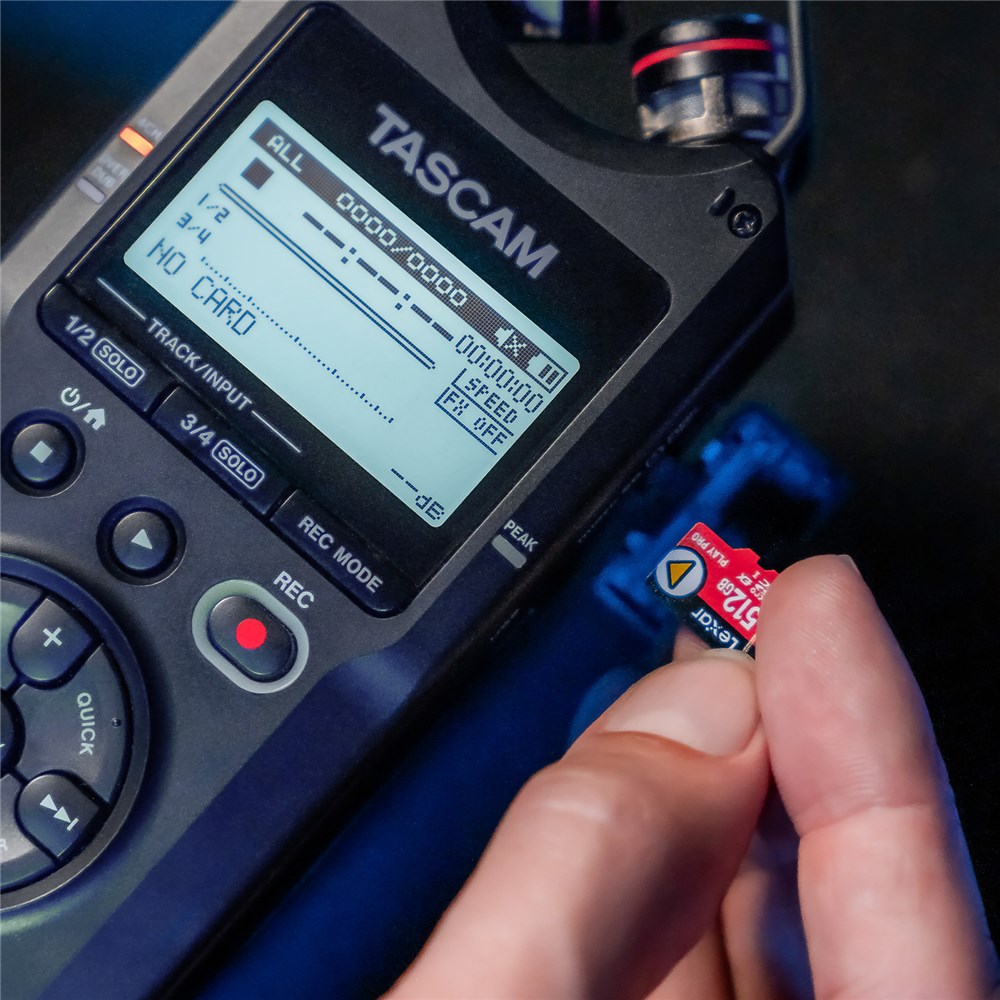
The format flexibility is equally broad. At 96kHz, every second of recorded audio contains a world of detail to embrace or remove, letting you identify, isolate and manipulate even the most short-lived sounds – essentially non-negotiable for foley and sound design work. Beyond 32-bit float, the DR-40XP records 24-bit and 16-bit WAV at up to 96kHz, as well as MP3 for extended sessions where storage matters. Media support extends to 512GB via microSDXC, and with battery life quoted at approximately 18 hours from three AA alkaline cells in two-channel mode, the DR-40XP is a capable workhorse for all-day documentary shoots, field research or festivals.
The built-in stereo condenser microphones are adjustable between X-Y and A-B configurations, letting you tighten or widen the stereo image depending on the application. Need a coherent picture of a single source like dialogue or an interview? Covered. Planning to record a live gig with binaural ambient crowd immersion? Also covered. The capsules are RF-resistant, a genuinely helpful upgrade from the DR-40X at a time when smartphones are present at virtually every recording session. MS microphone recording is also supported, giving field recordists additional flexibility in how they capture and manipulate the stereo image in post.
If you need more than a stereo image, the DR-40XP provides a pair of XLR/TRS combo inputs with +48V phantom power, supporting external condenser microphones up to a line-level input of +24 dBu. This gives the unit true four-channel recording capability, with the built-in pair and two external inputs running simultaneously, opening up possibilities for more complex documentary, broadcast or live music scenarios. Recording a band rehearsal with room mics and a direct feed from the desk, or tracking an interview with a dedicated shotgun mic alongside ambient room capture, becomes straightforward.
Handy functions
The DR-40XP functions as a 2-in/2-out USB-C audio interface, connecting directly to laptops and iPhones for composing directly into a DAW or importing audio live alongside video playback. The move from Micro-B to USB-C brings it in line with current connectivity standards.
Additional features round out a thoughtfully considered package: an auto tone for DSLR audio-video sync, four-stage low-cut filtering (40, 80, 120 and 220 Hz), a pre-record buffer, auto-record triggering, overdub functionality, a built-in reverb for tracking with feel, and a chromatic tuner. A built-in limiter and peak reduction give an additional layer of protection for unpredictable recording environments, while an input delay function of up to 150ms is useful for broadcast and video workflows requiring precise audio-video alignment. Variable speed playback, adjustable from 0.5x to 2.0x without pitch shift, also makes it a solid transcription tool.
Overall, the TASCAM DR-40XP is built to cover everything a working musician or creator needs in a portable recorder, organised around the single most compelling advance in portable audio technology of the past decade. You get 32-bit float recording, TASCAM’s exceptionally clean HDDA preamps, four-channel capability and generous battery life, all packed beneath a familiar interface and a proven, rugged design.
If you’ve ever lost a take to a clipping transient or a poorly judged gain setting, the DR-40XP is a reliable recorder built to make sure it doesn’t happen again.
For local enquiries, head here.