The choice between edge-terminated and centre-terminated capsules has shaped the sound of popular music for 75 years. AKG's Chris Hansen breaks down why it matters.
Recording engineers are creatures of habit, and as such, many of us find ourselves reaching for the same select mics, time and time again.
Their timbre, transient response and clarity bring their unique sonic signature to every source in every session. While manufacturers are often quick to boast frequency response graphs, max SPL specifications and more, what’s often overlooked (and what is quite possibly the single biggest determiner of a mic’s tonal character) is often hiding right there in plain sight (that is, if we remove the grille). It’s the foundational design of the mic and its capsule.
Catch up on all the latest features here.
What does edge-terminated actually mean?
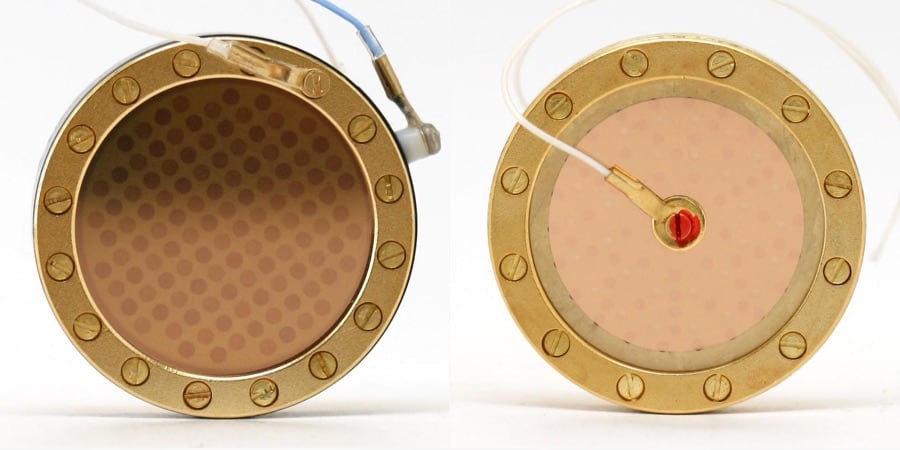
Condenser microphones remain steadfast in our mic lockers because of their clarity and natural sound, all the while managing to hype the source for best results. However, not all condensers are created equal. Most true condenser microphones are either centre-terminated or edge-terminated, the latter being well known for adding air, clarity, hype, sparkle and a slew of other audio buzz words. Centre or edge-terminated refer to where and how the microphone capsule itself transmits sound, and has a drastic effect on the result. Centre-terminated mics such as many Neumann condensers are often praised for their heft, weight and low-end richness, the electrical lead that carries the signal being connected to the centre of the capsule. Edge-terminated, as their name suggests, carry that signal from the edge of the capsule, the edge retaining more detail in the richness of a performance.
The AKG C12 and its CK-12 capsule
Without doubt, the most famous examples of edge-terminated mics carry the name AKG, their famous C12 used to record the likes of Frank Sinatra, Elvis Presley, Michael Jackson, The Beatles and Whitney Houston, the C12’s legendary CK-12 capsule being edge-terminated and perfect for capturing and reproducing these magical vocals. Even the purple one himself, Prince, is reported to have carted around a rare stereo AKG C24 condenser as his studio vocal mic of choice throughout his career, utilising one of the C24’s dual CK-12 capsules to impart some of that silky, top-end goodness onto his productions.
Suffice to say, the influence of the CK-12 capsule and its offspring is at the very core of what is often referred to by audio engineers as the AKG or ‘Austrian Sound’ – incredible detail and recoil properties, combined with a highly musical top end which (unlike so many ‘claustrophobic’ sounding capsule designs) seems to only become sweeter, with a bit of distance in the open air.
From the C12 VR to the C414 and C114
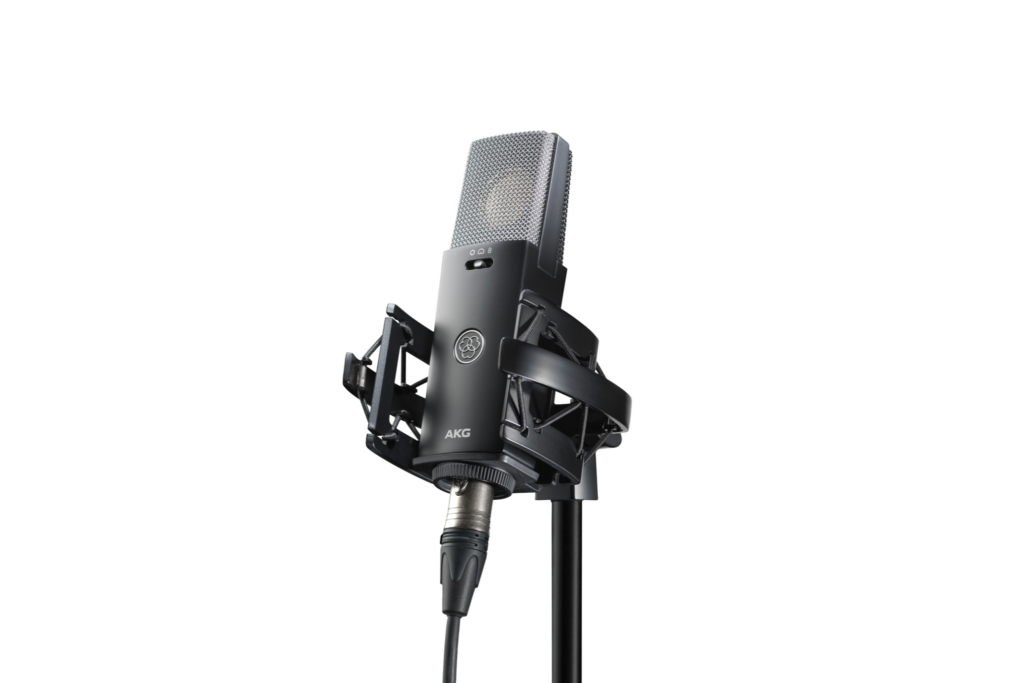
It’s this dedication to edge-terminated designs (and their sonic signature) that can be traced through AKG’s history – from the original C12 and its modern C12 VR variant, through to every permutation of the iconic C414 and even through to AKG’s recent (and highly touted) C114 condenser microphone.
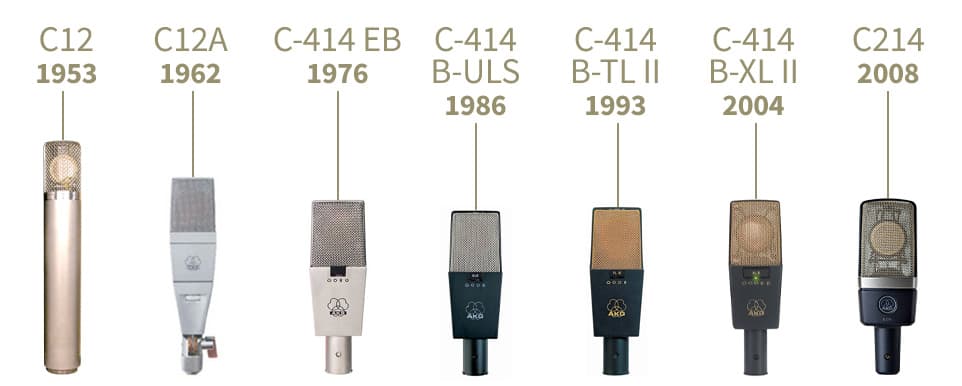
But how can something as seemingly innocuous as the simple placement of a wire on a mic capsule (itself only an inch or so in diameter) have such a major impact on the overall sonic character of a microphone, to the point where it has underpinned the two major evolutionary strands of microphone design (and in turn, the sound of popular music) for the past 75 years? What is it about edge-terminated designs that makes them such a vital point of difference in a tracking engineer’s arsenal – the yin to the full-bodied, Germanic yang of their centre-terminated counterparts?
Inside the capsule with AKG’s Chris Hansen
To dive in deeper, we spoke to Chris Hansen, Director of Product Development at AKG. Chris is proudly sitting in his own mixing and production room, surrounded by quadratic residue diffusers, recently having completed a fit-out for immersive audio. He’s beaming and very excited to talk tech.
“Edge-terminated, in terms of capsule design, is something AKG invented.” Chris begins with a smile. “Y’know, decades ago.”
“There’s an aspect of capsule termination that also influences the sound and the tone of a microphone, as well as the overall frequency response.”
Chris dives deeper, explaining that the decision is something that every microphone manufacturer needs to make when designing a microphone.
“This decision occurs when you’re looking at a medium to large diaphragm capsule, but the larger you get, it’s more common to have these two designs,” he explains, referring to edge-termination vs. centre-termination.
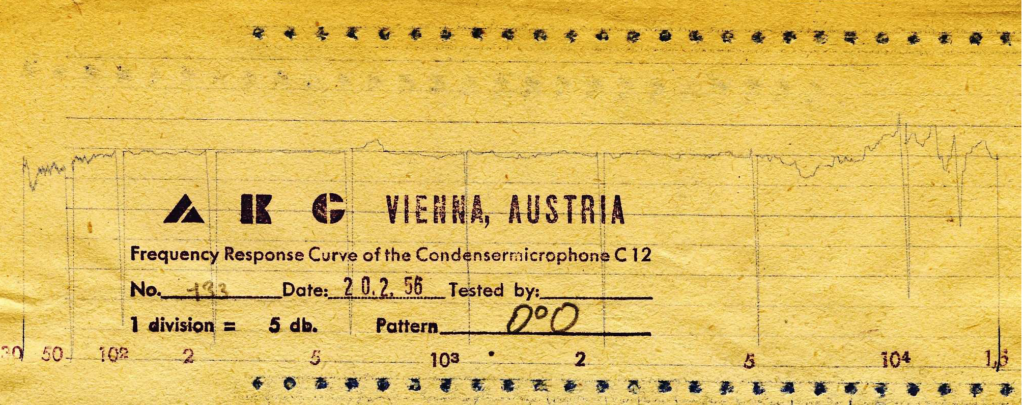
Chris goes on to say that it’s most common in large-diaphragm condensers because smaller capsules introduce constraints and limitations in the design. Returning to the point that AKG invented the edge-terminated design, Chris clarifies that it was popularised in the AKG C12, which has been produced in various forms since the ’50s.
“That was the first microphone in the portfolio where the edge-terminated capsule was a really significant part of the capsule design. The difference is how the electrical signal leaves the capsule and assembly, and carries on into the rest of the circuit.”
“Where you terminate, or where you tap that, is obviously the difference between these two designs.”
Speaking to the sonics, Chris explains that an edge-terminated capsule will have a ‘lighter, more airy sound’, a result of the minimal material that’s actually in contact with the diaphragm.
“By terminating the capsule around the edge, you’re leaving the diaphragm to vibrate more freely. A diaphragm is extremely thin, measured in microns, and leaving the front edge of the diaphragm to vibrate freely allows it to capture some of the higher frequencies.”
“Again, it’s not that one is better than the other; these are just two different designs,” says Chris. “And you live with the results of that choice.”
Chris goes on to explain that a centre-terminated capsule offers a more predictable frequency response, albeit rolling off some of the high end that an edge-terminated design would extend to.
“The challenge with [designing] an edge-terminated capsule is maintaining the quality standards of production. As you can imagine, with a very, very thin layer of Mylar and thin materials used in capsules, any variation in that material can make a huge difference. Frankly, they’re some of the things that the AKG team experienced decades ago when they were making the C12s.”
“You always hear these stories about different C12s having different sonic characteristics, and that’s why. There were very, very slight variances in the materials that were being used to assemble the capsules,” clarifies Chris.
The ‘sound’ of AKG is transparent and true-to-source, whether it be the famed C12, the workhorse C414 and the C114 that now follow it, the small-diaphragm C451 or otherwise. The entire range is robust, built for the gig and offers accurate sound above all else.
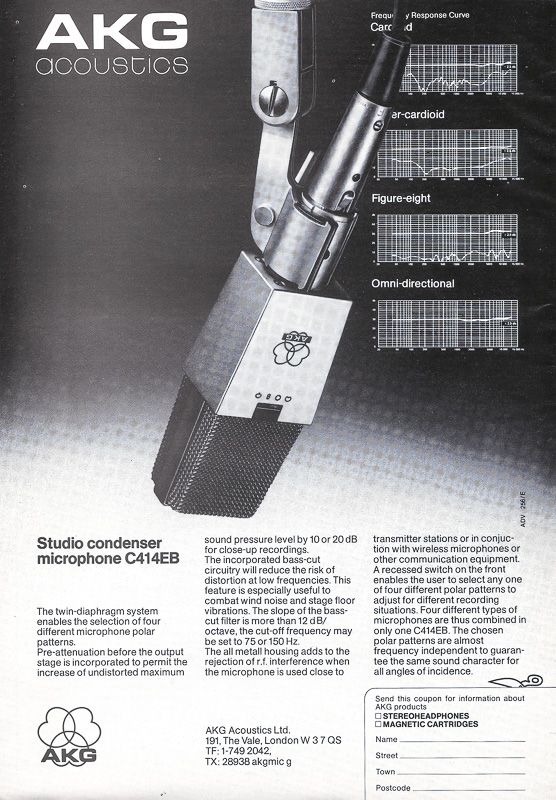
“I still remember the first time I used a C414.” Chris grins, and I chime in to say that it’s a universal experience for engineers and music makers. He agrees.
“All the products in the AKG portfolio prioritise sonic accuracy and transparency. I’ve been in sessions where I’ve stood in a room with the performer, I’ve set up an AKG microphone, I’ve walked into the control room, and I’ve forgotten that I’m not standing next to the performer, right?”
“That transparency is something that’s carried through the range, no matter which direction you go.”
This detailed, accurate sound also lends itself to versatility; moving the mic around a source can yield drastically different sounds, whereas a centre-terminated design provides more predictability when miking different spaces and sources.
Edge-terminated mics for vocals, drums and strings
Chris is also an engineer and producer, having run a studio himself in the past. For vocals, he’d find himself reaching for an edge-terminated design for articulation, clarity and excitement, as well as for drum overheads.
He acknowledges that spot miking drums is important, particularly for modern production, though overhead mics serve to capture the energy coming off all the drums.
“It’s the aggregate sound of the entire kit,” he says. “It’s a pretty complex group of sounds that are escaping the drum kit and filling up the room.”
He continues, explaining that part of AKG’s R&D involves discussions on transient attack and how mics and capsules capture them, and this is particularly important for drums.
“For overheads, that’s all they’re doing. They’re capturing multiple [instances of] transient attack per second. Every drum, every cymbal is a transient. So that’s an area where an edge-terminated capsule is important.”
Chris would also find himself reaching for an edge-terminated design for stringed instruments, whether it be an acoustic guitar, a violin or other detailed source.
“Those instruments all have a complex set of overtones which fill up the frequency band in a way that’s very pleasing to our ears. Having a microphone that can capture that is very important because you can never EQ that back in if you didn’t capture it the first time.”
AKG are in the business of making tools for creatives. From the stalwart Perception line aimed at home musicians, through the recently unveiled C114 and C151 for an accessible podcasting and music studio solution, right through to the flagship C12 and C414, AKG’s dedication to design as well as quality speaks to decades of innovation. Values like this are the reason they’ve stayed at the top of the game, and they’re showing no signs of slowing down.