A studio’s identity is rarely defined by its acoustic treatment or its furniture; it is defined by its ‘locker’.
For decades, the path to professional-grade sonics was guarded by a five-figure entry fee – the vintage tax on the legendary circuits that defined the 20th century. Warm Audio didn’t just disrupt this market; they democratised the aesthetic. By focusing on the specific flavours and non-linearities that engineers used to spend a lifetime chasing, they have moved beyond being a recreation brand to becoming a primary colour palette for the modern hybrid studio.
The current fleet offers a range that covers the contemporary locker effortlessly, proving that a professional sonic identity is now a matter of choice, not just capital.
Catch up on all the latest features and reviews here.
The foundations: utility and versatility
If a studio has a go-to piece of kit, it is likely an 87-style FET. The WA-87 R2 is the cornerstone of the Warm lineup, but its value is not in its technical lineage – it is in its authority. This is a mid-forward microphone that demands attention in a mix. It handles the omni-utility role with a certain muscularity, excelling on everything from drum overheads that need to glue together to broadcast-style vocals that need to sit right at the front of the speakers.
For those requiring a flatter, more transparent capture, the WA-14 provides a distinct alternative. It trades the mid-push of the 87 for a shimmering, expensive top end. It is a microphone that feels open, making it essential for grand piano or the jangly, surf-indie rhythm guitars currently dominating the Australian alternative scene. It captures the air around an instrument without thinning out the body.
The Junior SE series – comprising the WA-87jr SE and WA-47jr SE – takes this a step further by offering a faster transient response. Because they use a transformerless FET circuit rather than the heavier transformer-coupled designs of their flagship counterparts, they react to sound with surgical precision. The 47jr SE, in particular, offers a tighter version of a vintage vibe, making it a formidable choice for high-energy tasks where you want the character of a classic mic but the controlled low end of a modern one.
The muscle: instrument specialists
When it comes to the thump of a record, the WA-47F is the heavy lifter. It is a microphone designed for impact. While many try to force it into a vocal role, its true home is in front of sources that move a lot of air – the outer kick drum or a bass cabinet. It provides punchy detail that tube microphones often soften. It is the difference between a sound feeling warm and a sound feeling solid.
In contrast, the WA-84 brings a sense of weight to the small-diaphragm world. Most pencil mics can sound brittle or clinical, but the WA-84 injects a sense of harmonic richness into the signal. For acoustic guitars, it is about capturing the wood – the resonance of the body – rather than just the zing of the strings. It makes small instruments sound large and intimate.
The vibe architects: character and texture
Warm’s foray into mechanical transducers has produced some of their most interesting flavour mics. The WA-19 is a standout – a recreation of a 1960s dynamic that feels like a time capsule. Often called the ‘Beatles mic’, it is a dynamic microphone that delivers condenser-like clarity and top end. It is an incredible tool for snare-bottom or lean acoustic guitar tracks where you want to avoid low-end build-up right at the source, giving you a mix-ready sound before you even reach for EQ.
The WA-44 ribbon is the polar opposite – dark, gooey and massive. It is the ultimate smoothing tool, taming harsh high frequencies and providing a sultry intimacy to vocals or brass. It feels like a late-night radio broadcast from 1945.
Sitting in the middle is the FEN-TONE, a selectable passive/active ribbon. It solves the traditional gain-staging headache of ribbon mics. You can run it in a vintage mode for that classic, dark response, or flip it into a modern, high-output mode that brings more detail and shimmer to the performance. It is a chameleon ribbon that fits into almost any genre.
The ‘money channel’: flagship tube condensers
For the lead vocal – the ‘money channel’ – the choice of microphone is less about accuracy and more about emotional intent. Warm offers four distinct flavours of tube saturation:
WA-8000: This is the sound of modern polish. It delivers an airy, radio-ready top end that is the hallmark of contemporary pop and R&B. It feels expensive and finished the moment you hear it through the monitors.
WA-251: Arguably the most musical mic in the fleet. It has a lush character that feels wider and silkier than a standard workhorse. It sits in a mix effortlessly, providing a sense of depth that feels like it was recorded in a much larger room.
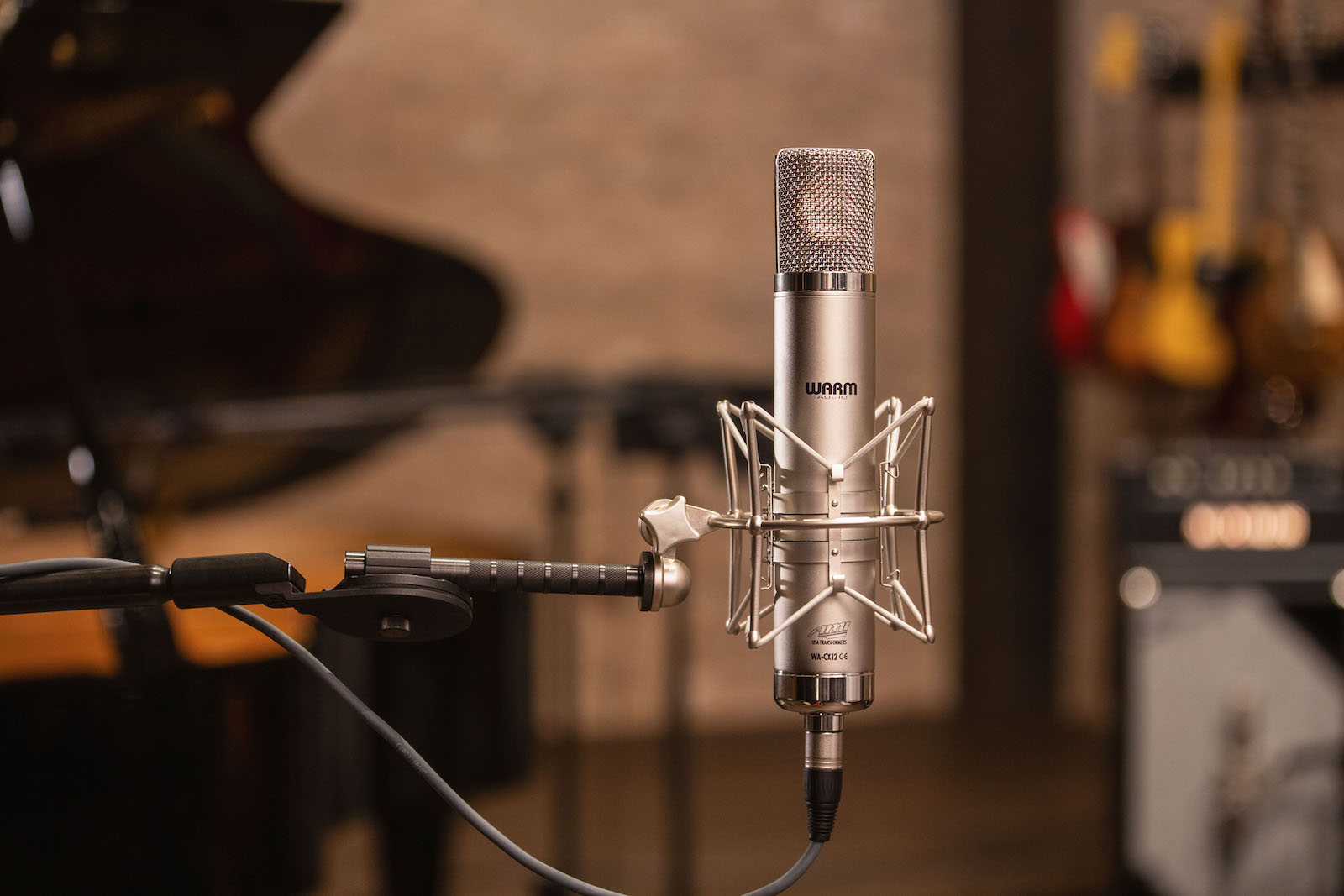
WA-CX12: This is the choice for high-fidelity transparency. It captures the true air of a performance without adding heavy colouration. If you have a vocalist with a beautiful, natural tone that does not need fixing, this is the mic for you.
WA-47: The vintage powerhouse. It provides a larger-than-life bottom end and smooth, uncompressed highs. It is the sound of the 1950s – bold, authoritative and harmonically rich.
The verdict: building the modern locker
The strength of the Warm Audio ecosystem is not just in the accuracy of the recreations, but in the accessibility of a professional workflow. In modern production, the goal is source correctness – selecting the microphone that solves the mix’s problems before the record button is even pressed.
Whether it is the WA-14 for clean rhythm beds, the WA-47F for the foundation of the rhythm section, or the WA-8000 for a polished lead vocal, these microphones provide a professional palette. They allow the producer to focus on the performance, knowing that the vibe – whether modern air or vintage weight – is already baked into the circuit.
Visit Warm Audio to learn more. For local enquiries, head here.