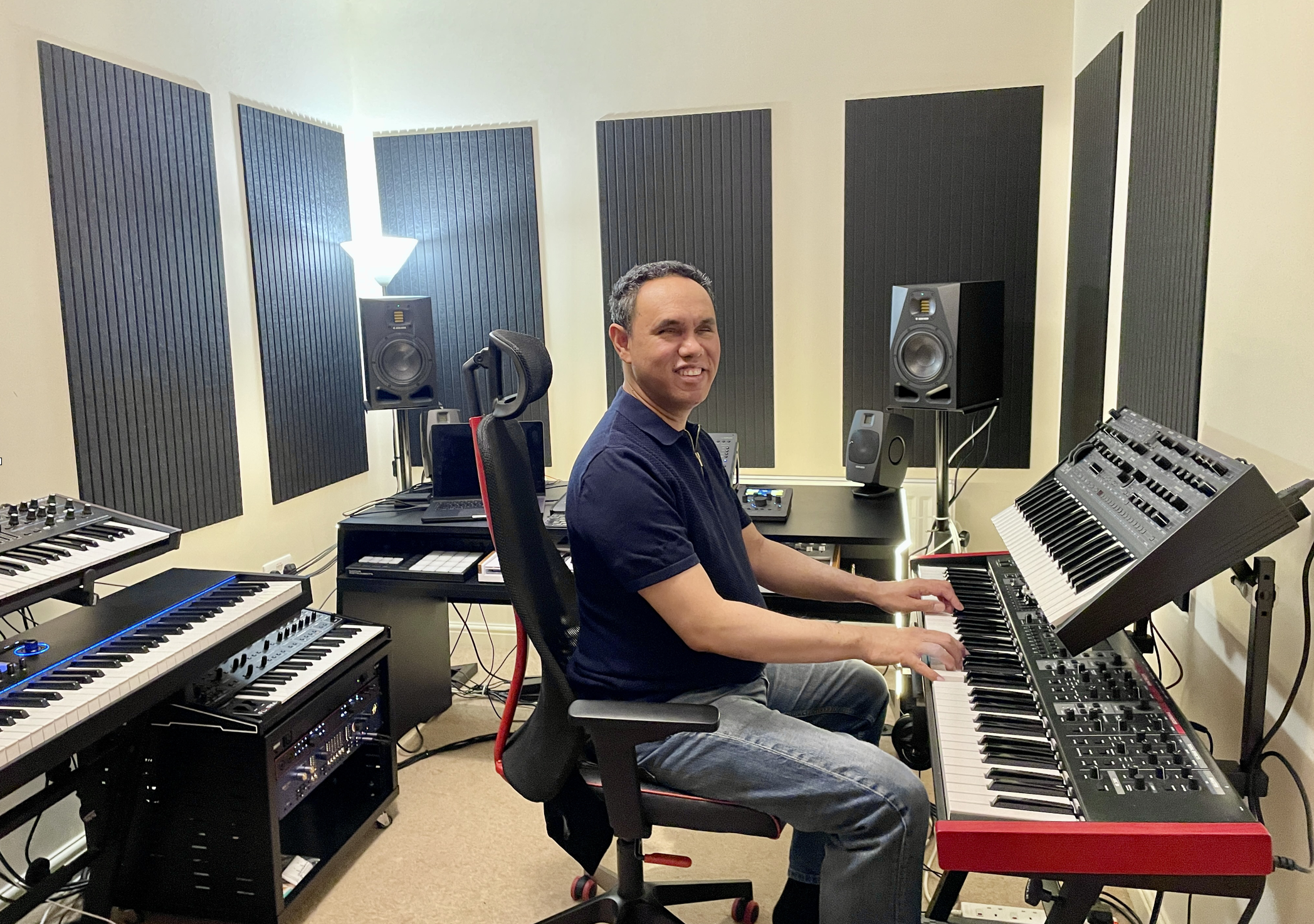
Roland's Future Design Lab worked with blind musician Jason Dasent on screen-reader guides, audio walkthroughs and described video covering every part of the keyboard.
Roland’s Future Design Lab has put together an accessibility package for its V-STAGE keyboard, built with blind musician Jason Dasent to make the instrument learnable for players who are blind or have low vision.
Catch up on all the latest news here.
On the V-STAGE, almost every parameter has its own physical control – a knob or button for whatever you’re adjusting. That means a player can learn it by feel and build muscle memory, without needing to read a screen. Dasent, a musician and producer who has advised other music-tech companies on accessibility, chose this as the place to start. “The V-STAGE was his idea,” says Roland Future Design Lab’s Paul McCabe.
Dasent then led the documentation itself, covering every part of the keyboard, including the organ, piano and synth engines, the effects and the rear panel. The documentation comes in three forms: written guides that work with screen readers, audio walkthroughs section by section, and video with detailed audio descriptions. All of it uses the same clear, tactile language, so a blind or visually impaired player can learn the V-STAGE.
“Roland has always been one of my favourite brands, long before I ever imagined working with the company,” says Dasent, who led the project. “The V-STAGE already speaks the language blind musicians need: tactile, consistent, and built for muscle memory. All that was missing was documentation that met us halfway. Being able to build that alongside Roland, and to share it with the visually impaired music creator community I know so well, means a great deal to me.”
The materials are live now. Roland’s lab plans to share them with blind and/or visually impaired music communities and gather feedback, then use that to push for more accessible documentation across its range, and potentially similar projects for more instruments.
Learn more here.