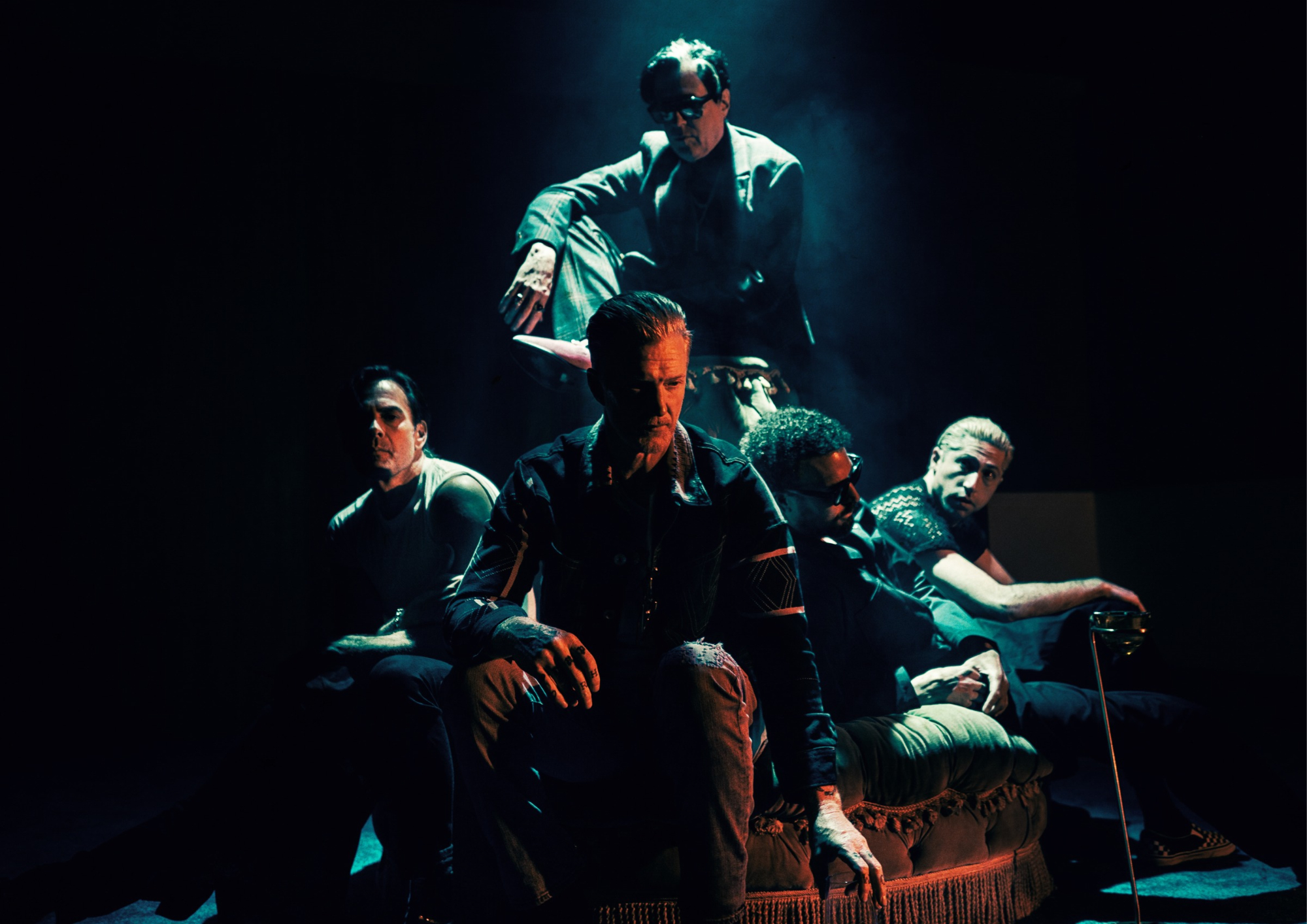
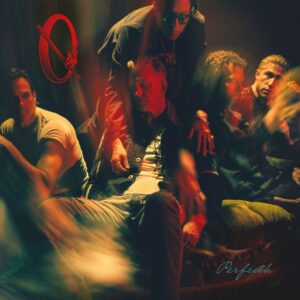
Ahead of their Australian tour, we spoke to QOTSA's bass man and co-producer of Perfecth about the making of their new record.
Congratulations on the album Mikey, how was your experience making this record?
It was the most fun Queens record we’ve made. After every record we kinda say, “Can we just make one that’s a little bit easier and fun?” And this time it actually happened. I think it just has to do with where we are as a band, and our individual lives coming together. There’s just weird things with timing, you know? The world kinda sets things up for you that way. So I was pleased with it. We spent a lot of time on it though, that’s for sure.
That really comes across, it sounds like a band having fun in the room together.
Good, good. Even with some depressing shit (laughs)
I understand there was quite a lot of live takes, particularly first and second takes that got used.
We normally go for live takes. We like to go for us in the room, and we’ve done that plenty before. But this was even more so, and a lot of times what we’ll do is put arrangements together and practise them so that we’re tight. Everyone goes to their own room and really figures out their lines and gets them down so that when we go to play live, everyone’s dialled.
Whereas this was more off the cuff. The first song we recorded, which was the last song that we tracked on the last record, was the last day of tracking and it was probably midnight and we kind of had one other idea. Josh had this one other thing and he said “Well, let’s just try this.” So so we put an arrangement together and he was literally calling out “Okay, let’s go to that chorus. Let’s go to that second bridge” in the room while we tracked. We did two takes to tape and the second take is the one that’s on the record.
So what’s cool about that song is you can really hear us listening to each other and giving everyone space to play while finding your own space to do a riff or an accentuation. So there’s a lot of that, and there’s a lot of ones that were demos almost. The main thing we were trying to capture was the correct emotion for each song. Everything else was secondary.
Read more interviews, columns and features here.
It’s interesting that you use the word demo. “It’s Only Love ” has a really cool effect where it starts out sounding like a demo, and then it blooms out into something more produced, was that the intention behind that song, or did it just happen that way?
That is one production move that we did do. It’s one part. Josh had this thing, that was left over from (Mark) Lanegan and I was like, “That’s really good.” We just saw it as this triangle. It didn’t need other parts. So we just let it build, and build. Once we had that trajectory, we were at Sound City and outside in the parking lot there’s a train that rolls by every 15 minutes. We really wanted to capture that feeling so we went out with a field recorder and recorded Josh singing and humming on an acoustic guitar and pieced it together. There are some thematic things, some production moves that are important, even if you’re making a really raw record.
It’s a great rug-pull moment when the bass kicks in
Yeah. We like to knock people on the floor a little bit, you know?
You’re very good at that
It’s a funny trick.
How did you find the experience of recording over various studios? Was the challenge to maintain a consistent sound, or were you trying to lean into each song having its own flavour?
The latter. We talked about this idea of it almost being like a mixtape. It stemmed from, after the Catacombs we really reimagined a lot of our older songs, hearing them stripped down and broken down. We started to see things in these songs that we didn’t appreciate before, especially lyrically. So we really wanted to lean into that and focus on each song individually and give it its due. Whatever that song deserved, we would do. We started in New Orleans just to break the ice and go to a weird, wild place that was nobody’s home. We could all be together, focused on one thing in this wild city.
We didn’t know we’d end up at Sound City, or our friend’s house that we recorded a lot in. We didn’t know we’d end up in the Village. But it all just went that way and ended up being the best thing because it just leaned in perfectly to the idea we had.
How much did the Catacombs experience inform this album? I would imagine it opened you up to new possibilities in terms of what sounds the band is capable of.
Absolutely. I think it did timing-wise, because it intertwined with us making this record, we weren’t really supposed to do that Catacombs tour. We had this idea, but we knew we wanted to go make a new record. So once it got rolling, it was hard to get off that train, but we were also really enthusiastic about making these new songs. So the cool thing about it was that because we were in this different formation as a band for the live shows for the catacombs, everyone was on different instruments. I was on acoustic guitar for a bunch of songs, I was playing percussion, bass and singing lead for a lot of the show. Josh was just on lead vocals, no guitar strapped to him.
It all freed us up in this different way. So going in the studio, it really broke down all of those things, it was like “Oh, shit, we can be any band we want to be.” We know that now. We want to continue to do that. We don’t want to just be a rock band. We don’t just want to be a punk band. You know, we just want to be a band and do what is inspiring us at that moment. So it was very informative and inspirational and it opened us up to the rest of what our career could be.
I imagine that would be very invigorating, being quite a few years into the band’s career and having a new perspective on what you can do and maybe even what you’re allowed to do.
Yeah. I mean, we never think about what we’re allowed to do. I think our fans think about what we’re allowed to do. They have expectations, they have wants and needs. They want us to stay here, its like “You did this good. We like it. This is what I want from Queens.” But honestly, that’s never what we’ve really done. We’ve just kinda sprinkled around the stuff lightly so that I guess most people didn’t notice. I always think it’s funny talking about this record in interviews, people are like, “It’s a really mellow record. It’s a big change.” I’m like, “Well, you know what? The last song on the first record is a mellow pop song.” Rated R has instrumental songs, acoustic songs, mellow songs. So I don’t know where you’ve been, but maybe you haven’t been listening properly.
But I think that’s the trick of Queens, we’ve been able to slip in these weird songs without people noticing. I always think about, and I’m not comparing us to this record, Led Zeppelin III. Or I think about a lot of the Sabbath tracks, on all of their records, these guys are playing acoustic guitar, like folk acoustic guitar. So what are you guys mad about? And they’re the gods of metal!
So I think it’s funny. But it was eye-opening also because that (Catacombs) tour was the most fun we’ve had. We love playing rock shows, but to do something brand new that’s scary, that made us nervous. There’s no feeling like it and that’s what we want to continue to do. Challenge ourselves.
Variety, dynamics and that light and shade have seemingly always been a big part of what the band does.
I agree. Even from when I was a fan and listening to Songs for the Deaf, it was like, why are there so many voices on this record? Who’s the singer? It was always a surprise. I think people come back around which is funny. Every time we put out a record, people are bummed. But then you know, Era Vulgaris, people hated that album and now people are like, “Oh, it’s my favourite record.” It’s like, “Oh, really?” Cool.
Was their any gear you ended up playing on Perfecth that surprised you?
I mean, the first song, “It’s Only Love,” I play this little key bass. Its this little red synth, probably like 16 keys. So that wasn’t something I was expecting to use.
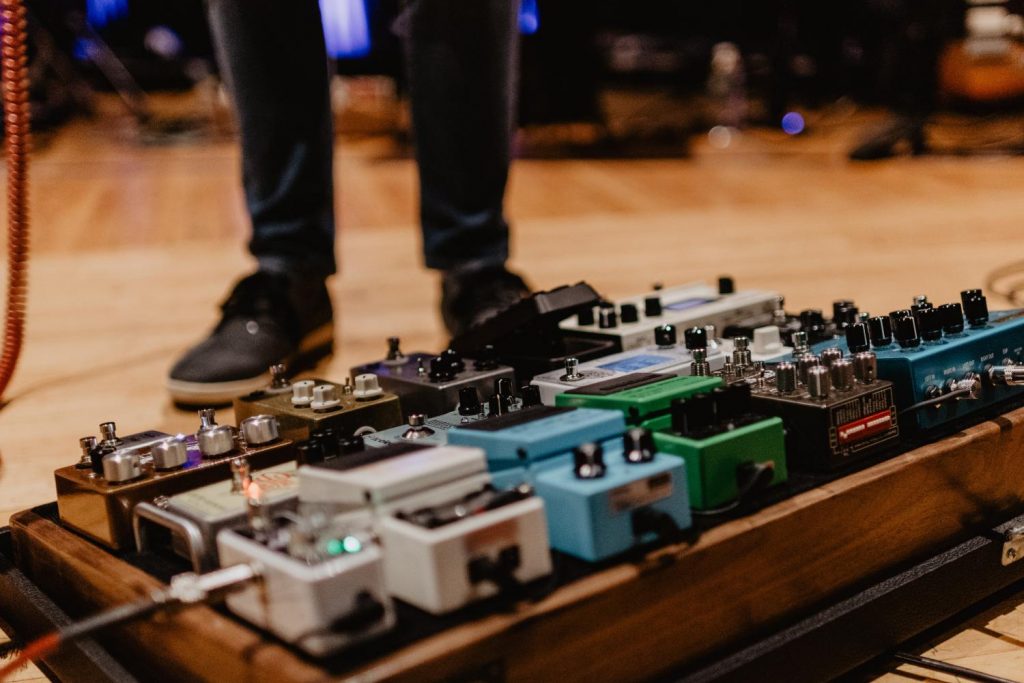
On “Goth Girls,” we were at Sound City, and on a Queens record, I was yet to play a P bass through Rat pedal. We put two amps in the hallway, I think it was an (Ampeg) SVT. We rarely use that with Queens, but that’s kinda like my old teenage punk gear setup, so it was nice to do that again. And even playing it now when we’re rehearsing, it feels old school. It feels like me listening to Jesus Lizard records and wanting to get that sound. So that was something I never thought we would do on a Queens record.
Do you find that when you’re playing bass parts on keys that you reach for notes that you wouldn’t necessarily reach for on your bass guitar?
Absolutely. I was gonna play a synth live, but I thought there was a way to do it on bass. And then, even though it’s just whole notes, learning that there’s this one little part that you can barely hear on the record, that’s like, “That’s so stupid.” I would never have chosen to write this or play this. But I have to now.
Is it a important part of your process to capture the sounds you want right off the bat rather than fixing things up down the line?
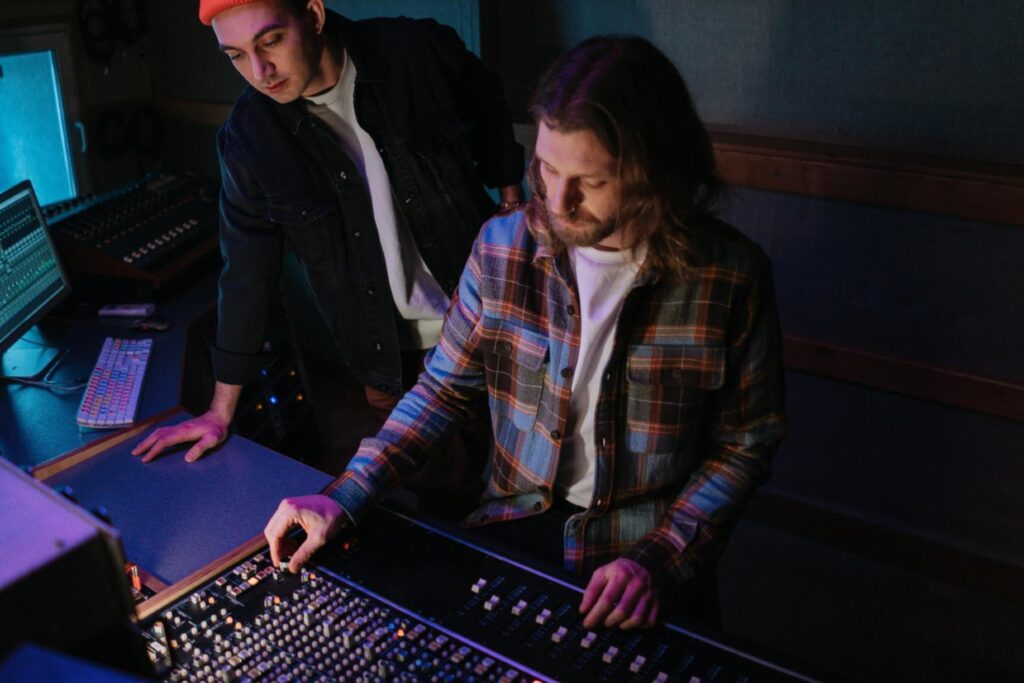
We wanna leave very little room for mixing. That’s why it’s often hard for other people to mix our records because they wanna say “Well, I’m gonna do my thing, I’m gonna spice this up and I’m gonna add this compression here add some delays here.” But we already did all that. We compressed on the way in, we EQ’d on the way in, we sent this to a delay. You have it. There it is. So we like to do a lot of the pre-work and that’s why we ended up mixing a lot of it ourselves.
How important is it for you to then recreate those sounds when you get on the road? Or are they two separate things to you?
We just spent two weeks every day rehearsing. Because it’s important. We don’t need to get it exactly right. But there’s some things that are important, but then you have to learn what you did. It’s important to get it close, but it’s really about the feeling and the sentiment that it’s putting across rather than it being an exact sample. Some things we do like to trigger a sample of but we don’t use backing tracks or anything, so we do have to recreate it ourselves, and it’s time-consuming.
Let’s talk about “Mono”, the mixing choices on that song were incredible. Going from the vintage, condensed mono feeling and then blowing up into widescreen stereo in the bridge is a huge moment on the album.
Yeah that song had lived for a while. It was recorded during the making of the last record. Josh had this demo and it was very raw. He did it at his house by himself. When we came to do this record, we were like, “We need to put that song on here.” We were talking about re-recording it but we listened back, and you can’t recreate emotions that are in real time. It’s a tough one to listen to because its him in pain in real time. All that screaming and the tears and all that shit, that’s real. It’s literally while he’s recording it. So no producer can go and try to recreate that.
The only thing we did re-record was the drums because we were at Sound City and it just needed that amazing big drum sound in this beautiful room that we were in. John (Theodore) learned it almost note for note and really nailed the feel of it. He did an incredible job but it was more about the sonics that we wouldn’t be able to recreate in a mix. We needed to get that sound live and commit to that.
When it came to mixing it, I mean, Josh is bananas, we were at this house where we did a lot of the record and we had mixed “Sunday”, where we did the bass on the left and the guitar on the right, we were really happy about that. We thought it was really great and he thought “Well, what if we just recorded it all in mono?” It’s got this weird nostalgic sound. We’re already making all these weird choices, let’s give it a shot. And then it was his idea to go wide on that bridge and I thought it was a brilliant idea. Normally it’d be a big no-no but, but the whole point of this record is to have each song be its own individual character, and this song deserved that. It accentuated the feeling even more with the mix.
It’s a fantastic moment on the album. You guys always have a handful of production moments on your records that are just mind-boggling and leave us all wondering how you achieve them.
Well, I think it’s just that people get too stuck on rules. A lot of people go too much by the book. So I love how more artists now are coming out and doing videos going through stems and saying how they did it. Because you realise that really cool records and really cool artists that you probably love made weird mistakes and made weird moves and experimented and that should be celebrated. That’s what ends up inspiring the next record, so I’m all for that.
Perfecth is set to be released on the 30th of October
Find out more about QOTSA’s upcoming Australian tour here