Fender’s 2026 American Professional Stratocaster keeps the classic formula and sharpens the details, from the V-Mod III pickups to the recessed saddle screws.
I don’t envy the Fender American Professional Stratocaster. That guitar shoulders so much pressure to represent the Stratocaster in its most up-to-date yet history-affirming form. Its place in the Fender catalogue means it’s literally meant to be ‘the’ Stratocaster, so there are things it simply cannot have. It cannot have a super modern neck. It cannot have super modern frets. It cannot have a quadruple-locking multi-scale, MIDI-equipped self-tuning bridge. It cannot have super complicated pickups and unorthodox switching. There are plenty of other Strats that will do that. They exist all across the Fender range, from fun little Squiers to the most outstanding Ultra Luxe series instruments and a few utterly unique signature models. But the American Professional Stratocaster has to just be a Stratocaster at the pinnacle of its Stratocasterness. Argh, the pressure!
Catch up on all the latest reviews here.
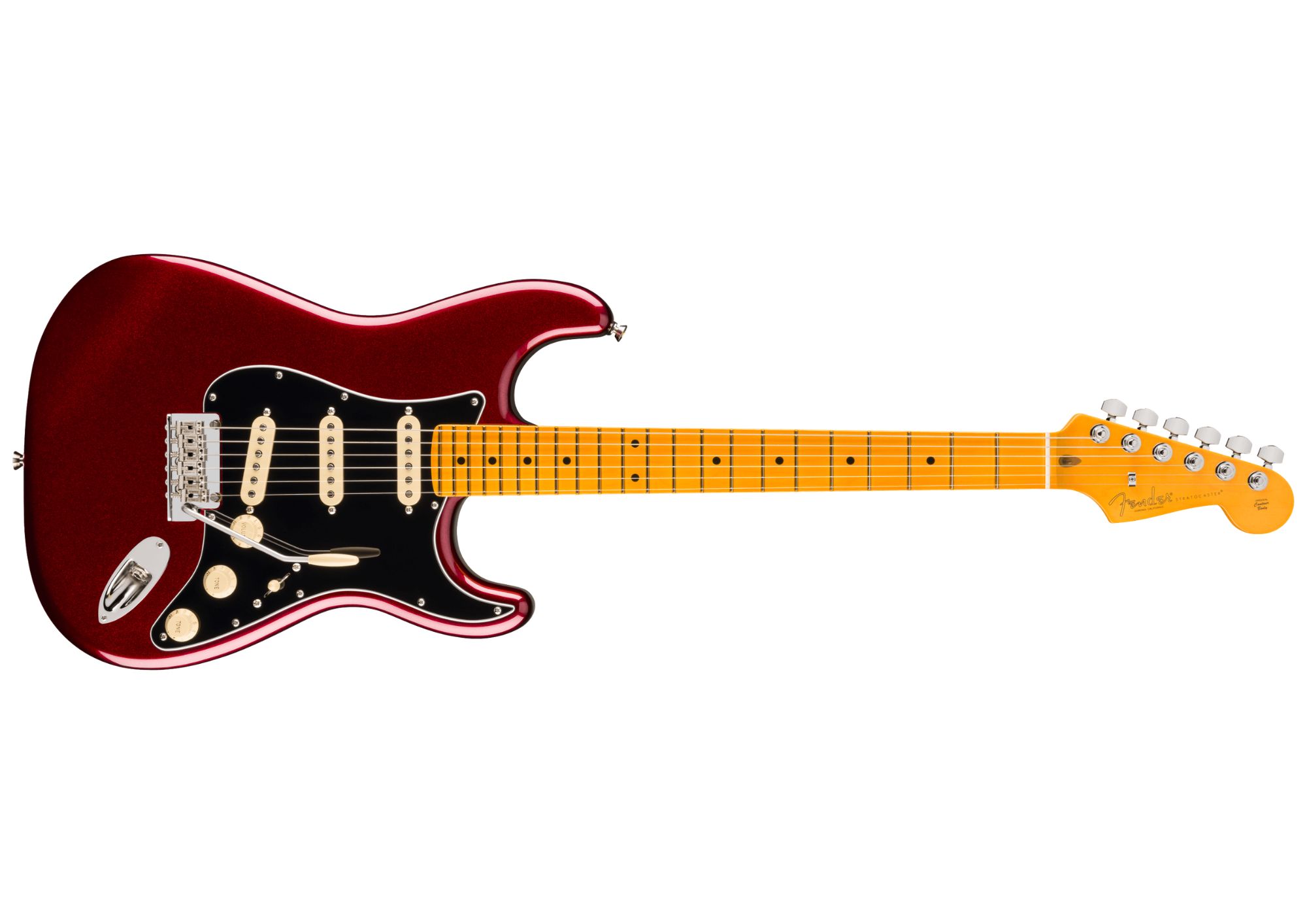
So here we find the latest iteration of the American Professional series (the 2026 evolution), which grew out of the former American Standard line. The whole point of this line is to capture the essence of the Stratocaster in the same way that the first three decades of the Strat were simply ‘Stratocaster’. So we have 22-fret necks (yes, I know vintage Strats had 21. It evolved, okay?), alder or ash body options, a maple neck with rosewood or maple fingerboard options, a bone nut and pretty standard electronics in the form of three single-coil pickups, two tones, a volume and a five-way switch. There’s also an HSS version available, and both come in a Deluxe Molded hardshell case. Our review model came in Oxblood, a deep, dark red that looks fantastic on those classic Strat curves. But there are some subtle tweaks too.
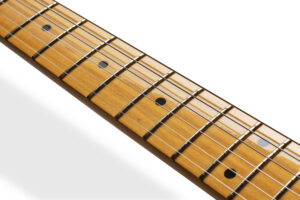
The neck is a Deep ‘C’ profile, slim at the nut and filling out gradually as it approaches the neck joint, which makes it just as comfortable for chords as it is for single-note lines. The hand-rolled fingerboard edges make it feel like it’s already been played in for a few years, and the 9.5-inch radius is classic Fender, while the 22 narrow-tall frets give you plenty of height for bends. Fender finishes the back of the neck and the fingerboard in its Super-Natural satin, so it stays smooth and fast even once your hands warm up. The heel is rounded and sculpted with a bevelled neck plate, which opens up the upper register and makes lead work up there easy and comfortable.
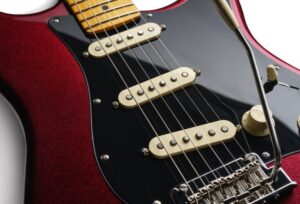
Then there’s the bridge. It’s an upgraded two-point tremolo with a cold-rolled steel block, which adds sustain, clarity and a little extra high-end sparkle, and new ClassicGear Radial bent-steel saddles. They look vintage at a glance, but the height screws are recessed, so they stay out of the way of your picking hand no matter how hard you dig in. Fender has designed the saddles for tuning stability and smooth tremolo action, and they make intonation and action adjustments very straightforward.
The pickups are Fender’s new V-Mod III single coils, voiced specifically for each position for a balanced set with plenty of vintage warmth and a crisp, clear top end. They also have a few extra turns of wire for a little more output, a more complex mix of magnet types and wire gauges, and a new magnet stagger that more closely follows the fingerboard radius. The original Stratocaster stagger was developed with ’50s string sets in mind, which were typically a heavy gauge with a wound G. Guitarists have come to love how that stagger sounds on modern string sets, and this new version is rebalanced for today’s strings, making the guitar easier to play under chords, with chords that hold up well under heavy distortion. The new stagger also turns up on the Telecaster and Jazzmaster pickups across the range, and the result is undeniably Stratty, especially in the top end.
Remember what I said about unorthodox switching? Well, there’s one small cheat. The second tone knob doubles as a push-push switch that brings in the neck pickup in positions one and two, giving you bridge and neck together, or all three pickups at once – two combinations you don’t normally get on a Strat. It’s the kind of mod Strat players have been wiring in for decades, and when it’s off, you’d never know it was there. The pots are Fender’s ClassicGear Precision units with a custom torque, precise resistance and a musical taper, so the volume and tone controls feel smooth and consistent across their whole turn.
If you were to stand in 1954 and look through time to the future, this is pretty much what you might imagine the Stratocaster to become in 2026. It’s not a reinvention of the form at all and it doesn’t try to be: it just wants to be a super Stratty Strat. The Strattiest Strat that ever Stratted. And to that end it’s a complete success. The pickups sound stunning, very clear and detailed, crisp but not brittle, full but not woolly. And the playability is wonderful. Slick and easy but not too easy. I found it perfectly suited to my terrible Eric Johnson impression, but equally at home with more hard-hitting, heavy-handed playing. The clarity of the pickups may lead you more towards clean and semi-dirty tones, but this is a guitar that loves higher-powered rigs too.
If you’re in the market for a Stratocaster, you have so many options, from vintage reissues and vintage-vibed models to the hyper modern. This guitar is none of those. It’s a Stratocaster in its own right, designed and crafted with the same player-forward spirit as the original and only Stratocaster offered in 1954.
Learn more here