Fender Chief Product Officer Justin Norvell talks pickups, offsets, versatility and why the best way forward sometimes starts with looking back.
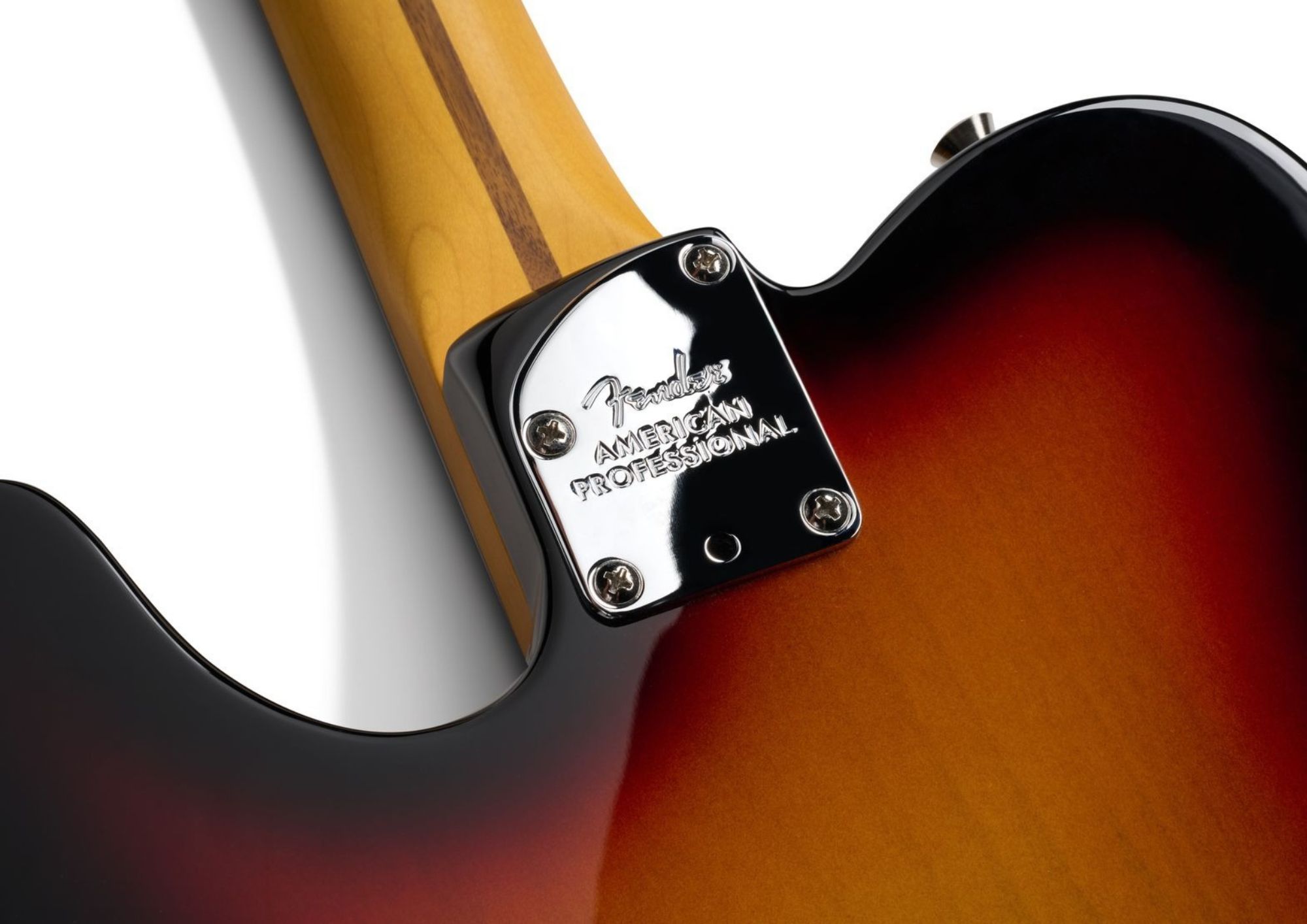
There’s something pretty special about getting your hands on a bunch of new Fender guitars before the rest of the world gets to see them. I’ve been spending some time with the latest American Professional series, and between the subtly-but-significantly-refined Strat, the three-pickup Telecaster Hot Shot and a gorgeous new Oxblood finish added to the line, there’s plenty to get excited about.
But what interests me most about a new Fender range isn’t just what’s changed. It’s understanding why those changes matter, and how you evolve an instrument that’s already pretty close to perfect without losing the things that made it iconic in the first place.
Read more interviews, columns and features here.

That’s where Justin Norvell, Fender’s Chief Product Officer, comes in. We caught up to talk about the new range, the relationship between vintage character and modern performance, and why designing a guitar is about so much more than bolting a few familiar components together.
“This is the 2026 version of the Stratocaster, the Telecaster, the P-Bass, the Jazz Bass, the Jaguar, the Jazzmaster,” Norvell explains, describing the philosophy behind the American Professional line. “It’s the next step of the evolution.”
He points out that Fender’s classic instruments were constantly changing in their early years. The Stratocaster of 1954 wasn’t necessarily the Stratocaster of 1958, as body woods, neck profiles and fingerboard options evolved. American Professional continues that tradition, bringing modern appointments to familiar designs while retaining their essential character.
The trick is knowing where to stop.
Fender’s American Ultra series pushes further into contemporary territory, with appointments that qualify as ‘Superstrat’, but American Professional occupies a different space, one previously held by the ‘American Standard’ designation. It’s about asking what these instruments should look and feel like today without forgetting their history. That balance becomes particularly important when you consider how we use guitars now. Between digital modelling, high-gain rigs and increasingly sophisticated pedalboards, an instrument needs to work across an enormous range of sounds.
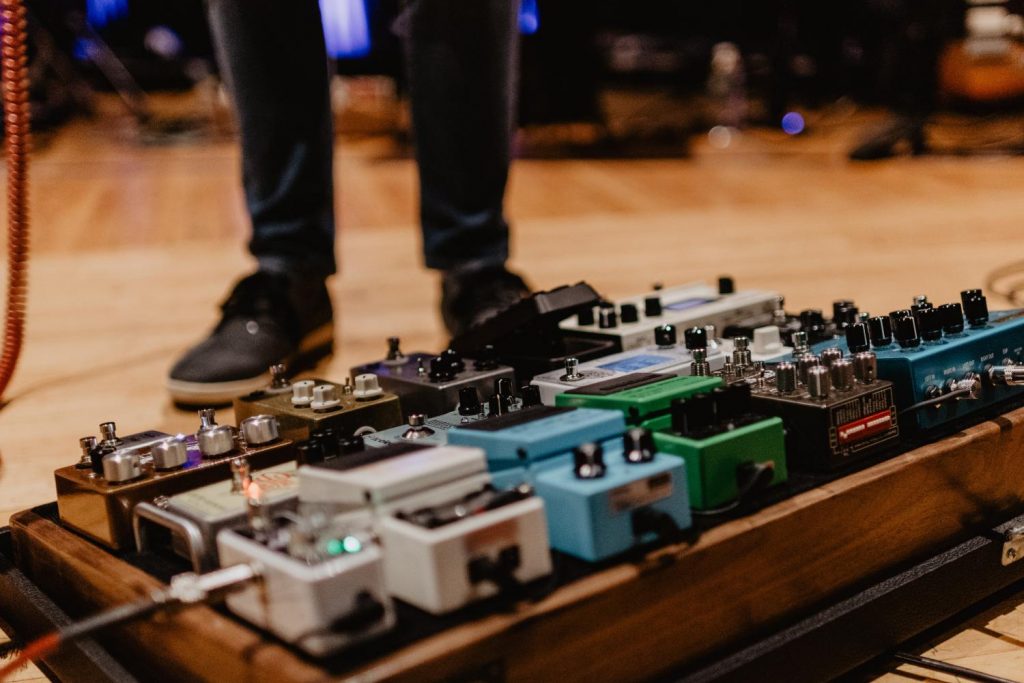
Norvell says Fender’s design team brings a similarly broad range of perspectives to the process, from country and blues to contemporary noise rock. “One of the big, long-standing challenges is pairing the beautiful cleans and the glassy thing that people want out of a Stratocaster, but also making it not too wiry with distortion.” That means testing guitars through real-world setups, including pedalboards, traditional amplifiers and Fender’s own Tone Master Pro modelling platform. It’s not enough for a pickup to sound great in isolation. It has to behave when you put it in front of a cranked amp, stack high-gain modules or start experimenting with effects.
And that’s where some of the more interesting refinements begin.
The new single-coil pickups feature revised stagger patterns that more closely match the fingerboard radius, alongside changes to coil pitch, wire and winding characteristics. These adjustments might sound microscopic, but pickup design is all about the cumulative effect of small decisions. Norvell says the development process grew organically, with Fender pickup designer Stephen Gassado experimenting until the team arrived at a set they felt was really special. Some of the thinking had already appeared in Fender’s 70th Anniversary Stratocaster pickups, but the new range takes those ideas further.
The humbucker-equipped Stratocaster gets particular attention. Anyone who’s spent time with an HSS guitar knows the compromise: you get the beefier bridge pickup, but splitting the coils can leave you with a comparatively thin, underwhelming single-coil sound.
Fender has approached the problem with an asymmetrical humbucker design intended to deliver a more convincing single-coil voice when split. The goal is to retain the versatility of an HSS Strat without sacrificing the character of its in-between positions. That’s a big deal, because a Strat that can move convincingly between glassy cleans, punchy single-coil sounds and full-bore humbucker drive is one seriously useful instrument.
The neck profile is another example of Fender refining rather than reinventing. The familiar Modern C has long been a comfortable middle ground, but Norvell says the new Deep C profile adds more substance as you move up the neck, reflecting the way vintage necks often become fuller towards the heel. It’s a subtle change, but one that makes sense when you spend time playing the guitar rather than simply reading a spec sheet. There’s a reassuring solidity to the neck without it feeling cumbersome.
The updated hardware follows the same philosophy. The Stratocaster’s newly revised saddles feature a wrap-under design and shorter adjustment screws to reduce the chance of chewing up your picking hand. There are now two points of contact for the screws to pass through the saddle, providing more stable lateral movement. And the Telecaster’s compensated bridge saddles now incorporate string grooves for improved positioning. These are the sorts of details that might not make for the most dramatic marketing images, but they’re exactly the things you appreciate when you play a guitar every day.
And I’m particularly happy to see the Jaguar represented in the range. Fender has spent plenty of time championing Jazzmasters in recent years, but the Jag deserves its moment in the spotlight, too. Norvell loves the instrument’s distinctive design, its chrome-heavy appointments and its sonic versatility. The shorter scale length and unique bridge system give it a response that’s fundamentally different from a Strat or Tele, opening up textures that reward experimentation.
He makes an important point here: Fender’s instruments aren’t simply different body shapes with interchangeable electronics. Each is a complete system, with pickups, bridges and other components designed to work together, and made from the ground up by Fender.
The three-pickup Telecaster Hot Shot is another highlight. Building on the Nashville Tele concept, Fender wanted to take the format beyond its traditional identity as a country studio musician’s secret weapon and give it broader appeal. With a Strat-style middle pickup and dedicated switching, the Hot Shot opens up a whole new set of tonal possibilities while retaining the Telecaster’s essential personality. It’s a familiar idea, but one that feels particularly well suited to players who want maximum flexibility without abandoning the simplicity of a classic Fender.
Then there are the finishes. Oxblood is an absolute winner, and Norvell acknowledges the challenge of developing colours for a range that needs to appeal to a broad cross-section of players. Fender has decades of finishes to draw upon, but there’s always room to reinterpret familiar ideas rather than simply defaulting to black, white and sunburst.
That’s really the story of American Professional. These guitars don’t need to reinvent the wheel. They need to make the wheel roll a little smoother, give players a few more options and preserve the character that keeps us coming back.
For more information on the American Professional series, head here