There's something particularly satisfying about watching an artist's trajectory when you've been there near the beginning.
I first interviewed Plini back when he was still in the early stages of building the thing that would eventually become his career: intricate instrumental guitar music that could be virtuosic without becoming a wank-fest, progressive without disappearing up its own arse and melodic enough to stick in your head long after the shred had stopped. Now, years later, he’s preparing to return to Australia with his biggest and most ambitious live production yet. And if there’s one thing that becomes obvious talking to Plini, it’s that none of this happened by accident.
“I bought a lot of live DVDs before I’d ever played a show,” he tells me. “I’d see all my favourite bands, like Dream Theater and shit, playing the biggest stages imaginable with videos and lights and all this stuff.”
Those DVDs helped shape not just the music Plini wanted to make, but the kind of live experience he wanted to create. This was never going to be a case of dragging a couple of amps into a sweaty little room and hoping for the best. Although, as he admits, he wouldn’t necessarily hate that either.
“I guess the music that I wanted to make comes from that, but also this kind of show that I want to put on. It was never a small punk club, stage-diving sort of thing. Although I wish it were.”
Catch up on the latest interviews and features here.
Instead, Plini has spent years gradually scaling things up. Some of us caught his first Melbourne show at The Workers Club. Each Australian tour has meant a slightly better venue, a few more lights, more sophisticated programming and, ultimately, a bigger attempt to translate the scale of his recorded music into a live setting. Having already taken the new material through Europe, he’s had the chance to refine the production before bringing it home. There are banners, programmed lighting and, generally speaking, just a little more spectacle.
The new album also sees Plini leaning further into something that has always been lurking around the edges of his music: heaviness. Like many guitarists of his generation, his musical education involved a simultaneous discovery of virtuoso guitar heroes and the heavier end of metal. Steve Vai and Joe Satriani sat alongside Lamb of God, Gojira and Meshuggah in his listening habits. But while the former influences became immediately apparent in his own playing, the latter took a little longer to work their way into his writing.
“I’ve always loved and listened to that stuff a lot, but it didn’t necessarily come out in the writing,” he says. “But I guess it’s just crept in over time.”
That evolution has now reached the point where Plini is happily venturing into tunings lower than an eight-string guitar would traditionally take him. “I was just like, I’m going to do this,” he says. And the response from audiences has been exactly what you’d hope for when you finally unleash a heavier side of yourself that’s been waiting in the wings. “I’ve always loved this stuff, but I’ve never been just playing a stupid one-note riff,” he laughs. “This is a lot of fun.”
There’s a similar sense of rediscovery in the way Plini describes being back onstage. After spending the previous year focused almost entirely on making the album, returning to live performance has reminded him just how much he enjoys it.
“I guess I’d forgotten how sick it is to play in front of people and they’re smiling and having a good time,” he says. “As soon as the show started, I was just like, ‘Oh my God, this is so cool.'”
That feeling becomes particularly pronounced when the music gets heavy. There’s an undeniable physicality to hearing a huge riff in a room full of people, something that simply can’t be replicated through headphones or speakers at home.
And then there’s the gear.
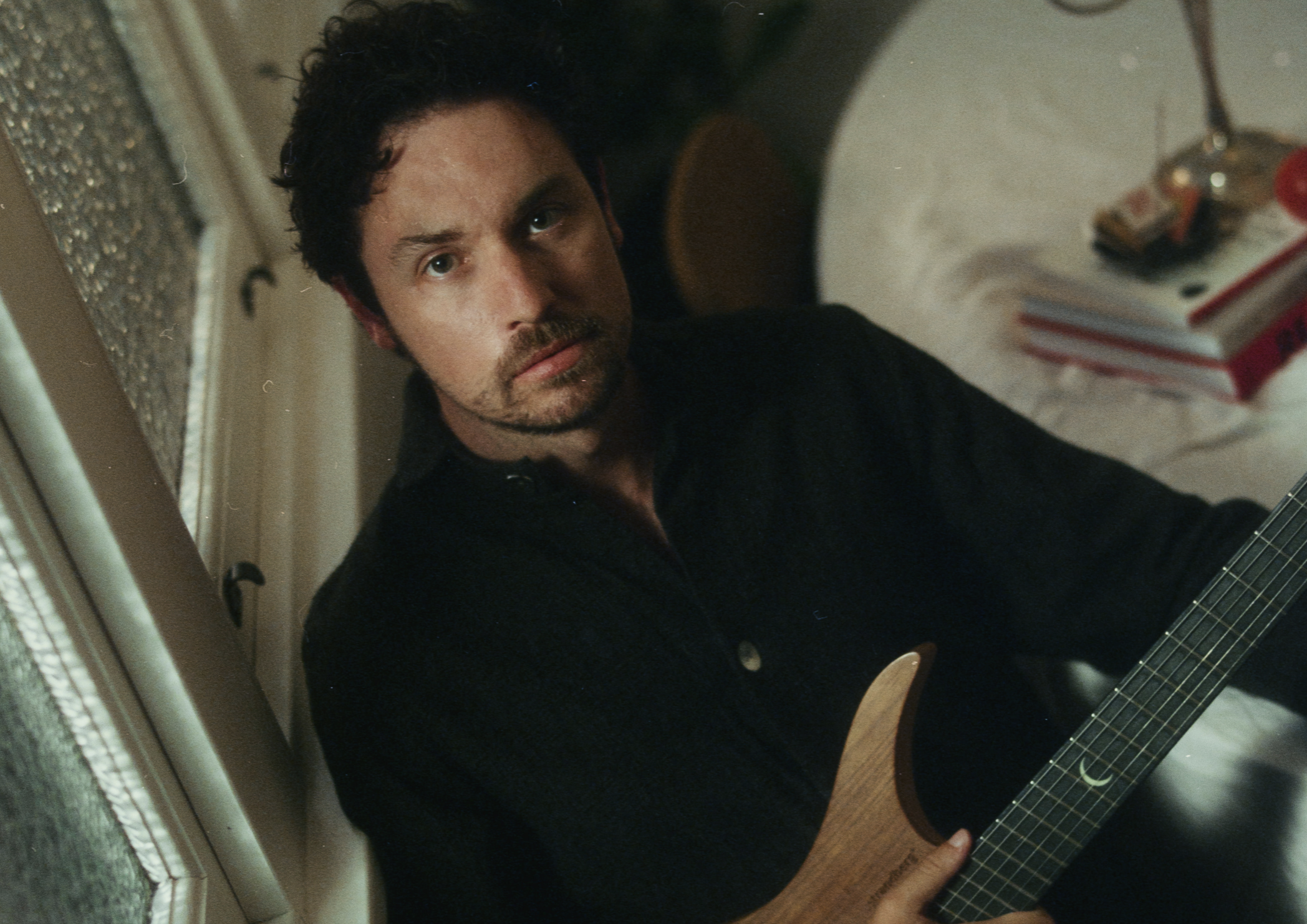
Plini has a new Strandberg model on the horizon, developed around the company’s latest innovations in guitar design. The story of how he first encountered the prototype is suitably surreal: at Guitar Summit in Germany, Strandberg founder Ola Strandberg offered to drop by Plini’s hotel room at 8am with a prototype.
“I was like, ‘8am? That sounds awful, but okay.'”
The result was a guitar built around a new tremolo system that Plini describes as feeling more balanced across the strings, with a more even response and improved behaviour when performing techniques like fluttering the tremolo. It also apparently handles things like dropping the tuning to D without throwing the whole instrument out of whack. “I was sleepy, but I was like, ‘This is the best Strandberg I’ve ever played.'”
For Plini, the appeal of Strandberg guitars extends well beyond their futuristic looks. Their ergonomic design has practical benefits for musicians who might struggle with the physical demands of conventional instruments. And then there’s the simple fact that they’re bloody light. With international touring involving increasingly complicated baggage logistics, being able to carry two guitars in a single case (along with cables and other essentials) is a serious advantage.
Sonically, Plini has also embraced the advantages of modern digital gear. His touring rig is based around Neural DSP Quad Cortex units, with the newer Quad Cortex mini now offering essentially the same functionality in a smaller package. Plini, guitarist Jake Howsam Lowe and bassist Simon Grove each have their own board, allowing the whole rig to travel efficiently while keeping things simple and reliable. That simplicity is important to Plini. Despite having his name attached to one of the most widely used Neural DSP plugins, he doesn’t consider himself a traditional gear obsessive.
“I just try to make something that’s simple and sounds good for a bunch of different things without being overly cumbersome or technical.”
Away from the road, Plini’s current inspiration comes from somewhere rather less predictable: blink-182. He describes himself as being on something of a ‘mental holiday,’ taking a break from the constant pressure to learn, create and optimise. There’s something therapeutic about returning to music you already know inside out.
“You don’t have to curate your own frigging thoughts all the time,” he says.
That same spirit has led him to rediscover artists he might once have dismissed for being insufficiently ‘serious.’ He’s also been listening to Madison Cunningham, whose guitar playing and recording techniques have sparked ideas for future projects. In particular, he’s fascinated by the way her guitars can sound like complete performances rather than the surgically assembled parts that have become so common in modern recording.
“I’m just used to recording chord by chord,” he says. “So that’s kind of inspiring to next time I write music or record, to see if I can get some of that vibe happening.”
It’s a fitting place to leave Plini: still curious, still experimenting, still pushing his craft forward, but increasingly comfortable with the idea that inspiration doesn’t always have to come from the obvious places. Sometimes it’s a new tremolo system. Sometimes it’s a brutally heavy riff. Sometimes it’s blink-182.
And sometimes, after years of chasing bigger stages and more elaborate productions, it’s simply remembering how fucking cool it is to plug in, hit a note and hear a room full of people lose their minds.
An Unnameable Desire Australia headline tour 2026
6 August: Princess Theatre, Brisbane
7 August: Liberty Hall, Sydney
8 August: Northcote Theatre, Melbourne
9 August: Lion Arts Factory, Adelaide
11 August: Magnet House Perth
Find tickets here.