From bedroom producers to touring professionals, the Sydney Guitar Show is designed for discovery—and according to AMA CEO Alex Masso, that's exactly the point.
The Sydney Guitar Show feels less like a new event and more like a long-awaited homecoming.
After years of building momentum in Melbourne, the Australian Music Association has taken a calculated leap north, bringing its flagship guitar event to a new city, a new audience and, inevitably, a new personality. According to AMA CEO Alex Masso, it wasn’t a reckless move, but a deliberate one.
“It was a bit of a gamble,” Masso admits. “We thought, let’s try it in a new city, a new market. It’s an industry event, so we’re always looking at where we can find different players and different people, and just bring this thing we’ve been doing in Melbourne to somewhere else.”
The early signs suggest the gamble has paid off. Exhibitor response has been strong. Public interest has been strong. The tone in Masso’s voice when he talks about it isn’t relief – it’s excitement.
“It’s going great,” he says. “The feedback we’re getting from exhibitors and the public has just been amazing.”
Catch up on all the latest features and interviews here.
If you’ve been to the Melbourne Guitar Show in recent years, much of the Sydney layout will feel familiar. The programming structure, room concepts and exhibitor mix draw heavily from the most recent Melbourne iteration at the Showgrounds. But this isn’t a copy-and-paste exercise.
“We’re starting with a similar model,” Masso explains, “but there are going to be things that are unique about each show. The venue shapes how you do things. The people around it shape how you do things. The community that gets involved will make it different over time.”
That’s the keyword: community. While the guitar show might technically be described as a consumer event, Masso sees it differently.
“We use terms like ‘trade show’ and ‘consumer show,’” he says. “But I really think of it as a community show. It’s where the guitar community, the players, the artists, the manufacturers, the retailers, the content creators, the kids, the parents, they all come together.”
That philosophy informs everything from the headliners to the pedal booths to the educational programming. One of the more interesting aspects of the Sydney Guitar Show’s programming is that it’s not built around a single towering headliner. Instead, it’s designed for discovery.
“When people come to our show,” Masso says, “they’re not necessarily coming because there’s one person they’ve always wanted to see. They’re coming because they love guitars and guitar playing and music.”
That means you might wander into a room and find a blues band tearing it up. Or a bunch of kids onstage discovering their first taste of live performance. Or a workshop on songwriting. Or Grammy-winning guitarist Larry Mitchell casually dismantling the fretboard in a way that makes you rethink your life choices.
Mitchell, in particular, is a smart addition. He’s one of those players who doesn’t require a deep discography dive before you “get it.” He just walks onstage and it works. The vibe, the touch, the authority, it’s immediate. Masso agrees.
“He’s actually the only person we’ve got doing two different things: performing and running a workshop,” he says. “He’s a real guitar person. Guitarists know him. He does a lot of different stuff. And for our kind of event, that’s perfect. People will walk into a room and go, ‘Who’s this?’ and discover something.”
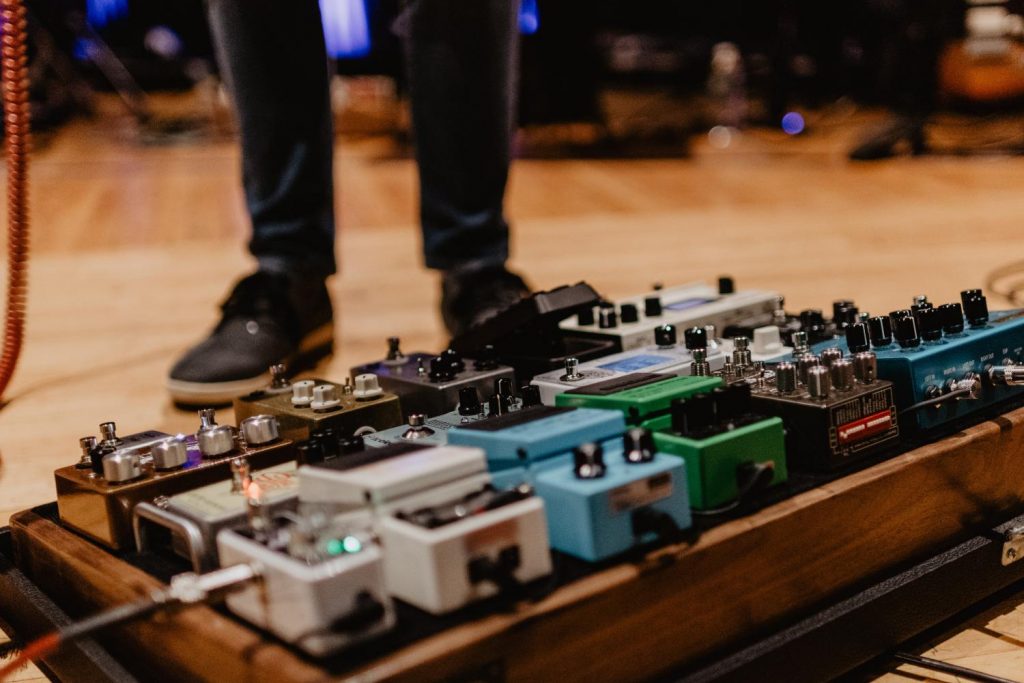
That sense of accidental discovery is built into the DNA of the show. It’s not about queueing up for a single act and then leaving. It’s about drifting, exploring, stumbling across something unexpected. If there’s one area that consistently generates buzz at these events, it’s the pedal section. Effects pedals are tactile, interactive and approachable. You don’t need to be a virtuoso to enjoy stomping on something and hearing the world explode into fuzz.
Masso says the Australian Music Association has been consciously expanding this area, particularly by highlighting Australian builders alongside international heavyweights. “We’ve been trying to get more Aussie builders involved,” he explains. “You might see Poly Effects pedals there, and Locky is right there talking to you about them. These people aren’t just brands, they’re there to talk.”
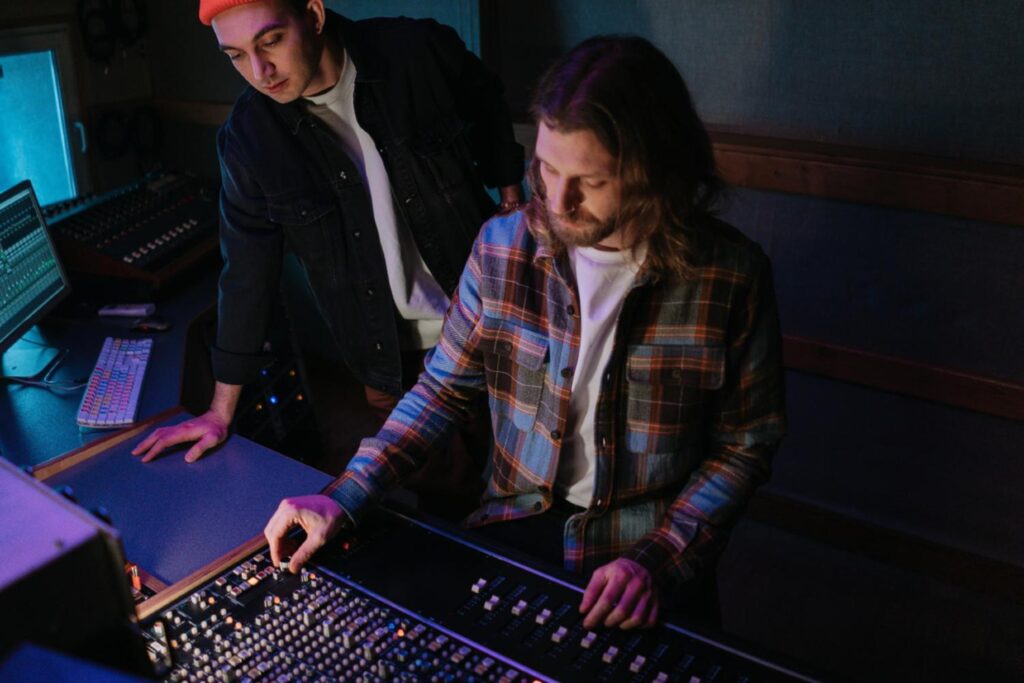
That accessibility matters. In an age where so much gear research happens via YouTube demos and forum threads, there’s something powerful about being able to ask the person who designed the circuit why they chose a particular clipping diode. And it’s not just about pedals any more. One of the most significant expansions at the Sydney Guitar Show is the introduction of a dedicated studio zone, a space focused on home recording, interfaces, software and production workflow.
“We’re adding this extra component, which is the studio,” Masso says. “It’s geared around home recording and pro audio gear: software, interfaces, recording equipment. We’re going to have presentations about reducing friction in your home recording setup. Just plug in and go.”
That phrase, ‘reducing friction’ might be the most important concept of the modern guitar world. Today’s players aren’t just buying guitars. They’re writing, recording, producing and releasing music from their bedrooms. The emotional momentum that comes from picking up a guitar can evaporate quickly if you’re fighting drivers, latency or a confusing DAW interface.
Addressing that reality acknowledges how people actually engage with music in 2026.
“It’s an important part of what people are doing with music,” Masso says. “Whether you’re professionally recording, doing demos, or just messing around at home, it’s part of your musical life. Bringing that in as a theme and giving it its own room is really exciting.”
And it reinforces the broader goal: get people making music.
Another programming highlight is a Fender-presented panel celebrating the Telecaster’s 75th anniversary, featuring a Custom Shop Master Builder in conversation with Australian artist Diesel. Rather than a standard performance slot, it’s a deep dive into the custom guitar process: what artists look for, how builders interpret those needs, and how decades of playing inform taste.
“We don’t just need performances,” Masso says. “We love having talks, presentations, and interviews. It broadens the program. It’s not just band after band.”
That variety gives the show a layered feel. You can watch a blistering solo in one room, then walk next door and hear a nuanced conversation about wood selection and pickup voicing.
It’s not unlike flipping through a great guitar magazine—except the pages are alive and occasionally very loud. Strip away the logistics, the exhibitor booths and the brand activations, and what you’re left with is something simpler: the guitar is an emotionally generous instrument.
“It’s very accessible,” Masso says. “You can start with it and go in so many different directions. You might become obsessed with classical music. You might write your own songs. You might jam with your mates. There’s not really a set path.”
That openness is part of why the guitar community is so diverse. Virtuosos and three-chord punks can occupy the same space. Bedroom producers and touring session players can share a conversation. That’s what the Sydney Guitar Show is ultimately trying to facilitate.
“People show up, they’re meeting someone, they’re standing in front of the same guitar going ‘Whoa,’” Masso says. “It’s because it’s a community. We want people to come together in one location and just be into the same thing.”
In a time when so much interaction happens through screens, there’s something quietly radical about standing next to a stranger, both of you transfixed by the same instrument. You might walk in thinking you’re there to test-drive a new overdrive pedal. You might leave having discovered a new artist, a new recording workflow, a new classical technique or even a new friend.
Masso puts it simply: “We want people to walk away excited about making music.”
If Sydney responds the way Melbourne has over the years, this won’t just be an expansion. It’ll be the beginning of a second home—another gathering point for a tribe that, despite its arguments about tonewoods and trem systems, still shares one fundamental truth: We’re all here because we love the guitar.
Sydney Guitar Show takes place March 7–8 at Sydney Showgrounds, Olympic Park. Find tickets here: guitarshow.au/sydney