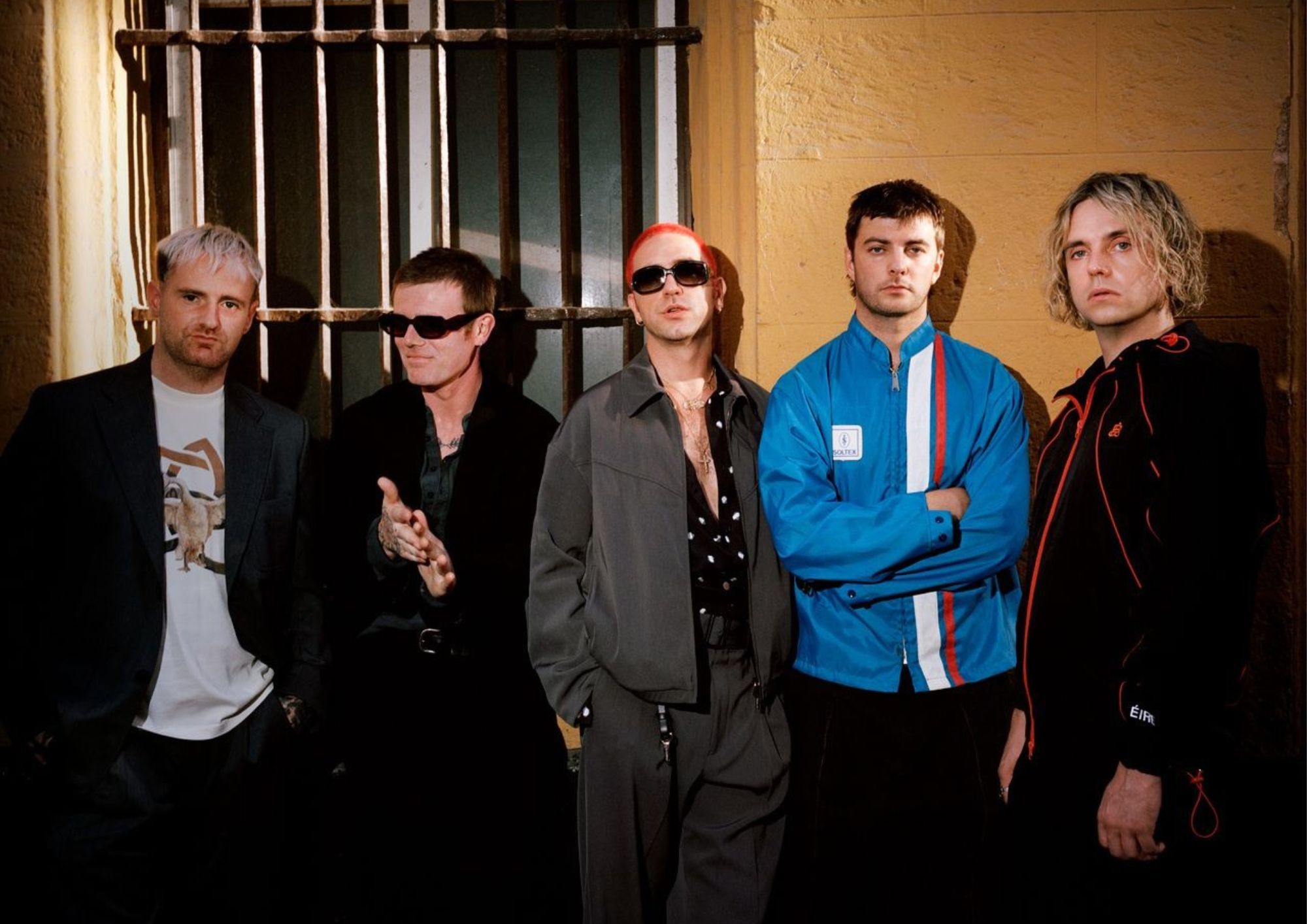
From Carlos O’Connell’s Hot Rails-loaded ‘64 Mustang to Deego’s knock-off Jazz Bass– here’s what the Dublin band take on the road.
Across five albums, Fontaines D.C. have moved from the clipped, wiry post-punk of 2019’s Dogrel into darker and more layered territory, and their latest record, Dopamine Chamber, pushes that shift further again. Released on 16 October through XL Recordings with James Ford producing once more, it’s the album the Dublin band are now taking into arenas across the UK and Europe.
Through all that change, the gear behind the band has stayed fairly consistent. Guitarists Conor Curley and Carlos O’Connell and bassist Conor “Deego” Deegan III still lean heavily on Fender amps and guitars, even as their pedalboards have grown much busier along the way, and this is what each of them has been playing live since the Romance tour.
Read up on all the latest features and columns here.
Conor Curley
Curley’s main guitar is a Fairlane Zephyr fitted with Monty’s P-90s and a Mastery bridge, and it stays in standard tuning for most of the set. Like the rest of his guitars, it’s strung with Ernie Ball Burly Slinkys.
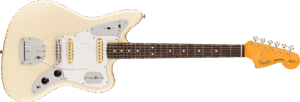
For heavier, more driven parts he picks up a Jazzmaster that Fender sent him a couple of years ago. It lives in E flat, although Curley retunes it to an unusual shoegaze-style tuning for “Sundowner”. A Johnny Marr Jaguar also gets plenty of use, and it was his main guitar back in the A Hero’s Death era alongside a ‘66 Fender Coronado II.
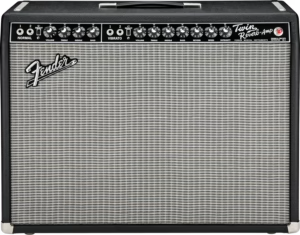
Twin Reverbs are where Curley feels most at home, so they’re his go-to backline. He keeps the EQ fairly flat so the amps act as a clean platform for his pedals rather than colouring them.
His 2025 board ran a TC Electronic PolyTune 3 Noir into a Strymon Timeline, Strymon Sunset and Strymon Deco, a Boss RV-6, PN-2 and BF-3, a Keeley Loomer, a Death by Audio Echo Dream, a Fairfield Circuitry Hors d’Oeuvre?, a DigiTech Hardwire RV-7, an Electro-Harmonix Nano POG and a Lehle Little Dual.
The Deco has been a favourite for years, giving him tape-style grit when he can’t turn the Twin up, while the RV-7 handles the gated and reverse reverbs that crept in around Skinty Fia. On that record he also leaned on an Industrialectric Echo Degrader for the noisier moments of “Nabokov” and “In ár gCroíthe go deo”, a pedal he’s described as so erratic it never sounds the same twice.
Carlos O’Connell
O’Connell’s favourite guitar is a 1964 Fender Mustang, which has picked up a Seymour Duncan Hot Rails since Romance. He has it wired so the original single-coil is always on, and blends in the Hot Rails when a song needs extra push.
After a private invitation from Rory Gallagher’s estate gave him the chance to play several of the late Irish guitarist’s instruments, O’Connell bought a Fender Custom Shop Rory Gallagher Signature Stratocaster. Its jangly, direct tone is all over tracks like “Boys in the Better Land”. He also tours a vintage Martin acoustic he picked up in Nashville.
Both of O’Connell’s amps are Fenders too. A Twin Reverb provides his core sound and a Deluxe Reverb adds weight for the louder sections, with a Radial BigShot ABY switching between them.
His board centres on a Soundgas 636p, a pedal built to recreate the breakup of the Grampian 636 microphone preamp. Around it are a TC Electronic PolyTune, Ceriatone Centura, Strymon Volante, Eventide H9, Orchid Electronics Audio 1:1 Isolator, Vein-Tap Murder One, MXR Micro Amp, Moog MF Flange, MXR Smart Gate and Freqscene Koldwave Analog Chorus.
O’Connell’s first ever pedal was a spring reverb from Dublin builder Moose Electronics, which he nicknamed The Heart Doctor because it “fixes my heart”.
Conor Deegan III
Deegan didn’t own a bass when Fontaines D.C. started, so he bought what he thought was a black Fender Jazz. It turned out to be a knock-off, with a Chinese-made body, a Mexican-made neck and a serial number that belongs to a Jaguar, but he stuck with it, and its nasal top strings and cheap, hot pickups are all over Dogrel.
He’s since added a Squier Bass VI for surf-style parts, upgrading its pickups and bridge, and a 1972 Fender Precision Bass that he admits he’s a bit nervous to run the serial number on. He strings his basses with Rotosound Swing Bass 66 sets and plays with orange Dunlop .60 mm picks.
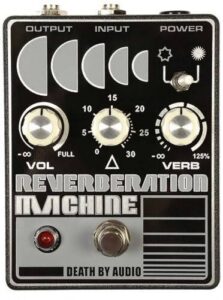
Deegan runs an Ampeg V-4B head into a Fender 6×10 cabinet. His board covers a Boss TU-3, Electro-Harmonix Hum Debugger, Boss TR-2, modded Ibanez Analog Delay, Death by Audio Reverberation Machine, Boss CE-2w, Tech 21 SansAmp Bass Driver DI, Darkglass Alpha Omega Ultra and Dunlop Volume (X) Mini, with a GigRig QuarterMaster handling the switching.
Grian Chatten
Grian Chatten sang through a Shure Beta 57A when the band covered for triple j’s Like A Version, and he’s been filmed playing a Martin 00-18 acoustic on songs from his 2023 solo record Chaos for the Fly.
Learn about all the latest Fender gear here