Floodlights’ front of house engineer explains mic choices, handling a loud stage and his advice for Australian soundies chasing work overseas.
When did you first start working with Floodlights?
I’ve been working with Floodlights as their live sound engineer since 2023. They came through the Gasometer Hotel where I was mixing in house and I really enjoyed their music and found they were very easy to work with. Shortly after that, they got announced to play at the Meredith Music Festival, which is a bucket-list festival for any Australian band. I’d worked there a few times before and I reached out to the band’s management. At that stage they didn’t have a regular FOH sound technician and being such an important gig for them, it didn’t take much convincing to bring me along.
That was the real test of my suitability to work with the band, because all their mates were in the audience. People who have seen the band play multiple times are a good judge, and everyone agreed it was a good fit. I’ve mixed most of the band’s shows since then.
Their recent tour in Europe moved between clubs like Molotow and Le Hasard Ludique and festival stages like St. Gallen, how differently do you approach a club show and a festival changeover?
When you are the headline band in a club, you have the luxury of time and primacy of stage setup. You can have a lengthy soundcheck to get the levels right and leave your drums and amps set up.
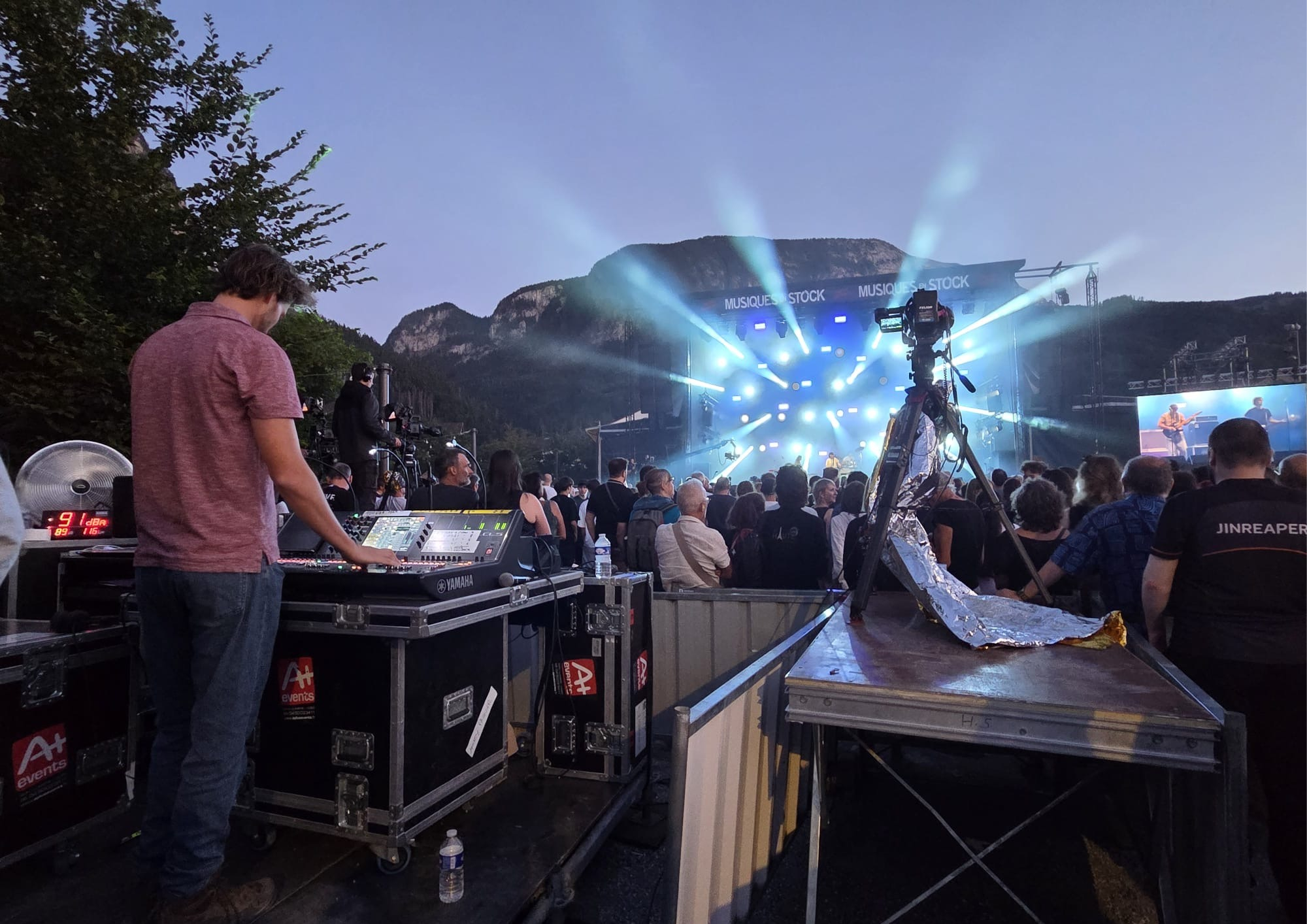
However, when you are playing a festival-style show, it has its own set of challenges. To save money on this tour, I was the only crew member. At a festival you are working closely with the local production crew to assist in setting up equipment, placing and patching in microphones and looking after the band’s stage sound. In smaller venues I would operate the stage monitors and in-ear monitors from my console. This is not possible at larger venues, so it’s really important to be able to communicate quickly with the monitor engineer side of stage to dial in the band members’ foldback requirements. This can sometimes cause challenges such as time pressure or language barriers, so having a detailed and up-to-date technical rider printed out and on hand can be helpful.
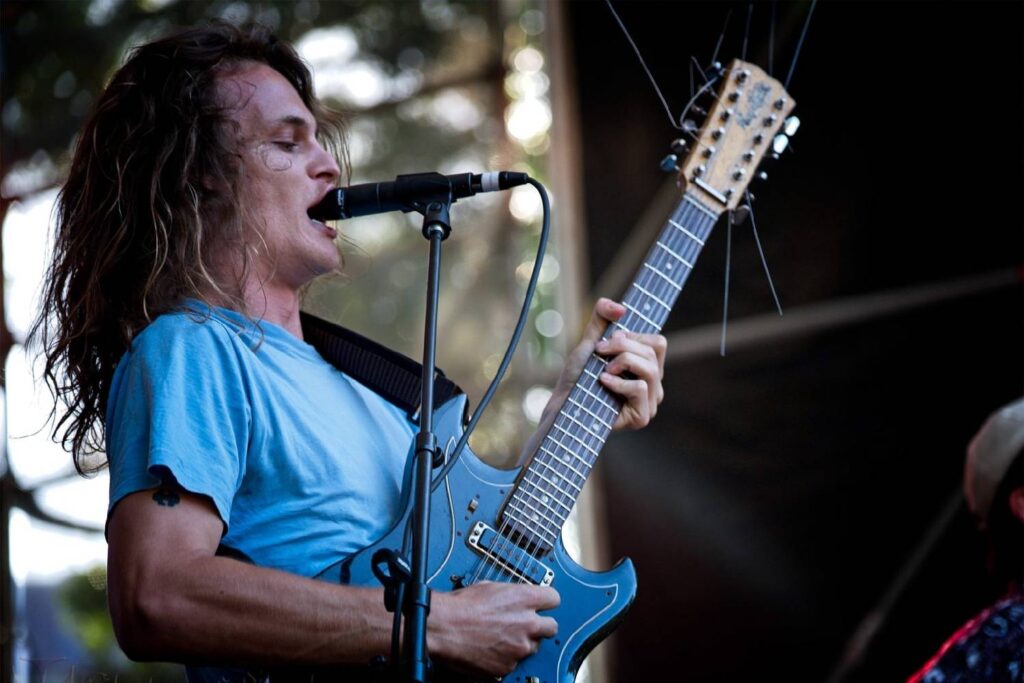
There’s definitely a difference in the way I approach stage volume in a smaller indoor venue versus some of the larger outdoor stages. Floodlights have a dynamic, powerful sound that ranges from flat-out driving rock to tender piano-driven ballads. The guitar amps must be set at a certain minimum volume to achieve the desired tone. Archie the drummer plays loud most of the time in order to create the impact, both sonically and from a performance perspective. I can’t simply ask him to play quieter, so these factors make for a loud stage. In an indoor venue that can really present a challenge, as I want to maintain as much control of the mix as I can. But ultimately I am just reinforcing what’s already coming off the stage. There are feature moments on the harmonica, keys and trumpet, but I can’t leave all those microphones up at full volume all the time because of the bleed.
Catch up on all the latest features here.

What gear came with you to Europe this time around?
I travelled light on this tour and used in-house consoles and microphones. The few choice mics I brought along were:
- Shure Beta 58 vocal mics, because they have a tight pickup pattern and help the vocals cut through in the mix.
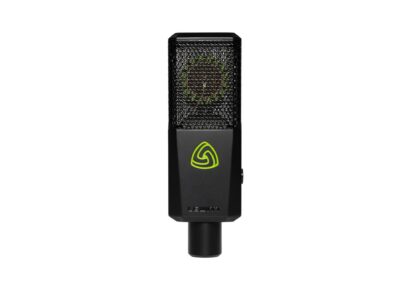
- Audix OM5 for harmonica. It’s a supercardioid mic that was popular in the 90s with a lot of loud rock and metal bands. It’s perfect for a harmonica, because when Ashlee plays, it’s with cupped hands right on the capsule. It has the secondary benefit of minimising the spill into the harmonica mic. When running reverb and FX units on stage, you end up hearing the snare drum coming through the harmonica mic as an unwanted side effect. That’s why it’s important to choose a very directional microphone.
- Telefunken M80 dynamic for snare top. I love these microphones. They give the impact and body of the snare while minimising hi-hat bleed.
Was there a room or a run on this tour that presented a particular challenge?
Most of the venues in France have mandatory government-imposed decibel limits. That’s always going to be difficult when mixing a rock band. My approach to that is to find out what frequencies the decibel meter is most reactive or sensitive to and use multiband compression to control them. Often the reading is averaged over 15 minutes, so you have to pick your moments.
Are there any other moments from the tour that stand out to you?
We were fortunate enough to support Nick Cave and the Bad Seeds at Burg Clam, which is a medieval castle 1000 feet above sea level in Upper Austria. That was a great experience for the band and myself. I do recall waiting for soundcheck in the afternoon sun overlooking a stunning vista while an expert tuned the grand piano. Of course, he needed complete silence to do this.
It’s common to have the crew and artists all sit down together for a meal provided by the venue. This is great for building morale and cultural exchanges. The band got into a memorable music exchange in Sconzier with some of the festival’s backstage employees. They would sing us an a cappella song and then it was our turn. Turns out they were in a choir together and had quite the repertoire.
What’s next? Is much of your year still spent mixing around Melbourne between tours?
After Europe, I went to America with Sweet Talk on their arena tour supporting Red Clay Strays.
Since then I’ve just started a four-week European tour mixing a soul band from Melbourne called The Meltdown. After that I’m going to be mixing some regional Victorian festivals. I occasionally work in-house at some venues in the inner north of Melbourne, but I’m looking at relocating to Nashville next year to hone in on the Americana/Country market.
What advice would you give an Australian sound engineer who wants to get on the road overseas?
Touring hasn’t been as strong or easy since the pre-COVID days. It feels like the music community is in need of some serious help in Australia, but it seems to be doing well internationally. It’s hard to get the capital and momentum together to make it overseas to tour, but once you do it once, it lays the foundation to come back again.
At least 50 per cent of the job is your personality, communication and listening skills. Learn when to listen and when to stay quiet. Don’t bother the musicians before the show with things that are irrelevant or won’t affect them. Give them the space to be creative, and don’t let your anxieties or stress impact them.
It’s not always going to be easy, and touring has its challenges: late nights, early mornings, lack of personal space and ever-changing surroundings, but the music industry has given me a lot over the years and I’ve had some incredible experiences.
Shure is distributed in Australia by Jands