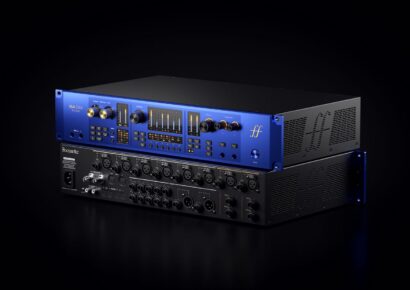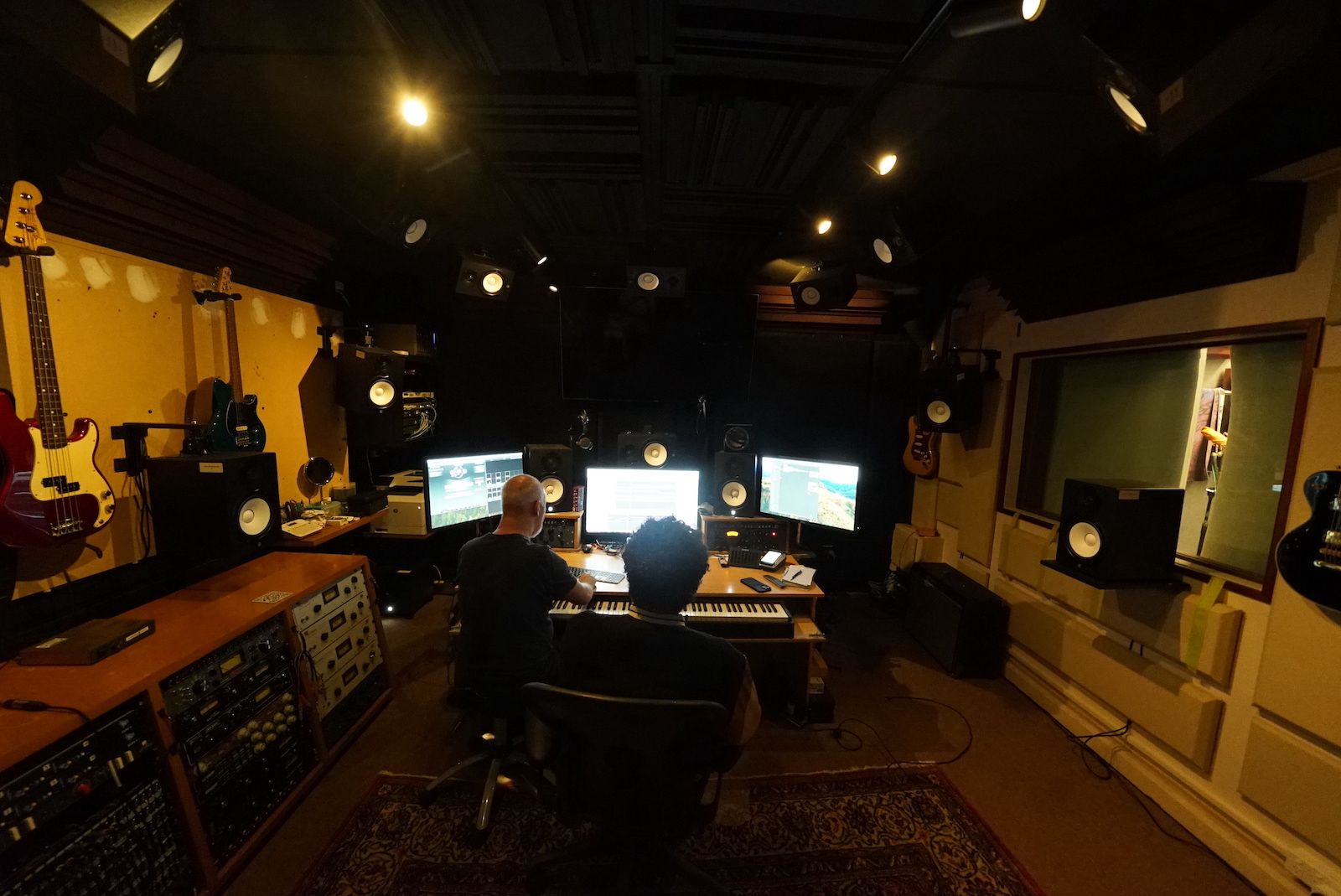
After three years of planning, sourcing and building, Crash Symphony Productions has completed one of the most advanced surround sound mixing systems in Australia.
With 24 speakers, a Trinnov D-MON processor and Prism ADA-128 converter at its core, the studio is now equipped to handle everything from Dolby Atmos music and film to immersive meditation experiences and museum exhibitions. We talked with James Englund to find out what drove the investment, what the build involved, and where immersive audio is heading next.
Catch up on all the latest features and interviews here.
Crash Symphony Productions has just installed one of the most advanced surround sound systems in Australia. What drove the decision to invest in surround sound?
Surround sound mixing marked the final technological frontier for Crash Symphony Productions – an exciting and natural progression to expand opportunities for our mixing engineers. From TV and film to video games, Dolby Atmos music, immersive meditation and healing experiences, and exhibitions, a wide range of projects now benefit from surround sound formats. Accessing these possibilities requires a premium Dolby Atmos and immersive surround sound mixing environment, purpose-built to deliver exceptional spatial audio experiences.
After three years of building, how does it feel to have the new system up and running? What did that process involve?
The process has been challenging, costly and time-intensive, so completing the system is a huge relief. Delays in sourcing key components added to the complexity, while installing 24 speakers throughout the mixing room proved to be a significant undertaking. Our studio technician, Francis Misfud, expertly handled the installation – managing audio cabling, speaker mounts, power distribution and ensuring precise speaker alignment toward the mixing position.
Once the hardware was in place, attention turned to configuring the digital signal routing and software required for surround sound mixing. This stage was led by our main mixing engineer and producer, Stewart Havill. Our primary DAWs, Logic Pro X and Pro Tools, were carefully set up to support surround sound mixing. With both hardware and software fully operational, the final step was calibrating the system using Trinnov to ensure optimal performance.
You’re running 24 surround sound speakers that can be quickly reconfigured to almost any format. How did you go about designing a system so flexible?
Our primary reference was the Dolby website, which provides extensive guidance on speaker configurations and immersive audio formats. While Dolby Atmos can theoretically support up to 128 channels – aligned with the capabilities of the Prism ADA-128 converter – most professional mixing is conducted in 7.1.4. This configuration includes seven speakers on the horizontal plane, four overhead and one subwoofer.
The most advanced format we identified in Dolby’s documentation was 13.1 Auro, comprising 13 array speakers, one subwoofer and a “Voice of God” ceiling speaker. As a result, there is no single format that utilises all 24 speakers simultaneously. Instead, speakers are activated as required, depending on the selected format.
To accommodate this flexibility, we designed the system around the highest supported configuration and worked backwards. At the centre of this is the French-designed and built Trinnov D-MON, which allows us to switch between formats quickly and seamlessly – something that would otherwise be significantly more complex without such a system.
What are the key pieces of gear that make the surround sound system work the way it does?
The system features nine ceiling speakers, eleven positioned around the room on the horizontal plane and four subwoofers placed in each corner. Two additional speakers can be engaged when required for a 13.1 configuration. The Trinnov D-MON handles system calibration and monitoring, while the ADA-128 manages conversion across all 24 channels. Audio is routed via Dante, ensuring efficient signal flow into the computer.
All hardware is housed in racks positioned to the left of the mixing position, with a large 65-inch screen directly in front of the engineer for TV and film work. Speaker groups are controlled using Philips Hue power switches, allowing activation to be managed digitally from a central iPad. This means only the necessary speakers are engaged – for example, when working in 2.1 – rather than running the entire system at once.
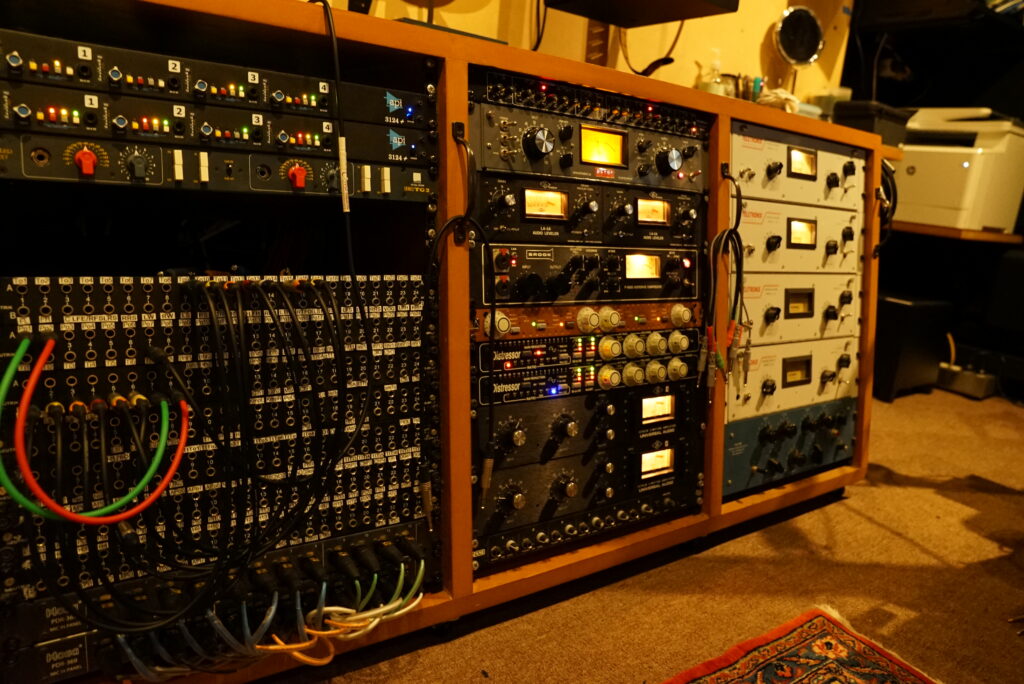
A hardware patch bay manages all analogue signal routing, enabling the integration of outboard effects and dynamics processing when desired. The Trinnov system also includes the La Remote, which allows the engineer to switch between speaker configurations – such as 2.0 and 7.1.4 – at the press of a button, making format changes, fold-downs and expansions seamless and efficient.
Tell us about the anchor pieces of the setup, the Prism Audio ADA-128 and Trinnov Audio processor. Why those two pieces specifically, and what do they bring to the room?
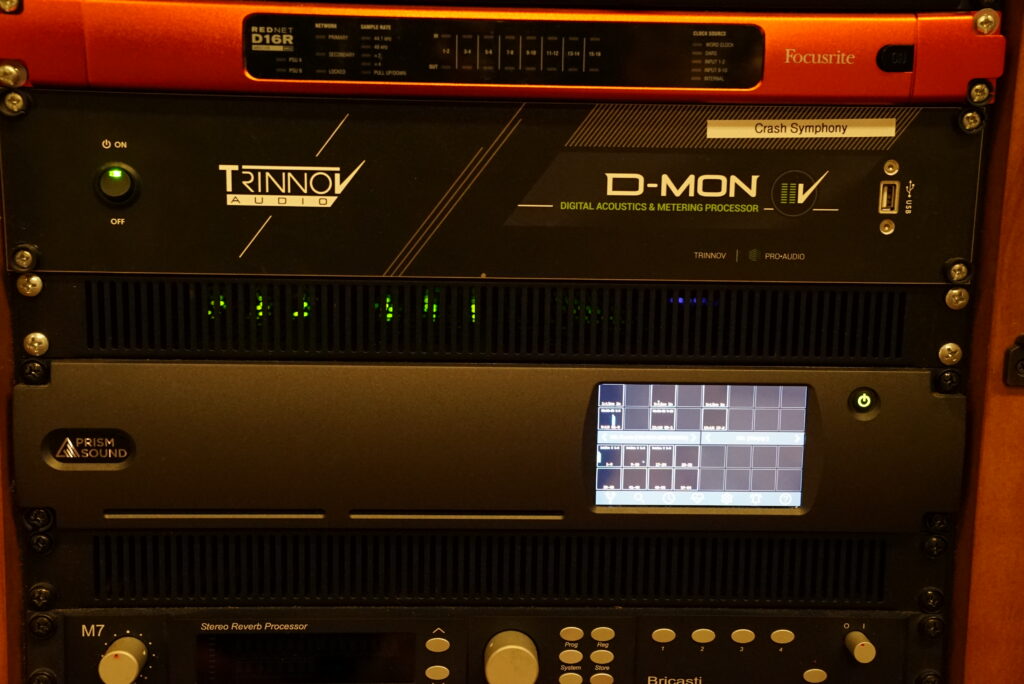
The Trinnov D-MON is widely regarded as one of the most respected monitoring systems in the professional audio world. Housed in a rack-mounted unit, it manages the studio’s entire signal flow, including talkback and routing to all surround speakers. Its defining feature is advanced calibration: the system aligns each speaker so that audio arrives coherently at a single listening position, while also applying precise frequency correction tailored to the room.
Using a highly sophisticated measurement microphone, the Trinnov analyses the acoustic response of the space, then adjusts both frequency response and time alignment. This ensures that sound from every speaker reaches the engineer’s ears at exactly the right moment. Without this level of optimisation, a multi-speaker environment could quickly become messy and imprecise. The Trinnov is therefore essential in delivering accurate, reliable surround sound monitoring.
The Prism ADA-128 serves as the studio’s primary digital audio converter, handling I/O across all 24 channels with exceptional stability, transparency, and reliability. Together with the RME Digiface Dante interface, these systems form a world-class signal chain, ensuring the highest standard of audio processing and delivery available today.
Surround sound mixing has traditionally been associated with film and TV. How has that changed, and what kinds of artists and projects are you seeing come through the studio?
We were inspired by developments in the music industry to expand into surround sound mixing. Streaming platforms like Apple Music are actively encouraging artists and producers to deliver mixes in surround sound and Dolby Atmos. As a result, many serious music creators are now exploring immersive formats, with some platforms even promoting or boosting artists who release surround mixes alongside traditional stereo versions. Given the volume of music production we handle, entering this space was a natural progression.
In addition, we have extensive experience mixing surround sound for museums and outdoor exhibitions. The meditation and healing industry has also become a frequent client, where high-quality surround mixes elevate the listener experience – immersive formats make these recordings truly spectacular.
Looking ahead, we plan to expand further into TV, film, and video game audio. While we already work in these areas, the post-COVID Australian audio industry has seen a notable increase in production demand. We are well positioned to meet this growth with expertise and precision.
Streaming platforms like Apple Music and Tidal are incorporating Dolby Atmos more and more. What does mixing in surround sound bring to a track that a traditional stereo mix can’t?
Dolby Atmos and other immersive surround sound formats aim to bring the listening experience closer to real life while also opening new creative possibilities. By increasing the number of speakers and optimising their placement, mixing engineers gain a dramatic expansion of their sonic palette. Audio has evolved from mono recordings to stereo, then to 2-dimensional surround formats like 5.1 and 7.1, and now to Dolby Atmos, which operates in a 3-dimensional space (7.1.4, 9.1.6, etc.). This progression represents the natural technological evolution of audio mixing, allowing artists and engineers to craft experiences that are more immersive, dynamic, and expressive than ever before.
You offer remote Dolby Atmos mixing via Source Connect and Source Elements. How does that work in practice, and how does it hold up against an in-room session?
Crash Symphony Productions has maintained a long-standing relationship with Source Elements, the company behind Source Connect – a software solution that links recording studios worldwide and opens opportunities for clients across the globe. Their most advanced version, Source Connect Facility, supports Dolby Atmos and cinema formats, enabling remote immersive mixing. This has become a crucial tool in our mixing arsenal, significantly expanding our international client base. While the software is still relatively new and we are continuing to gain experience with remote surround sound mixing, we are confident that it represents the future of our studio’s integration into the global audio mixing market.
For artists or producers who have never worked in surround sound before, what does the process of getting started with Crash Symphony actually look like?
Dolby Atmos mixing will be available to our artists and producers once a stereo mix has been finalised. Our priority is always to craft an exceptional stereo mix first, ensuring the music sounds its best. From there, the mix can be expanded into immersive formats – most commonly 7.1.4 – which is currently the most requested format for music streaming platforms. Delivering music in this immersive format not only offers a fresh and engaging experience for fans but can also increase an artist’s visibility on platforms like Apple Music, which are actively working to make these formats more accessible to listeners.
Where do you see immersive audio and Crash Symphony Productions heading over the next few years?
Our mission is to train all our engineers to mix in these advanced surround sound formats. We anticipate a significant increase in TV, film and video game music projects, and our team – made up of passionate composers and songwriters – is excited to apply their creativity in these immersive formats. Many of us are eager to mix our own work in these engaging soundscapes, driven to help our music clients advance their careers and provide their fans with richer listening experiences. Our system is extremely comprehensive and largely future-proof. We look forward to establishing ourselves as one of Australia’s leading surround sound mixing studios.
We would also like to acknowledge the people who made this project possible: Francis Misfud, for his passion and tireless hardware installation; Stewart Havill, for his expertise in software and mixing; Rod Owen at Turramusic, for ensuring we had the right gear and keeping suppliers on track; Trinnov in France, for their technical support and extraordinary audio systems; Peter Orehov at AVP, for supplying the Prism ADA-128 and the Trinnov system; and finally, myself, James Englund, for funding the project. Some men buy houses – some buy studios.
Head to Crash Symphony Productions to learn more.