From Duane Eddy's twang to Phoebe Bridgers' melancholy, the baritone guitar is having a moment. Here are the players who made it what it is today.
The baritone is back in a big way. Seemingly, out of nowhere, new baritones are being released left, right and centre.
Tuned a fourth or fifth lower than a standard guitar, baritones are deeper and darker than a regular six-string, adding weight and tension to whatever is played on one. It’s a quality that attracted session players and film composers long before metal, indie and pop caught on.
While the baritone is having a moment, it’s long been admired. Here are ten of the players who have made it their own.
Catch up on all the latest features here.
Duane Eddy
Before anyone else on this list picked up a baritone, Duane Eddy was already making it famous. The king of twang built a significant part of his sound around a Danelectro baritone, using it across plenty of recordings, including Bonnie Came Back, Because They’re Young and The Son of Rebel Rouser, as well as throughout his best-selling 1960 album The Twang’s the Thang. Playing melodies low on the neck with heavy tremolo and reverb, Eddy created a sound that was simultaneously sparse and enormous, essentially defining the possibilities of a low-tuned guitar for everyone who followed.
Glen Campbell
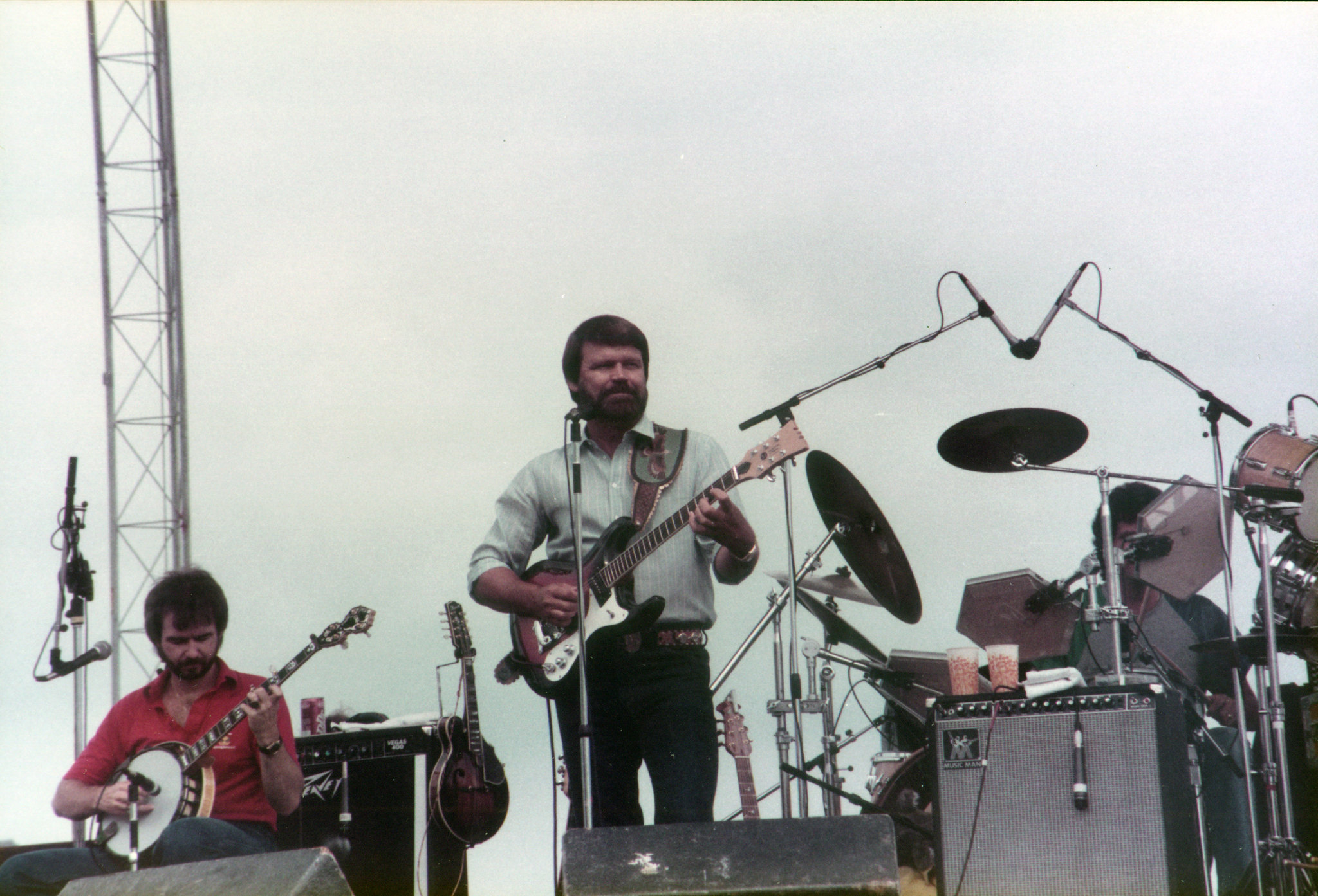
Few baritone moments in popular music are as immediately recognisable as Glen Campbell’s work on Wichita Lineman and Galveston. On both songs, Campbell played a distinctive baritone solo following the melody, the result being a warmth and depth that a standard guitar couldn’t have done.
Eddie Van Halen
The baritone is not what most people associate with Eddie Van Halen, which makes his use of it all the more fascinating. On Spanked and Runaround from Van Halen’s 1991 album For Unlawful Carnal Knowledge, Van Halen played a double-necked Ernie Ball EVH Music Man, the top neck being a baritone, which can be seen in the music videos and live performances from the era. It’s a lesser-known chapter in one of rock’s most documented guitarist.
James Hetfield
Metallica’s James Hetfield has reached for a baritone on a handful of occasions, most notably on Invisible Kid from the band’s 2003 album St. Anger, where he used his signature ESP baritone “The Grynch.”
Stephen Carpenter
The Deftones’ Stephen Carpenter recorded previous albums on standard-scale six-strings tuned as low as drop C, then switched to a baritone 7-string in 2002. The band’s 2003 self-titled album was recorded with it tuned to G#, a shift that added thickness to the low end that became central to how the Deftones sounded from that point on.
John Petrucci
Dream Theater’s John Petrucci has used Music Man baritone guitars tuned to A and B♭ as a compositional tool rather than purely for heaviness, exploring lower harmonic territory that on a standard scale length is awkward to play.
Tom DeLonge
Blink-182’s Tom DeLonge used a baritone on Adam’s Song from Enema of the State, and again on Obvious and Down from the band’s 2003 self-titled album. Both the earlier and later tracks showcase what a baritone’s darker character can do for a pop-punk sound, bringing an angst and heaviness that stood out against much of Blink’s catalogue at the time. The baritone is a significant part of that effect.
Dave Matthews
Dave Matthews is another player whose baritone use tends to surprise people. On his 2003 solo album Some Devil, Matthews used a baritone to add warmth and resonance to his playing that a standard guitar wouldn’t provide in the same way.
Pat Metheny
Jazz guitarist Pat Metheny has used baritone guitars built by luthier Linda Manzer across multiple solo albums. He recorded One Quiet Night (2003), What’s It All About (2011), and MoonDial (2024) entirely on custom-built baritone guitars. Metheny’s approach suits the introspective, spacious quality of those recordings; the baritone’s extended lower register and unusual tuning create sonic depth and breathing room within the solo performance, generating a sense of internal dialogue and openness that defines each album’s character.
Phoebe Bridgers
Phoebe Bridgers plays a Danelectro baritone – the same brand Duane Eddy was using back in the ’60s. Where Eddy reached for its low resonance for twang and swagger, Bridgers uses it for a quieter and more unsettled feeling, the instrument’s natural darkness a good match for the tone of her songwriting.