Fender recreates the ‘Frankenstein’ Precision that shaped the sound of pop for five decades.
The name Lee Sklar may not have the same recognisability as the people he has worked with, unless you’re someone who’s an avid reader of the musician credits on the back of albums. If you have listened to any of music’s greatest songwriters from the past five decades, chances are you’ve heard him and his bass. He has played bass for artists like Linda Ronstadt, Carole King, Dolly Parton, Hall & Oates, Phil Collins and, most notably, James Taylor. Sklar has amassed 4,000-plus recording credits over his nearly 60-year career. He has stated that his ‘Frankenstein’ Precision Bass has been on roughly 85% of those recordings.
Catch up on all the latest reviews here.
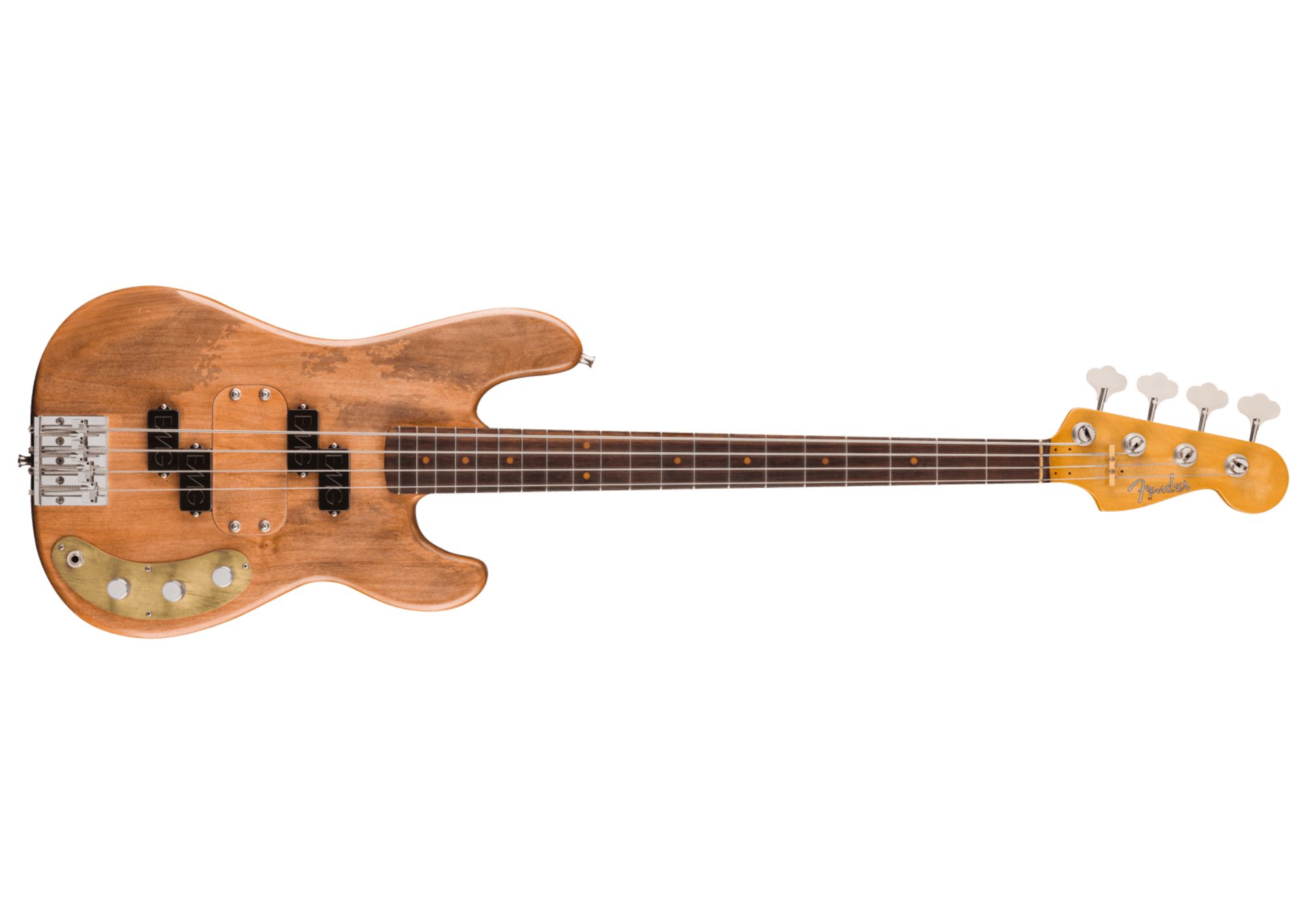
If you have an eye for detail, you might think the bass has a closer resemblance to a Jazz Bass than a stock Precision Bass. This is intentional, as Sklar started on a Jazz Bass and didn’t like aspects of the Precision. Sklar had acquired a neck from a 1962 Precision and happened to show it to luthier John Carruthers, who suggested they put a bass together. Sklar bought an unfinished blank Precision body from Charvel. While they were putting it together, Sklar wanted to take the pickup placement and neck profile that a Jazz Bass has and apply them to this bass. The reason why the bass has split P-style pickups is because EMG were a new company and hadn’t started producing J-style pickups. This is the first known bass to have the split order reversed, with the first pickup coil positioned under the D and G strings and the second coil positioned under the E and A strings, giving more clarity to the note. When Carruthers was reshaping the neck, Sklar asked if he could put mandolin gauge fret wire instead of jumbos, as he liked glissando but didn’t like the clack sound that jumbo frets made when sliding over them. Carruthers initially thought that mandolin frets wouldn’t work on a bass.
The body is made from alder and has a satin heirloom nitrocellulose lacquer finish. Fender has spent a lot of time detailing the years of wear on Sklar’s original. The only difference to Fender’s model is that there are no signatures. The maple neck is modelled after a 1962 Jazz Bass ‘C’ profile with a 7.25″ radius laminated rosewood fingerboard.
Hardware wise, this has to be one of the most kitted-out Precisions that Fender has ever offered, featuring a Badass II bridge and Gotoh Reversed-Open Gear Tuners with a Hipshot BT3 Bass Xtender on the E string, allowing players to easily tune to drop D tuning. Pickups and controls are heavily inspired by the classic Jazz Bass layout of volume for each pickup and master tone. Instead of one centred split-coil pickup, the bass has two EMG active Lee Sklar P Pickups, which are individually powered by two 9V batteries. While these are active pickups, the bass does not have any built-in pre-amp or EQ.
It was quite an exciting opportunity to be able to play this bass. As someone who is familiar with it, one of the most curious aspects is the mandolin gauge fret wire, as this is not common on any style of bass. Picking up this bass for the first time felt like reuniting with an old friend. Everything from the positioning of the controls to its cutaways has a familiarity. Playing this bass is simply joyous and takes minimal effort. This has to be one of the easiest basses to fret a note and slide up and down the neck on. The neck is the only element of the bass that feels and looks new. However, despite appearances, this neck falls into the Goldilocks zone as it has the right amount of chunkiness of a Precision neck and narrow roundness of a Jazz neck.
The 34″ scale and light weight is incredibly comfortable to hold and play. The combination of the Badass II bridge, brass nut and active pickups gives an excellent sustain, evenness and clarity to each note, no matter where you’re playing on the fretboard.
Tonally, this bass leans towards a P-bass rather than a J-bass, despite the pickup positions. While the neck pickup is slightly above the traditional centre position, there is not a great amount of tone shift, and it still has plenty of midrange growl and sub-low depth that Precisions are known for. The bridge pickup adds a pleasant hi-fi quality when the two pickups are blended. On its own though, the bridge pickup still has the midrange-focused Precision sound, while it does have slightly more treble, it does not have the classic honk of a J-bass bridge pickup. Overall, this bass is its own thing. While the P and J sounds are both present, countless tonal possibilities lie in between.
This is one for the serious bass player and fan of Lee Sklar. Fender has done a spectacular job at recreating one of the instruments that has shaped the sound of pop music for over five decades and been lusted over by many a bassist. Everything about this bass is the culmination of years of experiments, adding new technologies (for the time) and playing experience. This bass is one of those rare instruments that you’ll never sell if you buy one.
For more information, head here