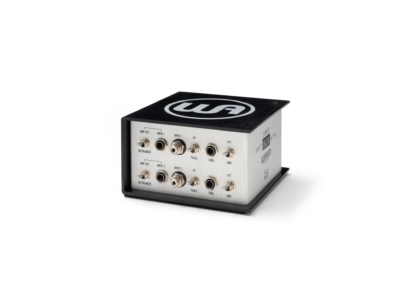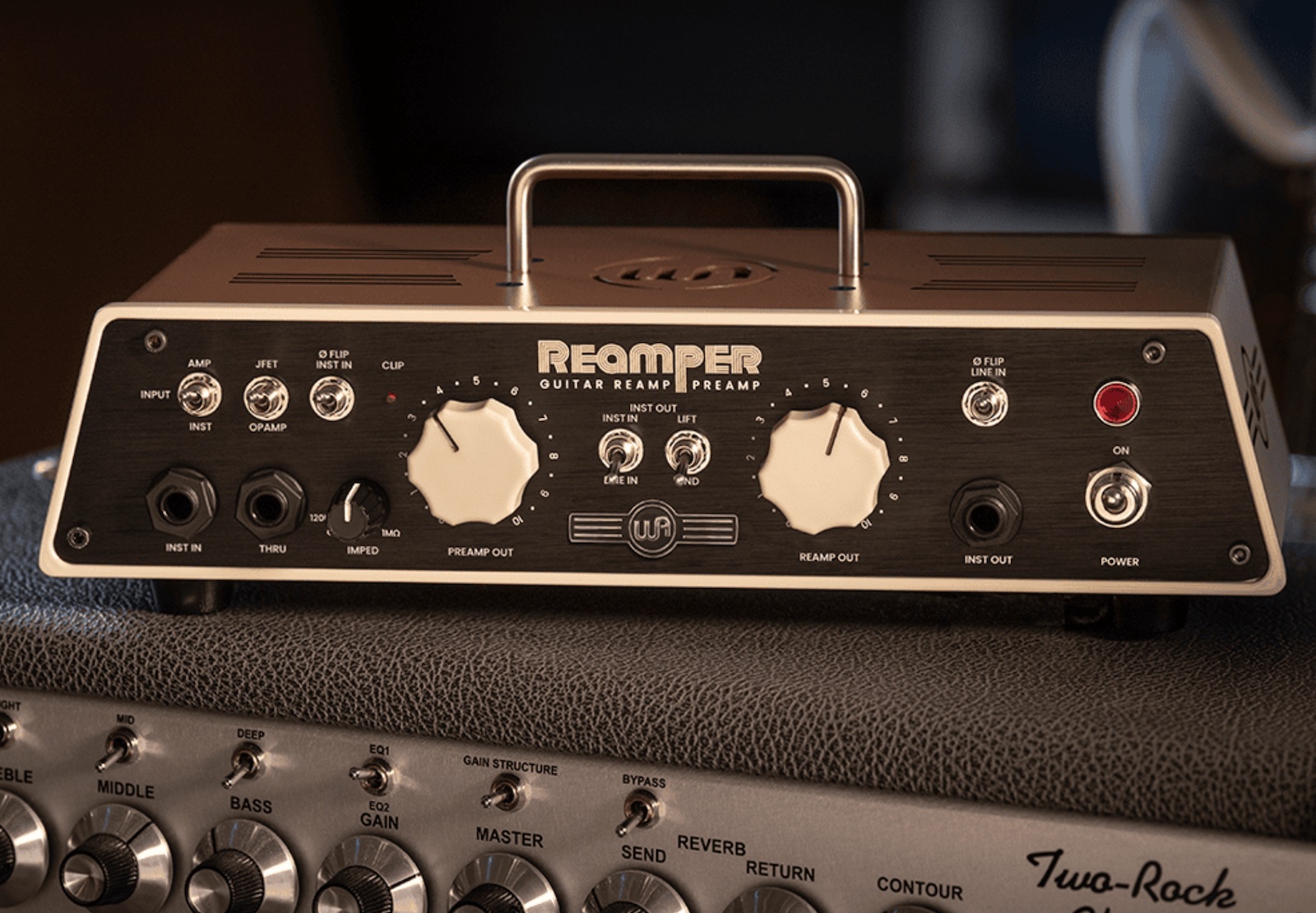
The Reamper is a fully analogue re-amping and signal routing device with a built-in power soak for silent tube amp recording.
Re-amping is one of those studio techniques that sounds simple in theory, but can be far more complicated in practice. Warm Audio’s Reamper aims to change that.
The Reamper is a fully analogue studio signal conversion device with two completely independent signal paths – a preamp out and a re-amp out – each with separate gain staging controls. Running a dry bail-out signal to your DAW while simultaneously feeding a tube amp for re-amping no longer requires a patchwork of workarounds.
Catch up on all the latest news here.
USA-made CineMag input and output transformers take care of conversion, and variable impedance control with a range of 120kΩ to 1MΩ lets the Reamper accept a wide range of sources without noise or distortion. Guitars, basses, synths and line-level studio gear all feed in cleanly. A JFET/Op-Amp switch shapes the character of the direct signal – JFET for a warmer, more vintage quality, Op-Amp for cleaner gain when the source calls for it.
The built-in 50W/8Ω power soak makes silent recording possible. If you connect a tube amp to the AMP-IN section and leave the THRU output disconnected, you can record without a cabinet. Pair it with an impulse response in your DAW, and you’ll get an accurate amp-in-the-room tone without the volume. When the THRU output connects to a speaker cabinet, audio routes to the cab as normal with no power or impedance limits. A ground lift switch eliminates hum and buzz from ground-loop issues, which become increasingly common as signal chains grow.
In practice, the Reamper covers a lot of ground – re-amping dry guitar and bass through real tube amps, integrating pedals into line-level studio chains, running studio processing into instrument signals and daisy-chaining two amps in a single take. For engineers and producers who want analogue integration without rebuilding their setup every session, it consolidates a lot of that flexibility into one box.
For local enquiries, head here.