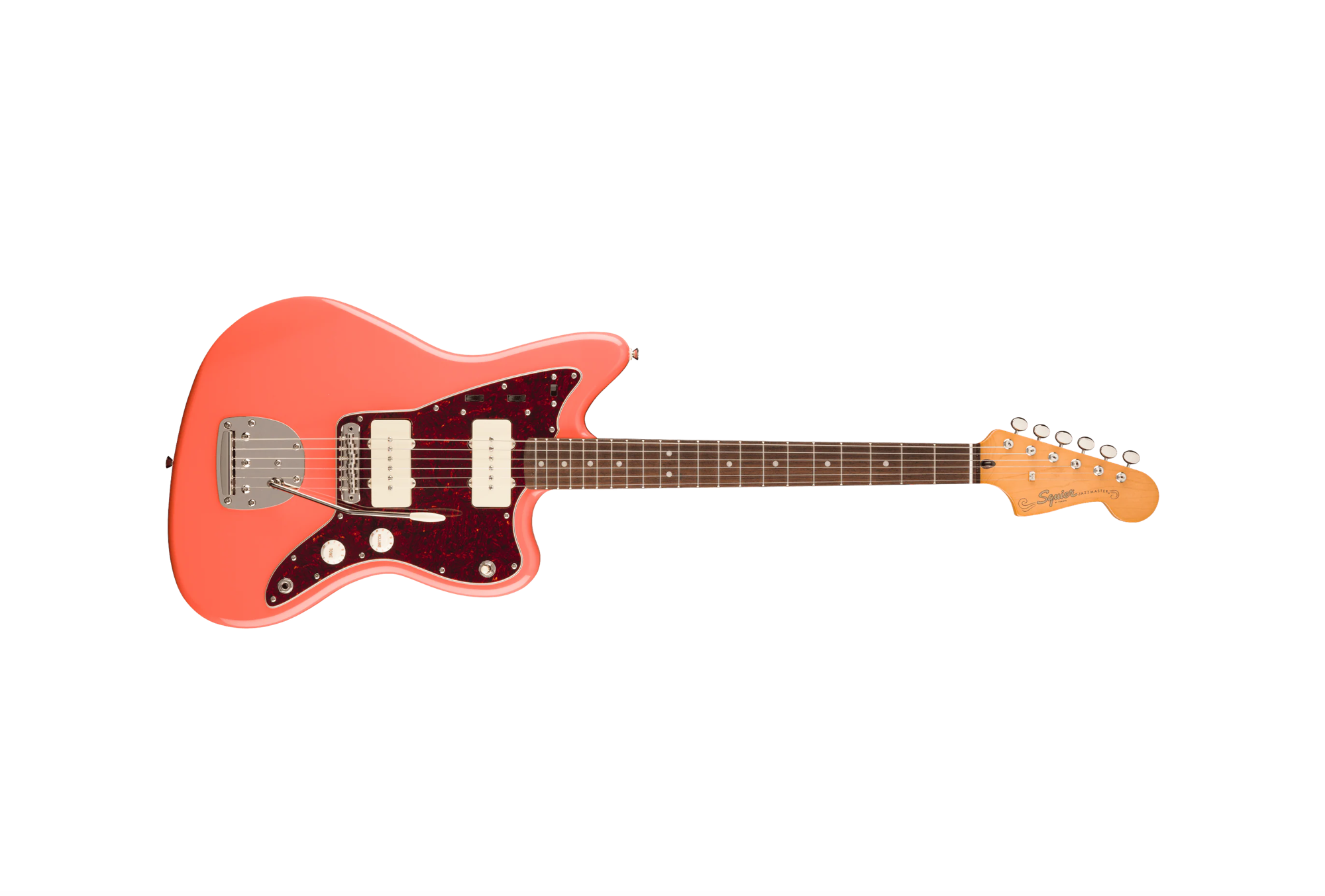
Great news for fans of Squier’s flagship Classic Vibe series; many of their most beloved models are now available in a new range of period-correct colours that are more vibrant than ever.
The Classic Vibe series has long been loved for producing extremely affordable versions of timeless Fender models inspired by specific eras in the brand’s long and storied history. The Classic Vibe ’60s Jazzmaster specifically is now available in one of the most classic ’60s colours in the brand’s catalogue, Tahitian Coral, a colour that just screams ‘surf’ and takes you right back to the brand’s glory days in the early ’60s.
Read all the latest reviews here.
From Fender themselves, the Classic Vibe ’60s Jazzmaster is a faithful and striking homage to the iconic Fender favourite, producing undeniable Jazzmaster tone courtesy of its dual Fender designed alnico single-coil pickups. Player-friendly features include a slim, comfortable “C”-shaped neck profile with an easy-playing 9.5″-radius fingerboard and narrow-tall frets, a vintage-style tremolo system for expressive string bending effects, and a floating bridge with barrel saddles for solid string stability. This throwback Squier model also features 1960s-inspired headstock markings, rich-looking nickel-plated hardware and a slick vintage-tint gloss neck finish for an old-school vibe.’
Tahitian Coral is a gorgeous pink colour with a strong orange undertone. Like many classic guitar colours, it is derived from the automotive industry, having been first produced for a 1958 Chrysler. It’s a colour that is very much associated with Fender’s heyday in the early ’60s, a time in which surf bands were readily adopting the Jazzmaster as their weapon of choice. On this model, it looks fantastic against a Tortoise Shell pickguard and Laurel fretboard and is about as bright and vibrant as it gets. It’s certainly an eye catcher.
The Jazzmaster was first introduced in 1958, famously missing the mark with its intended audience of jazz musicians and instead striking gold with surf bands, and ultimately a vast array of alternative, indie and shoegaze groups further down the line. Today it is known as the ultimate ‘left of the dial’ guitar, having been used by such iconic alternative artists as Elvis Costello, Thurston Moore, J Mascis, Robert Smith and MJ Lenderman.
The Squier Classic Vibe ’60s Jazzmaster is a super affordable throwback to those early iconic Jazzmasters, stripped back to its simplest form and made to be as accessible as possible for new players with a limited budget. In saying that, it plays great and sounds fantastic and J Mascis himself is known for playing a Squier version of the iconic guitar.
The Classic Vibe Jazzmaster features a Poplar body with a gloss polyurethane finish and a maple neck with a lovely light brown laurel fretboard. Despite its low price tag this model features some authentic throwback components such as vintage Kluson-style machine heads, narrow tall frets and a retro headstock design. It also features modern upgrades to improve playability like a more manageable 9.5” radius that tends to fret out less than the original 7.25”.
Aside from feeling great in the hands and having a smooth playability far exceeding expectations, this CV ’60s Jazzmaster really does capture the vintage Jazzmaster tone. Featuring two Fender-designed wide range, soapbar style single coil pickups, the unique sound of a Jazzmaster has been accurately captured by this very accessible iteration.
Bright like other single coils but not as thin-sounding, Jazzmaster pickups have wider coils than a Strat or Tele and therefore pick up a broader range of frequencies. Whilst not quite as beefy as a P90, they are definitely warmer and thicker than the average single coil and provide a very versatile range of tones that are applicable to almost any genre.
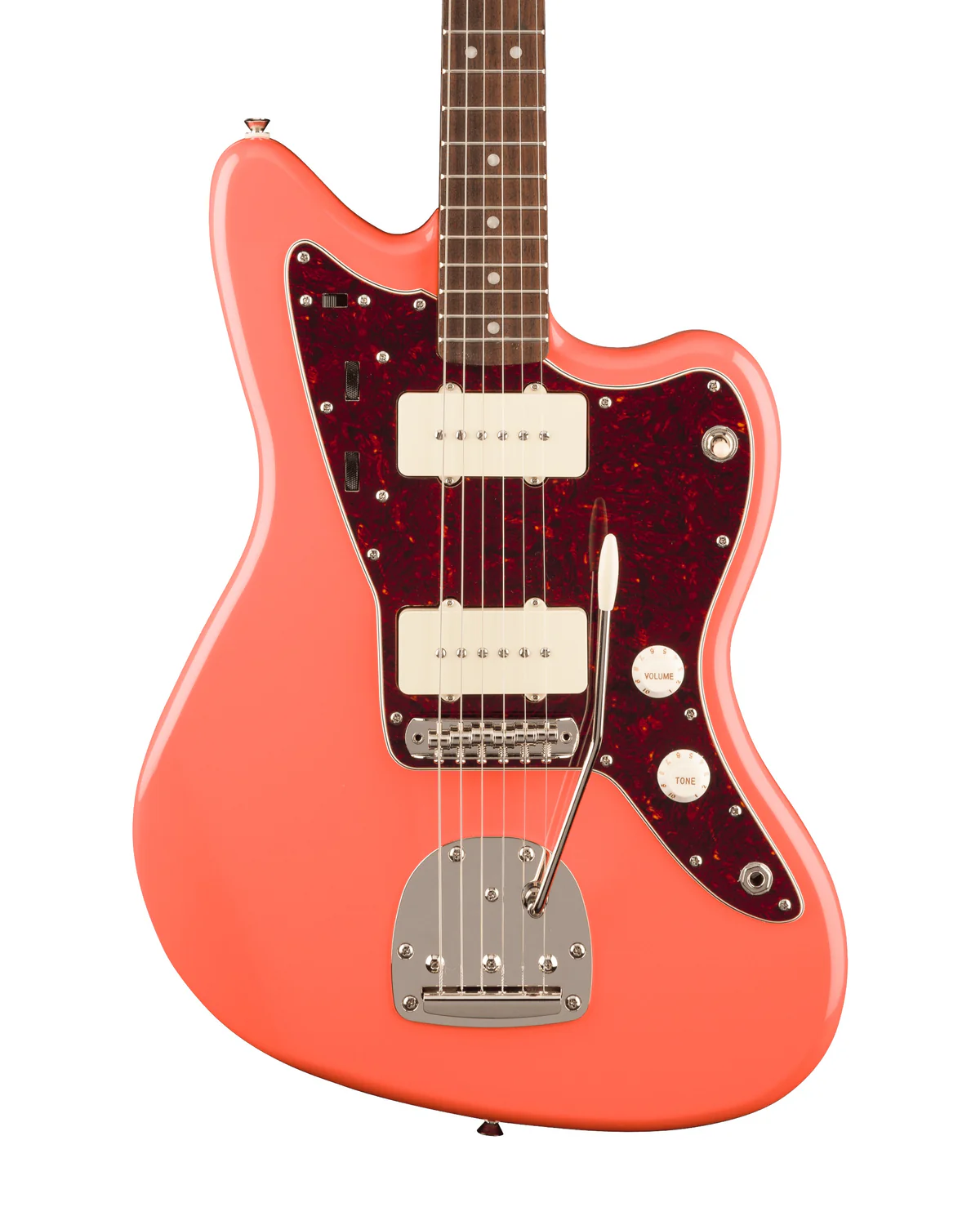
Also included in this entry-level model is the infamously elaborate and yet beloved Jazzmaster circuitry. Intimidating to some but endlessly useful to those in the know, the circuitry of a Jazzmaster, including this one, is somewhat of a marvel. The Jazzmaster has two entirely separate tone circuits. The lead circuit has standard controls for a Fender guitar: a single master volume and tone control on the lower bout, and a three-position pickup selector toggle switch. The darker-sounding rhythm circuit has its own separate volume and tone control wheels found on the upper horn.
The lead circuit is fairly simple. Activated by setting the upper horn slide switch in the down position, the master volume, tone and three-way pickup selector switch work as one would expect. The rhythm circuit, activated by setting the upper horn slide switch in the up position, is controlled by two inside wheels on the upper horn next to the slider switch, which function as passive tone and volume controls. When in the rhythm setting, only the neck pickup is operational and the bridge is deactivated. The pickup selector switch and lower-bout volume and tone controls also become non-functional in this setting.
As a result, there are two ways to set a Jazzmaster so that only your neck pickup is heard, but the interesting thing is that each method provides a different sound. The rhythm circuit’s neck pickup tone is noticeably darker than the lead circuit’s neck pickup tone. This is due to different potentiometers being used in each of the circuits. Functionally, this is a bit like having a third pickup, adding to the versatile range of tones already provided by the Jazzmaster, were it only to have a lead circuit.
Also included in this model is the extra-long vibrato arm so crucial to the dive bombs of surf rock and the sonic mayhem of shoegaze. The iconic bridge setup of a Jazzmaster is also crucial to the ‘behind the bridge’ playing that has made this model an essential noise-making tool for bands like my Bloody Valentine and even Queens of the Stone Age, specifically in the hands of Troy Van Leeuwen.
In short, the Squier Classic Vibe ’60s Jazzmaster is a super affordable version of a ’60s Jazzmaster that does a great job of capturing the essence of the iconic guitar. With its new and retro Tahitian Coral paint job, it looks better than ever and has never more effectively embodied the spirit of the 1960s. An excellent choice for a first electric guitar for somebody with a penchant for alternative music, this would also make a fine addition to any guitar collection lacking a bit of noise and flair.
Check out the whole Classic Vibe series here.