Distributor: Fender Music Australia | RRP: $399
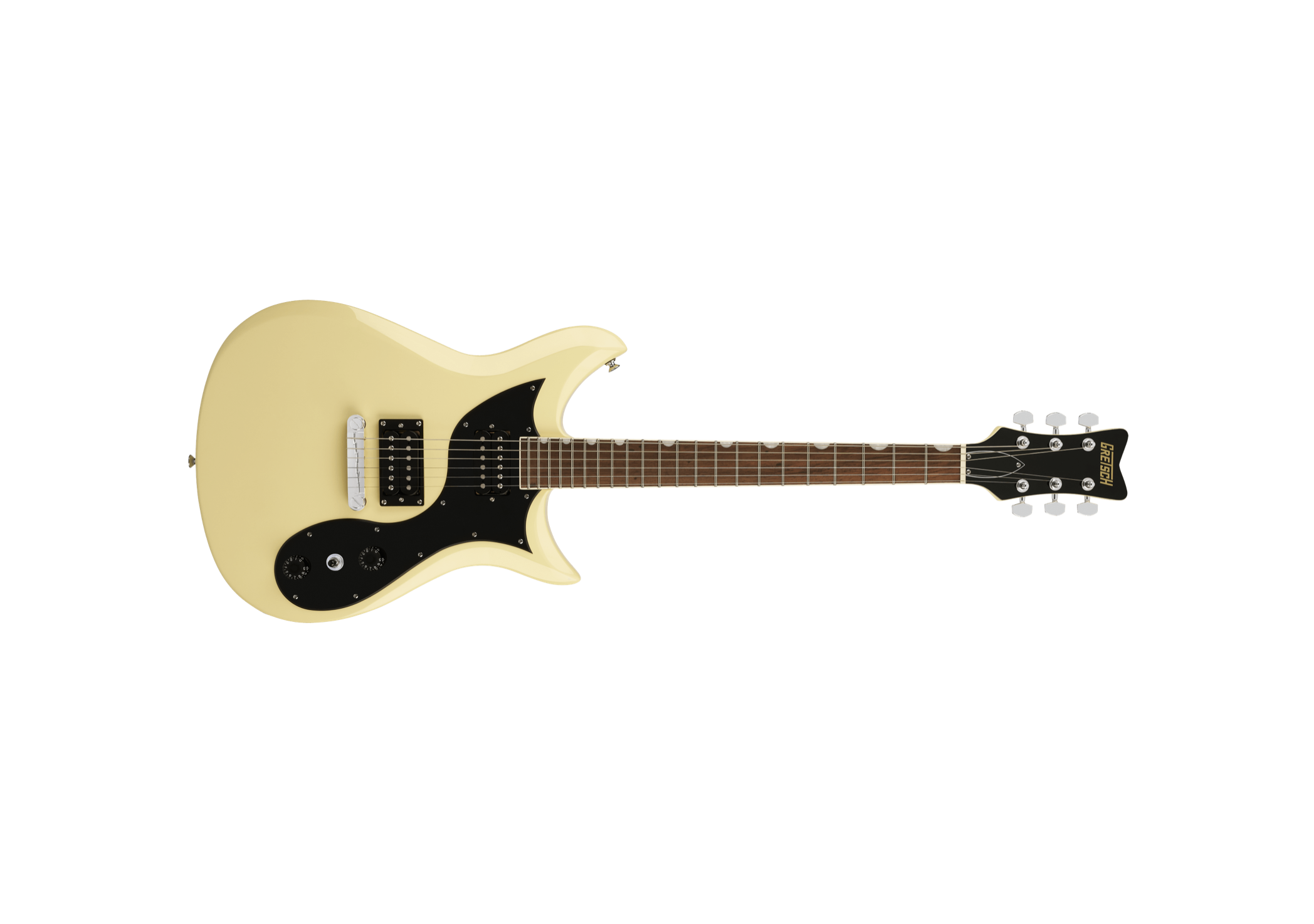
The Gretsch Corvette was originally released in 1961 to compete with other brands’ student model guitars. Like many of those student models, the Corvette came in numerous pickup configurations and tailpiece options, with some configurations developing cult followings. In 2026, Gretsch reinvigorated the Corvette body shape for the next generation of rockers with the introduction of the Streamliner CVT. This guitar drips vintage chic and harks back to a time when the guitar was seen as a dangerous weapon of rhythm. If you want a no-frills, stripped-back, short-scale rock ‘n’ roll machine, then the Streamliner CVT is the guitar for you, featuring all-mahogany construction, two humbuckers and a compensated wraparound tailpiece.
Catch up on all the latest reviews here.
The Streamliner CVT comes in four colours: Jet Black, Aged White, Sea Foam Green and Olive Drab. The headstock features the classic Gretsch Split-V, three-a-side tuning peg design instead of the asymmetrical four-and-two that the late-’60s Corvettes were known for. Gretsch has improved the headstock break angle to help with tuning stability.
The CVT has a bolt-on mahogany neck with a 22-fret Indian Laurel fingerboard, medium jumbo frets, a GraphTech NuBone nut and pearloid Neo-Classic Thumbnail fret markers, along with aged white binding. The neck has a fast C-shaped profile, yet when combined with its 12″ radius, it is surprisingly chunky. The back of the neck is finished with the same gloss paint as the body and doesn’t feel sticky when playing.
The mahogany body has been updated for the modern player, with more pronounced bevelled contours and a rounded heel joint for comfortable upper-fret access. It is surprisingly lightweight for a mahogany body.
The 24.88″/632mm scale of the Gretsch CVT is the perfect length for young children wanting their first electric guitar or seasoned players wanting something with a slinkier feel. As someone who tends to play larger-scaled guitars, the CVT might feel a bit cramped when you first pick it up, but after a few minutes you won’t notice a difference.
Electronically, the guitar keeps things simple, with two HotWire high-output ceramic humbuckers, master volume and tone, and a three-way pickup selector switch. This is where the Streamliner CVT really shines. These coverless humbuckers sound monstrous. Both pickups have been vacuum wax-potted to reject background noise and measure around 12–14k ohms.
They will have no problem kicking an amp into overdrive, and they will also clean up when the volume is backed off. The neck pickup has a lot of bass on tap, especially when the tone is rolled off, which adds a nice heft for fuzzed-out doom sounds. When both pickups are active, there is a balance and clarity that is perfect for rock rhythm playing. The bridge pickup has the right amount of treble for leads. These pickups were built for hard and heavy rock. However, don’t let that last sentence fool you, as manipulating the volume and tone controls will offer a nice array of tones across both pickups, everything from a dark and mellow jazz sound on the neck pickup to a snarling rock sound on the bridge pickup. Both volume and tone potentiometers have been fitted with speed knobs and have seriously slick action.
There’s a lot to like about the CVT. The pickups sound great, the neck feels good, and for an entry-level guitar from a well-known company the $400 AUD price point is hard to beat, especially for a guitar with two amazing humbuckers. The few things holding it back come down to hardware and setup, and some of these may be down to our particular review unit rather than the model as a whole.
The Gretsch Corvette is an extremely underappreciated and largely unknown guitar with very few notable players, one of whom is Rory Gallagher – so if you want to stand out from the crowd or play some old-fashioned dirty rock ‘n’ roll, the Streamliner CVT is well worth checking out.