Distributor: Technical Audio Group | RRP: $2349 each
After debuting the Image 2s a few years ago, Fluid Professional, the pro-focused wing of Fluid Audio – a brand that built its name on more affordable studio gear – has launched the Image 1, a smaller take on its successful bigger brother.
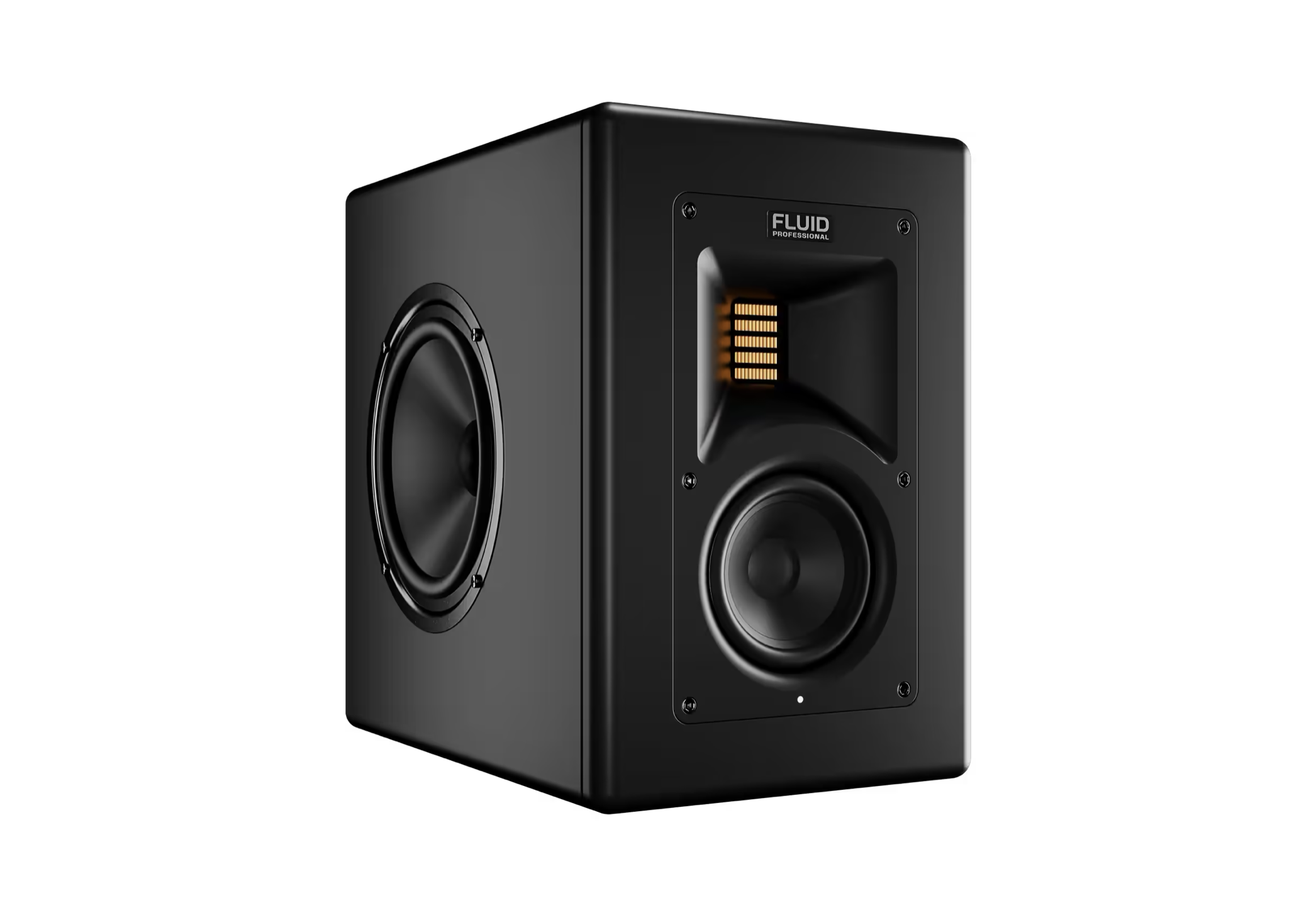
Straight out of the box, this monitor is sleek, and in checking it out further, the Image 1 is definitely feature-packed. It’s a 3-way design with dual (yes, dual!) 6.5-inch side-mounted low-frequency drivers, a 4-inch aluminium mid-frequency driver and a waveguided AMT tweeter, along with both digital and analogue inputs, rear-panel EQ tuning switches and onboard DSP capable of storing SoundID Reference calibration profiles. There’s 475 watts of amplification per monitor behind all that, split across the three drivers, so headroom is never in short supply.
Catch up on all the latest reviews here.
On the technical side, the Image 1 reaches down to 42 Hz, and courtesy of its Vi-bracer design the woofers are force-cancelling, reducing cabinet vibration for a tighter, more controlled low end. It also runs a sealed cabinet rather than a ported one, something that’s unique at this price point, and part of why the low end stays so composed. This is especially apparent in smaller rooms, where the Image 1 reaches that low with serious power without the unwanted room reflections a port can throw up.
Sitting the dual woofers opposite each other cancels out much of the cabinet reaction force I’d otherwise feel, and I could hear the benefit as a low end that stayed put rather than smearing.
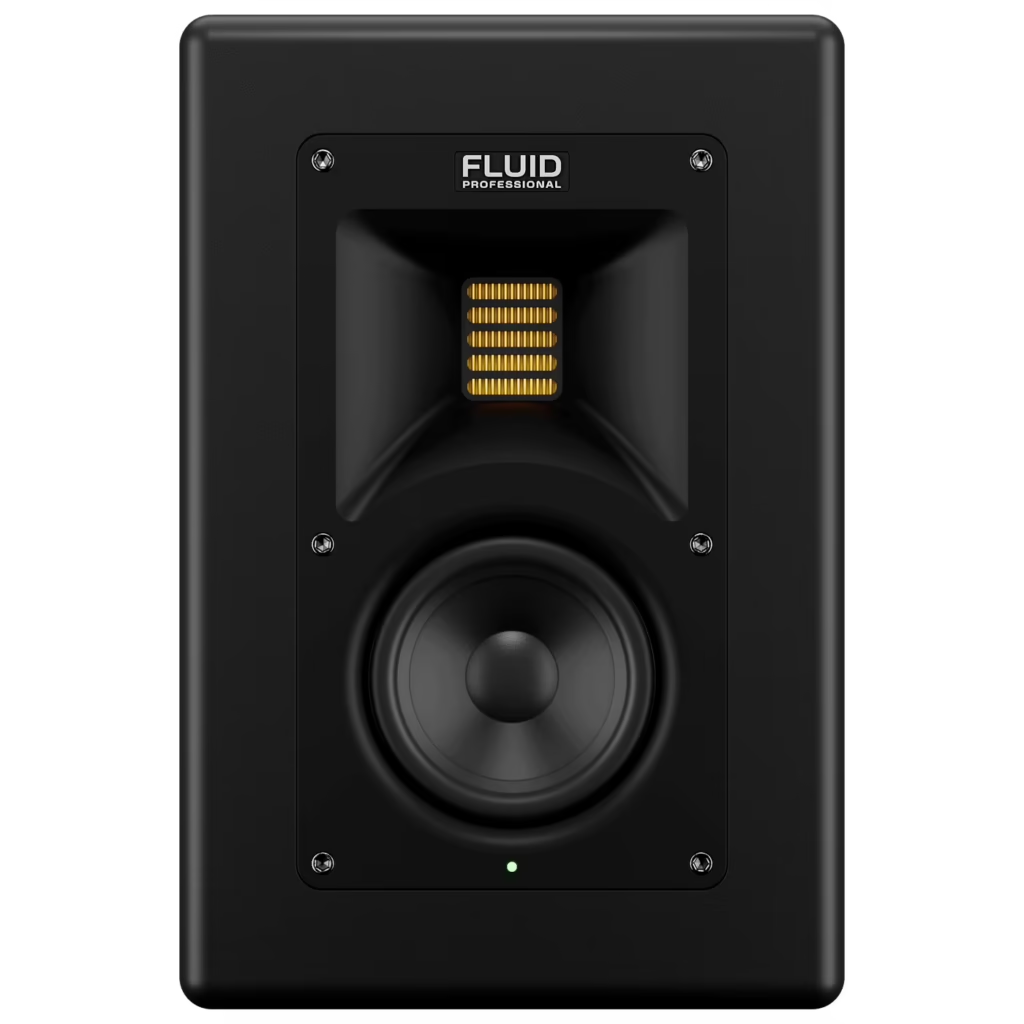
The waveguided AMT tweeter is very directional by design, which focuses the sound on the listening position and again reduces room reflections in the process. Mounting the tweeter a little inside the cabinet aligns it with the mid-frequency driver, and the pairing is tight. The tweeter is also extremely fast, handling very short transients with ease.
The crossover between the two (set at 3 kHz, with a lower crossover at 190 Hz handing off to the woofers) never draws attention to itself. As a folded Air Motion Transformer design, it moves air quickly, and it shows in the way it renders detail, ambience and movement up top without ever getting harsh.
Straight out of the box, before touching SoundID for any tuning, the near-flat frequency response was pleasing and smooth. The low end was present but focused, and felt consistent across the room. The midrange sat forward enough to read clearly without being over-emphasised, and the high end was detailed and crisp. Overall they displayed a fantastic sound.
A lot of that even balance comes down to the dedicated midrange driver. Rather than asking a woofer to cover vocals and the bulk of the instrument range the way a two-way would, the Image 1 hands that job to the 4-inch aluminium cone, which has a low-distortion motor with a shorting ring to keep things clean. In practice, that meant the vocals sat exactly where I placed them, instruments stayed separated in a busy mix, and long sessions were noticeably less tiring on the ears.
One very interesting feature of these monitors is the ability to turn off the bass woofers and emphasise the mid frequencies by putting them in the aptly named CubeMix monitoring mode. Using the Image 1 in this mode made my mix decisions in the midrange simpler, and really made me focus on the nitty-gritty of the sensitive region of hearing, a great feature to have when you’re chasing translation to other systems.
The onboard DSP stores up to four SoundID Reference profiles, which meant I didn’t need to keep the software running on my computer once the measurements were done. Running SoundID and loading a profile straight into the monitors was straightforward, and having it live in the speaker itself makes them properly standalone. I could hook them up to an analogue mixer, with no computer in the signal path at all, and still get the benefit of a flattened room. The rear-panel EQ switches are handy here too, letting me compensate for boundaries and room interaction before I even reach for software correction.
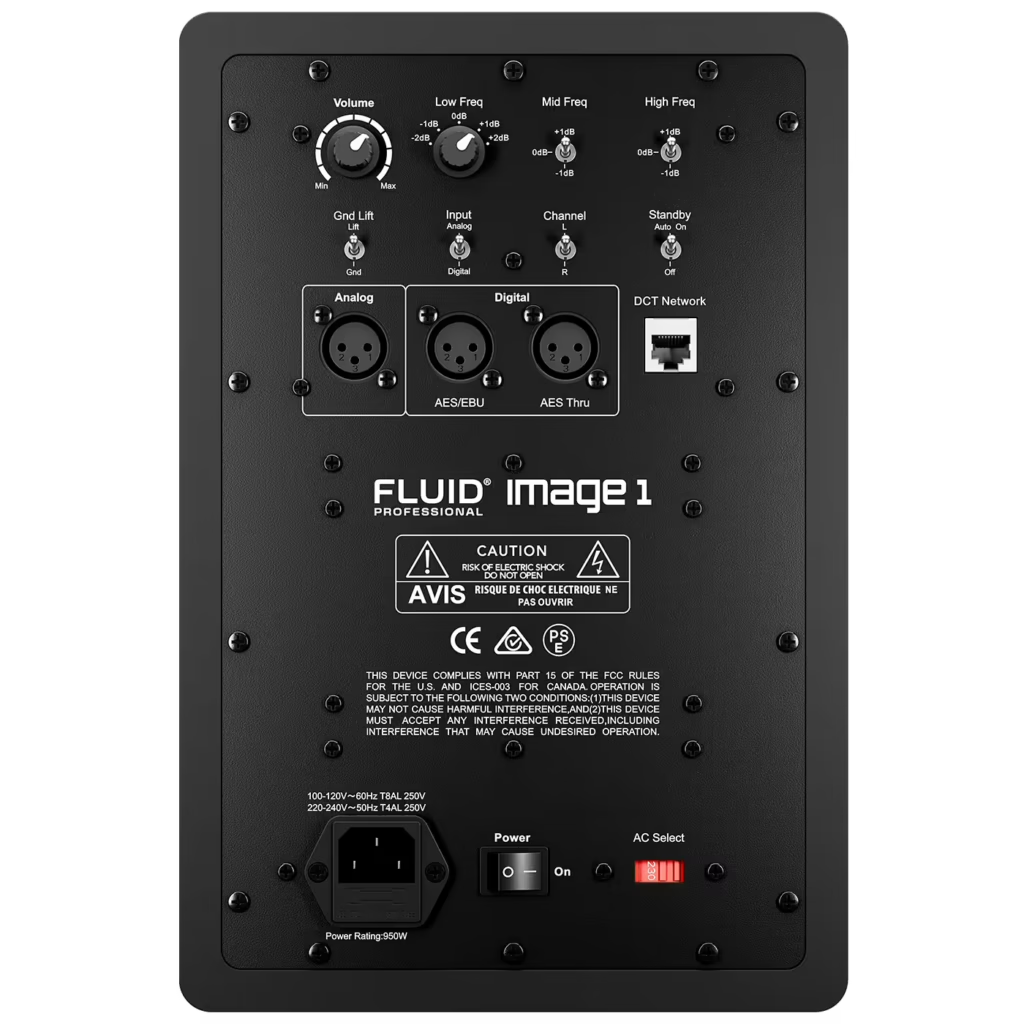
Connection-wise the Image 1 covers both worlds, with a balanced analogue XLR input and AES/EBU digital in and thru, so the Image 1 slots into a professional digital setup as easily as a traditional analogue one. The digital thru in particular keeps daisy-chaining and larger monitoring setups tidy.
The Image 1 is the compact option in the Image Series, weighing just under 10 kg, with the larger Image 2 on hand for bigger rooms and higher SPLs. There’s the 212S subwoofer if you want to extend the low end further for immersive or Dolby Atmos work, something the Image 1 is clearly built with in mind.
After a good stretch of mixing on them, the near-flat response, awesome sound and sheer power of the Image 1 felt perfect for making critical mix decisions, and combined with the ability to tune them with SoundID to flatten out room responses, you have a set of real honest studio monitors you can rely on.
Learn more Fluid Audio. For local enquiries, head here.