When we think of Fender, we think of vintage sounds, iconic design, and the unmistakable feel of a classic. But when Fender unveiled the first electric bass in the 1950s, it wasn’t “vintage” at all. It was a modern innovation that completely changed how music was played and recorded. Decades later, Fender continues to push forward without losing that timeless edge. It’s less about chasing nostalgia and more about the reintroduction of legendary designs for modern players with new balances and refinements.
Catch up on all the latest features and reviews here.
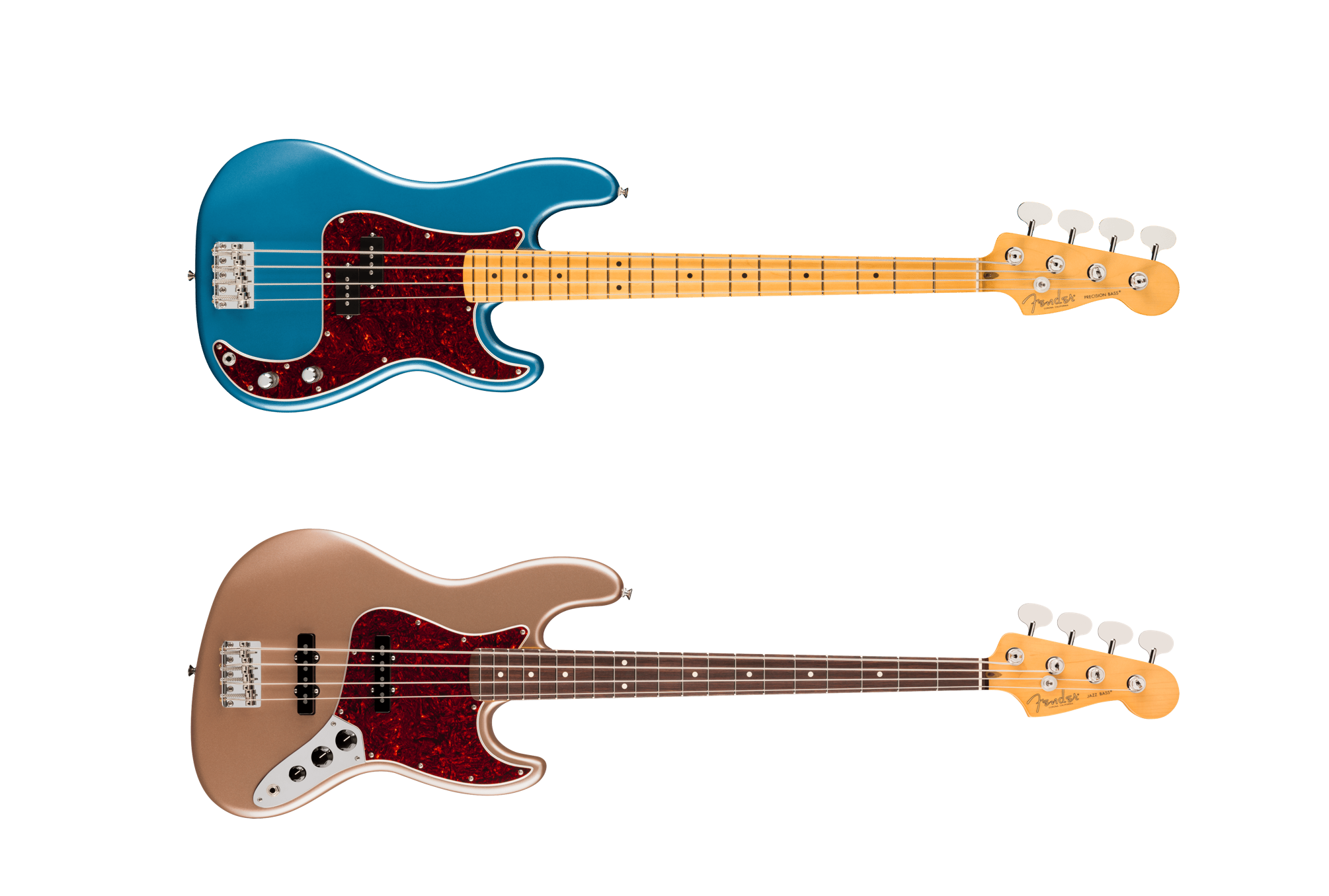
The American Professional series was first launched in 2017, showing why Fender remains the number one choice for musicians across generations. Now, it returns with refreshed Precision and Jazz Bass models, built for the players of today. After unboxing both the P and J basses, I stood them side by side to admire their craftsmanship: the Precision in Faded Lake Placid Blue and the Jazz in Faded Firemist Gold. I was ready to test what Fender’s been perfecting for over 70 years.
The Precision and Jazz basses in the American Professional Classic series share the same DNA. Both have a modern C-shaped neck and the classic Fender alder body, known for its warm, balanced tone and punchy response. The wide vintage-style lollipop tuners glide effortlessly and hold their position well. Both models also feature a 9.5-inch fingerboard radius for smooth playability, along with Fender’s finger-lickin’ Greasebucket tone circuit, which slips off the highs without losing clarity. Everything about these basses feels solid, consistent, and ready for whatever you throw at them.
American Professional Classic Precision Bass
I expected the Precision bass to have more weight to it, but it sat comfortably against my body without any neck dive or awkward balance. The controls are dead simple: one volume, one tone. Easy to dial in, easy to control. The first notes I played on the brand new strings were bright, funky and a little bit cheeky, making it hard not to play the Seinfeld bass line (I did).
What surprised me most was how responsive and dynamic the Precision bass is. Dig in hard near the bridge, and you get grit and snap that cuts through without losing body. Lighten your touch and play closer to the neck, and you’ve got that smooth, rounded thump. Roll back the tone control, and the notes submerge warmly at no cost to clarity. After a few pot and play position adjustments, with a touch of palm muting, the familiar echoes of my flat wound Violin Bass emerged.
The Coastline ’60 split-coil pickup is the beating heart of this bass, and it absolutely nails the classic Precision voice. There’s a super sharp clarity to the highs, a warm and tangible texture to the midrange, and weighty authority to the lows without bottoming out of range. When you ride that root note, it lands exactly where it should and stays there.
American Professional Classic Jazz Bass
The bar was set pretty high so far, but if I know anything about mathematics and jazz, it’s that the addition of another pickup increases the amount of freedom of expression; hence, more jazz. The dual Coastline ’62 single-coil pickups open a world of experimental sonics. Each pickup has its own volume control; nothing game-changing in the world of bass, but here it lends just the right amount of dimensional movement to feel magical.
The narrower nut width (1.5″ versus the Precision’s 1.625″) makes the Jazz feel faster under my fingers. If you like to move around the fretboard, play melodic bass lines, or have small hands and short fingers (like me), then the slightly slimmer neck makes a real difference. Solo the neck pickup and you get a fat, warm growl that’s similar to the P-Bass, but with more articulation in the upper mid-range. Solo the bridge pickup, and suddenly you’re in sharp, aggressive territory that can almost step on a guitar’s toes. But blend them, and you’ll find a wide gradient of unique tones existing in the slightest of adjustments.
Absolutely ‘locking in’ as they say, I found a 3D airiness to the high end that allows space to breathe, and when you dig with your fingers or a pick, the attack is immediate and percussive with plenty of headroom. Taking it to the band, I walked my bass lines beneath the layers of guitar and drums, and every note punched through with perfect definition. It might take a few minutes to balance your playing style with the pickup’s expressive range, but to the victor go the spoils.
Precision or Jazz?
After messing around with both the Precision and Jazz bass, it was clear they’re not really in competition with each other. I found myself reaching for the Jazz more often, but that says more about my playing style than the quality of either instrument. If you’re a set-it-and-forget-it player, you’d probably reach for the Precision every time. If you like to experiment with tone and explore different sonic textures, reach for the Jazz bass.
Fender isn’t reinventing anything with the American Professional Classic series, and that’s exactly the point. These are refinements, not revolutions. They’ve taken two of the most iconic bass designs in history and asked a simple question: “What if we made these exactly what modern players need without losing what made them legendary in the first place?”. And with the latest Precision and Jazz bass models, it’s clear they’ve done exactly that.
Head to Fender for more information.