The full commercial release brings faster processing, new snapshot tools, and updated VU-NET features to the Wavefront Precision line array ecosystem.
Martin Audio has announced the full commercial release of DISPLAY 3, its next-generation 3D audio prediction and optimisation software, following an extensive beta programme.
Built for speed and precision, DISPLAY 3 delivers substantially faster prediction and optimisation processing than previous versions, allowing system designers to iterate rapidly across complex venue models without compromising measured accuracy, verified to within ±1dB of real-world performance.
Catch up on all the latest news here.
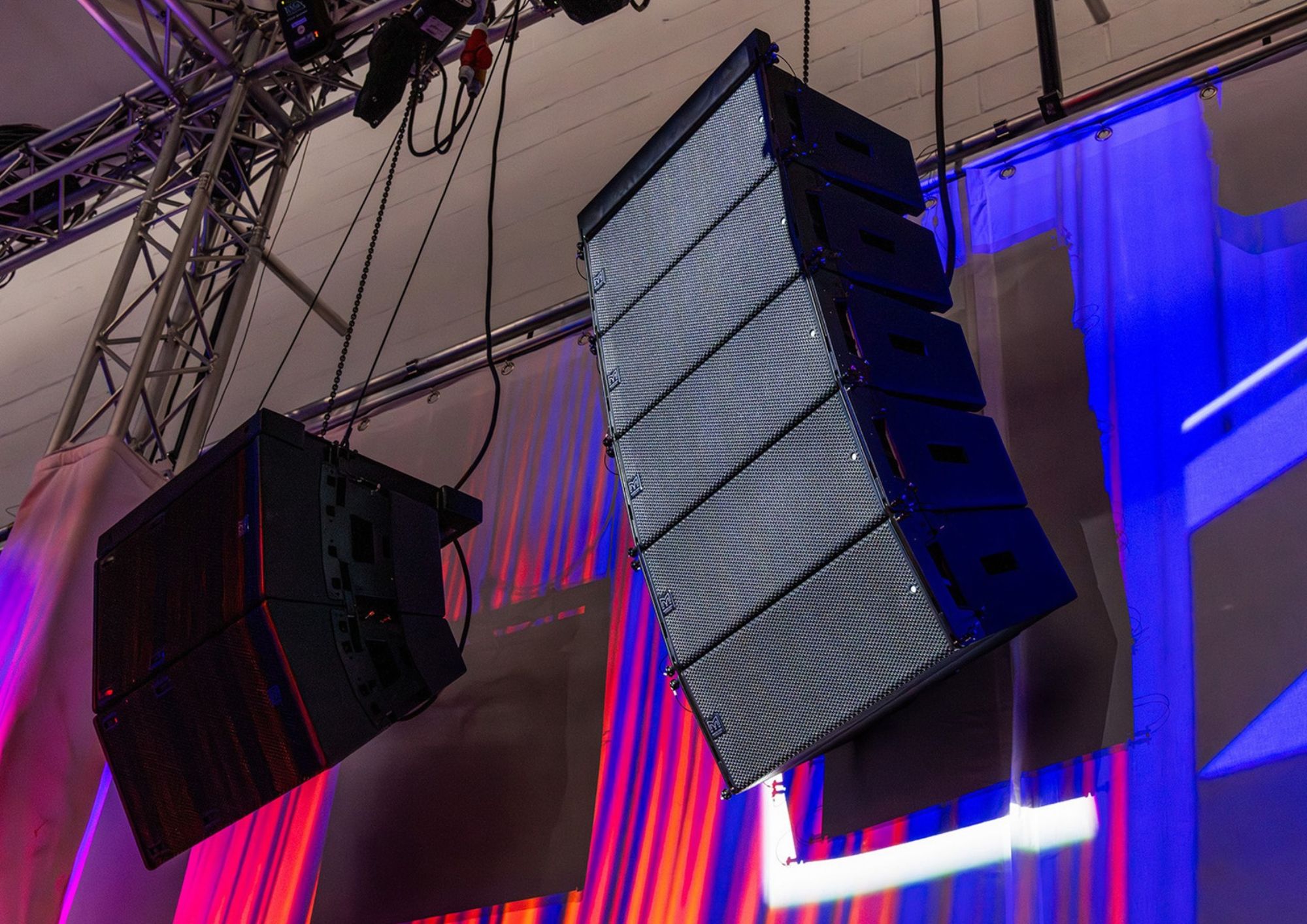
For Wavefront Precision line array systems, DISPLAY 3 combines mechanical angle optimisation with advanced DSP filtering to configure arrays automatically against user-defined SPL and frequency response targets, at a speed that lets users design, optimise, redesign, and re-optimise to compare outcomes and land on the best possible performance for a given venue or space.
Enhanced voicing consistency across the Wavefront Precision series is designed to maintain a uniform tonal signature throughout a system, regardless of its configuration, scale, or optimisation settings. The handling of natural sound rejection behind and below the array has also been improved, with Martin Audio’s Hard Avoid feature able to extend this effect by up to 30dB, or apply the same control more strategically elsewhere in a venue — a hard back wall, a sensitive boundary, or any zone where the system needs to actively reduce sound levels.
DISPLAY 3 also introduces a new “Don’t Care” designation, letting users mark areas of a model where coverage and SPL targets don’t apply. The optimisation engine leaves those areas out of the DSP calculation, focusing only on the areas that matter. Users can also create and store multiple optimisation snapshots, so a single model can hold separate settings for different audience or environmental conditions.
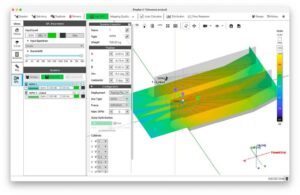
Beyond optimisation, DISPLAY 3 continues to offer full system prediction across the wider Martin Audio portfolio, with seamless SketchUp integration for venue modelling. Configurations generated in the software upload directly to iKON amplifiers via VU-NET, which has itself benefited from a recent upgrade. The dedicated subwoofer array design tool is also retained, gaining additional configuration options while following the existing workflow.
VU-NET 2.3.5 targets reliability in large-scale deployments, adding two tools for verifying a system in the field before doors open. LED Mode illuminates Wavefront Precision cabinet LEDs in sequence or individually, confirming the physical order of an array at a glance, while Mute Mode steps through each cabinet in turn to verify audio routing.
Engineers can also save a diagnostic file directly from any iKON amplifier on the network, capturing the unit’s stored internal state across fault and protection counters, configuration, and performance history — shortening the time spent tracing a fault. Performance also improves significantly across ganging, metering, snapshot recall, and large project trees.
Martin Audio managing director, Dom Harter, said the voicing gains in DISPLAY 3, alongside the speed improvements and enhanced optimisation tools, will keep Wavefront Precision at the front of the line array market for years to come, across both live sound and permanent installation, adding that the VU-NET release gives users smooth, reliable control of those systems.
For more information, visit martin-audio.com. For local enquiries, head here.