The all-analogue frequency splitter still sends your highs and lows through separate effects loops, and the v1.5 version makes it easier to set the split exactly where you want it.
After two and a half years on pedalboards, Great Eastern FX’s XO Variable Crossover has been given a set of practical tweaks, and the new v1.5 version keeps the pedal’s split-and-recombine idea exactly as it was while making it easier to get around.
Catch up on all the latest news here.
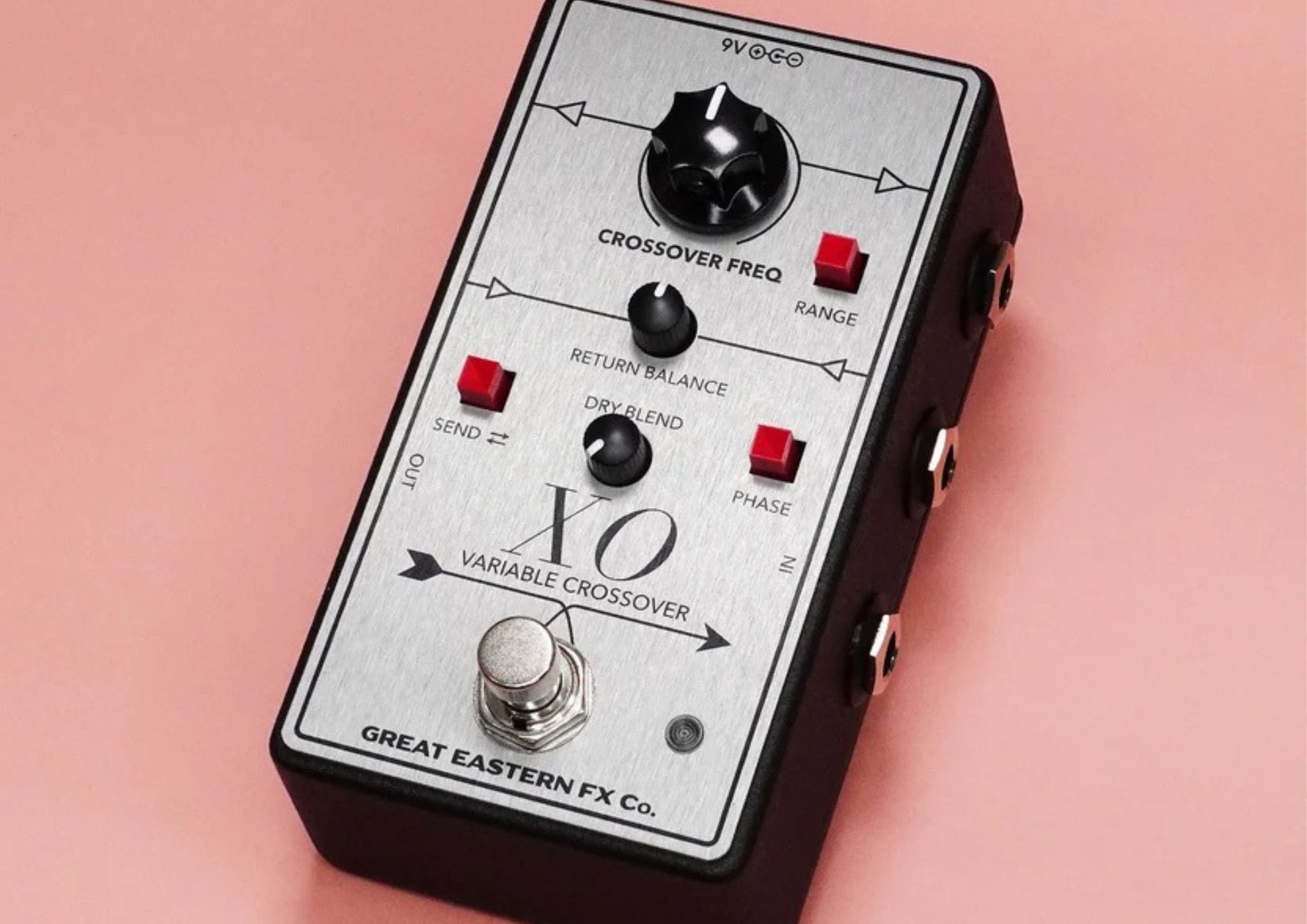
Hand-built in Cambridge, the XO uses a pair of 12dB/octave filters to divide the input at a chosen frequency, then sends the high and low bands to their own send-and-return loops before mixing them back together. In practice, a fuzz can work on the low end while an octave pedal or reverb only touches the top, or the returns can be skipped entirely so each band goes to its own amp. A range button moves the crossover between 50–600Hz for bass and 300Hz–3.4kHz for guitar, and two more buttons swap the high and low sends and flip the phase between the two channels.
The most useful change is to the crossover frequency knob, which now has a revised taper that spreads adjustment more evenly across its travel, so small moves don’t jump past the sweet spot. Great Eastern has also flattened the response around the crossover point, which should help the two bands sit together more naturally when they’re recombined. The Return Balance and Dry Blend knobs, which set the level between the two returns and the overall wet/dry mix, are now larger and easier to grip, and the pedal comes with a new brushed, anodised aluminium faceplate.
The XO first came out in April 2024 and was a big departure for a company best known for its overdrives and fuzzes. According to Great Eastern, “the XO has proved popular with bass players looking to integrate guitar pedals into their rigs while preserving low end and with guitarists looking to wring new sounds out of their existing pedals.” For bassists in particular, keeping the fundamental clean while running mids and highs through a dirt pedal or modulation solves a problem that has kept plenty of guitar effects off bass boards.
For more information, head here