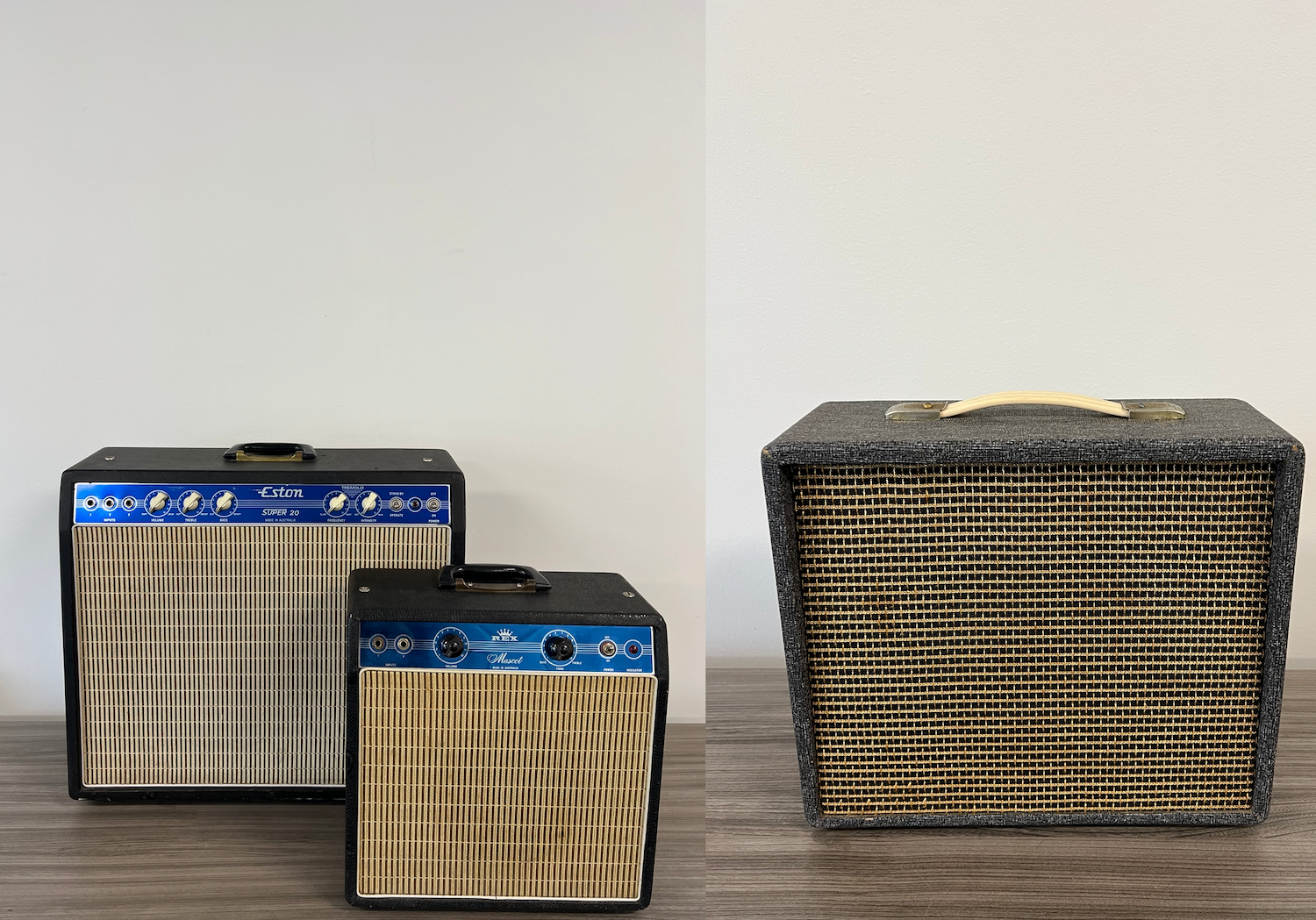
The story of Frank Lamberti's Rex and Eston amplifiers reveals a forgotten chapter of Australian music history, where family passion and radio engineering expertise created amps built to outlast generations.
There’s a particular smell old valve amps get after decades of sitting idle. Warm dust, that faint tang of previously-overheated transformer, maybe a hint of nicotine and beer from gigs long forgotten. Speaking over the phone with Joe Lamberti about the amplifiers his father, the late Frank Lamberti, once built in Melbourne under the Rex and Eston brands is like breathing life into those amps again. The last time I’d written about these amps for Mixdown, my kid was one year old. Now they’re nineteen and at uni. The amps, meanwhile, somehow feel unchanged, like little steel-and-vinyl time machines built to outlast us all.
Catch up on all the latest features and interviews here.
To understand why these amps matter, you need to understand the man behind them. The story begins in the 1930s, when the Lamberti family migrated from Italy to Australia. Frank was about 11 at the time, a young immigrant in a country that didn’t yet know it was about to fall in love with electric guitars. He finished school here, then pursued what was, at the time, the bleeding edge of modern technology: radio engineering. “Back then, radio tech was like what people think of AI now,” Joe tells me. “It was the wildest thing you could do.”
Frank studied at RMIT before landing a job at Astor Radio in South Melbourne. This was deep in the era when valves ruled everything—radios, record players, PA systems—so the future amp builder was learning on the very gear that would shape his career. After nearly a decade at Astor, he went into business with his brother, and in 1946—like so many post-war companies—they officially launched Lamberti Brothers. A manufacturing arm called General Music followed, and behind it all lay their small but ambitious manufacturing division.
The guitars, banjo-mandolins and imported instruments kept the business running. But the amplifiers were Frank’s passion.
“He wasn’t a guitarist,” Joe reminds me. “He was a radio technician. To him, an amplifier had to amplify. Clean, reliable, over-built. He didn’t like amps that distorted.” That philosophy would shape everything Rex and Eston ever produced.
It’s easy to forget just how hard it was to get gear in Australia through the ’50s and ’60s. Import restrictions were tight, freight was expensive, and boutique amplification simply didn’t exist here yet. Much like Jim Marshall trying to recreate Fender circuits with whatever he could get in the UK, Australian makers—Golden Tone, Moody, Strauss, and the Lamberti family—had to work with local components and a lot of ingenuity.
The earliest Rex amps were tiny six-watt single-ended practice units. The official rating was six watts, but Joe laughs at that now: “They probably weren’t even six watts.” They quickly expanded into radiograms, those big home entertainment units with TV, record player, and radio all built in, and eventually into a line of guitar and bass amplifiers that would peak with the mighty Rex Bass King.
“The Bass Kings started sometime in the late sixties,” Joe says. “They made a 20, a 50 and a 100 watt. From the front, they all look the same. It’s only when you look at the back you can tell the difference.” The 100-watt version was head-only and loud enough to be used as a PA. And like everything Frank built, they were rugged. “The cabinets were solid. Chassis were thick. The switches were military-grade. Transformers were huge, made by Radar TV Replacements in Coburg. They just don’t die.”
If there was one weak point, it was the speakers. Determined to support Australian manufacturers, Lamberti Brothers often used locally made Plessy drivers. “They weren’t known for musicality,” Joe laughs, “but once you put in a Celestion or a Jensen, these things sound incredible.”
When the Lamberti family officially closed the manufacturing operation in the mid-’70s, something strange happened: they simply locked the door and walked away.
For two decades.
“I’ve told the story before,” Joe says, “but there were about a hundred amps left in the old workshop. Cabinets, chassis, vinyl, everything. They basically shut the doors around 1975 and didn’t reopen them until the ’90s.”
The reason is painfully familiar to anyone who knows Australian manufacturing history. At the time, wages were rising dramatically, and small makers suddenly couldn’t compete with imports. “My father always talked about it,” Joe recalls. “‘You can’t make anything here anymore!’ He said it all the time.”
When the doors finally opened again around 1996, the room was a time capsule. Stacks of Bass Kings. Rolls of vinyl in weird psychedelic colours from long-defunct upholstery suppliers. Speaker cloth. Transformers. Hand-wired chassis stacked like bricks.
It was the kind of archeological discovery that amp nerds dream about.
After Frank passed away, Joe began collecting and restoring the amps. Back then, you could pick up a Mascot, which was the little six-watt darling of the range, for about fifty bucks. Today, they crack a grand easily. The Bass Kings, meanwhile, have caught the attention of indie players, collectors, and anyone chasing that clean-but-full vintage Australian sound.
About ten years ago, one of Frank’s former technicians helped resurrect the line. Using leftover parts and newly wound transformers, they rebuilt a batch of Bass Kings, Mascots and Super 20s. These reissues weren’t nostalgia pieces but genuine continuations of the original lineage, just with better speakers and even tighter tolerances.
“They were absolutely incredible,” Joe says. “Real Jensen speakers, beautiful workmanship. I bought as many as I could to help him out.” A handful of these amps are still floating around the collector market, but most are tucked away in private studios or treasured by players who know exactly what they’ve stumbled upon.
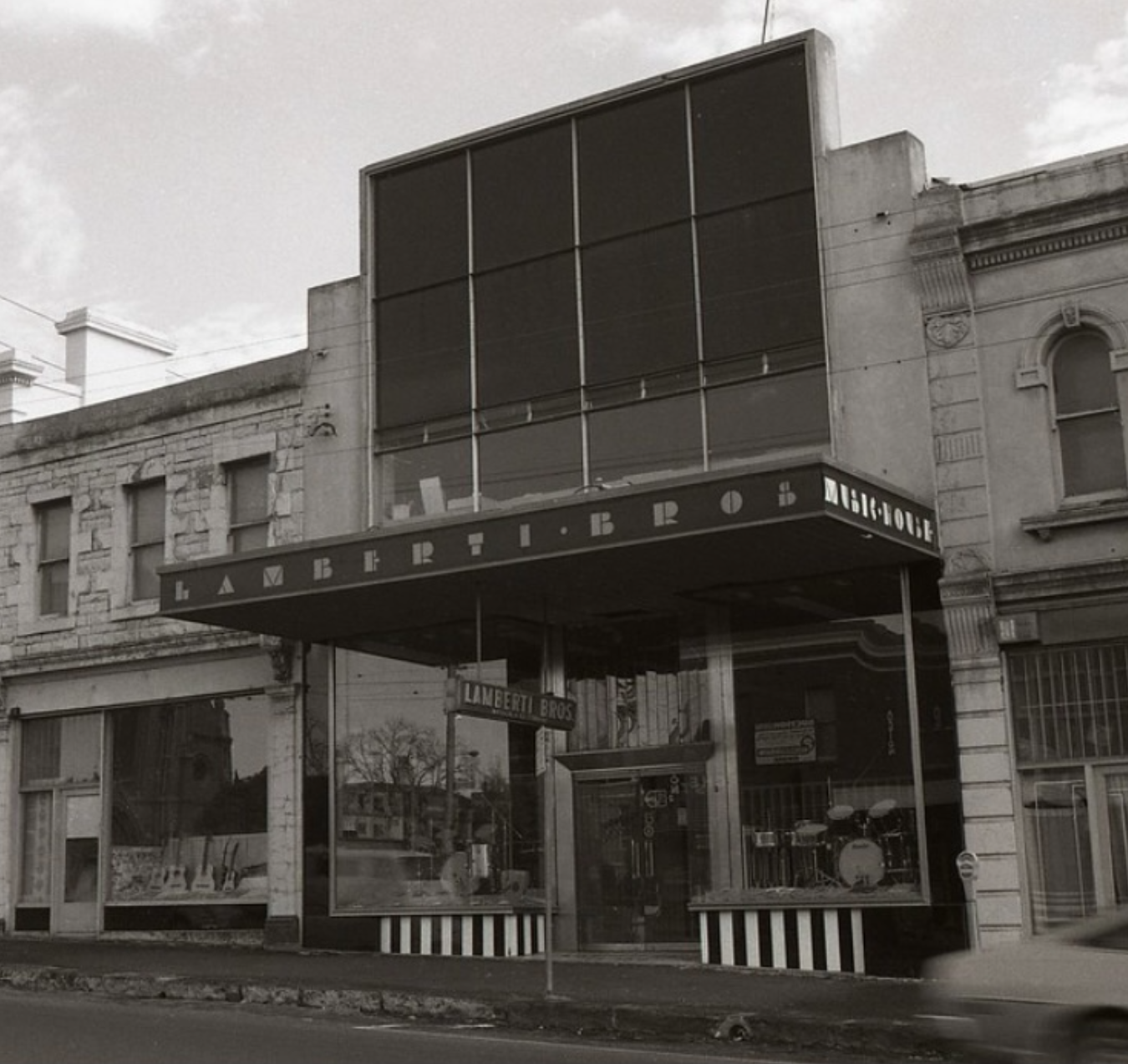
The manufacturing itself took place at the top level of a row of Victorian terraces beside the Lamberti family’s main music store on Victoria Street, just two blocks from Queen Victoria Market. The wiring and assembly of the amplifiers was done in Victoria Street; the woodworking, the cutting, joining and cabinet building was completed nearby on Peel Street. It wasn’t a big operation, but it was an efficient one. More importantly, it was a family one.
“We were always involved,” Joe says. “Dad would bring home rolls of wire and sit me and my brother down. ‘Cut a hundred lengths of this,’ he’d say. We’d strip the ends and bundle them up. Those went straight into the amps.”
Even late in life, Frank couldn’t help himself. Someone would drop off a broken six-watt Rex with tremolo, and he’d disappear downstairs for nights at a time, digging through drawers of old components. “He’d fix it for nothing,” Joe says. “He just loved it.”
If you work in a guitar shop long enough, you hear the stories, you meet the collectors, and see the spark in a young guitarist’s eyes as they discover some obscure detail about a piece of gear made decades before they were born. Joe’s right: the younger generation wants the history as much as the sound. And these amps have both in spades. They are relics of a bygone era, not because they’re outdated, but because they come from a time when Australia built things, hand-wired things, experimented boldly and backed local talent at every level of the supply chain. They tell the story of migration, family business, the rise of rock ’n’ roll, and a country coming into its musical identity.
Most of all, they carry the fingerprints of a man who believed an amplifier should be clear, powerful, beautifully made and built to last forever.
Turns out he was right.
For local enquiries, head here.