In 1972, a shy 19-year-old locked himself away at a residential studio in rural Oxfordshire and, over the course of a single week, recorded one of the most ambitious debut albums in music history.
Playing almost every instrument himself across 274 overdubs, Mike Oldfield created Tubular Bells – a 50-minute, largely instrumental epic that would go on to sell an estimated 15 million copies worldwide, launch Richard Branson’s Virgin Records, and become the highest-selling instrumental album of all time.
Catch up on all the latest features and interviews here.
More than 50 years on, the music is still very much alive. Tubular Bells in Concert brings Oldfield’s visionary work to Australian stages this September, led and arranged by Robin A. Smith – Oldfield’s long-term Musical Director and collaborator of over 25 years. The show performs Tubular Bells in full, plus extended sections of Tubular Bells II and III and the worldwide hit Moonlight Shadow, reimagined for a live ensemble of eight musicians.
We spoke to Smith ahead of the Australian dates about five decades of Tubular Bells, what it means to reimagine a classic, and why the music still moves audiences to tears every single night.
Tubular Bells in Concert has been touring the world as part of the 50th Anniversary celebration. What has the audience response been like globally, and what does it mean to bring the show back to Australia?
The audience response, right from the onset at the Royal Festival Hall and for the 160 following concerts have been outstanding. For some reason, there’s an incredible outburst of emotion and joy at the end of every concert. Yes, the music is fantastic, but it’s totally unique. Last time we toured in Australia, the response was amazing.
To bring it back is an honour, because I know it’s going to mean so much to people who listened to his music when they were much younger. That younger person, now older, has children or family of their own – and of course Mike’s music lends itself to all kinds of emotions, memories and joys.
You’ve collaborated with Mike Oldfield for over 25 years. What has that relationship meant to you, and what keeps drawing you back together?
It has always been such a pleasure to have worked with Mike. He’s such a creative being – sensitive, thoughtful and very measured – and of course, he draws on my knowledge of music to enhance his creative vision. For example, he doesn’t read music, but the music he plays is incredible; he needs people like myself to write it down and communicate it to others. My greatest pleasure was working on the Voyager album, which was a collection of folk tunes. It was amazing to explore the ability to arrange music for his style – the result was sublime.
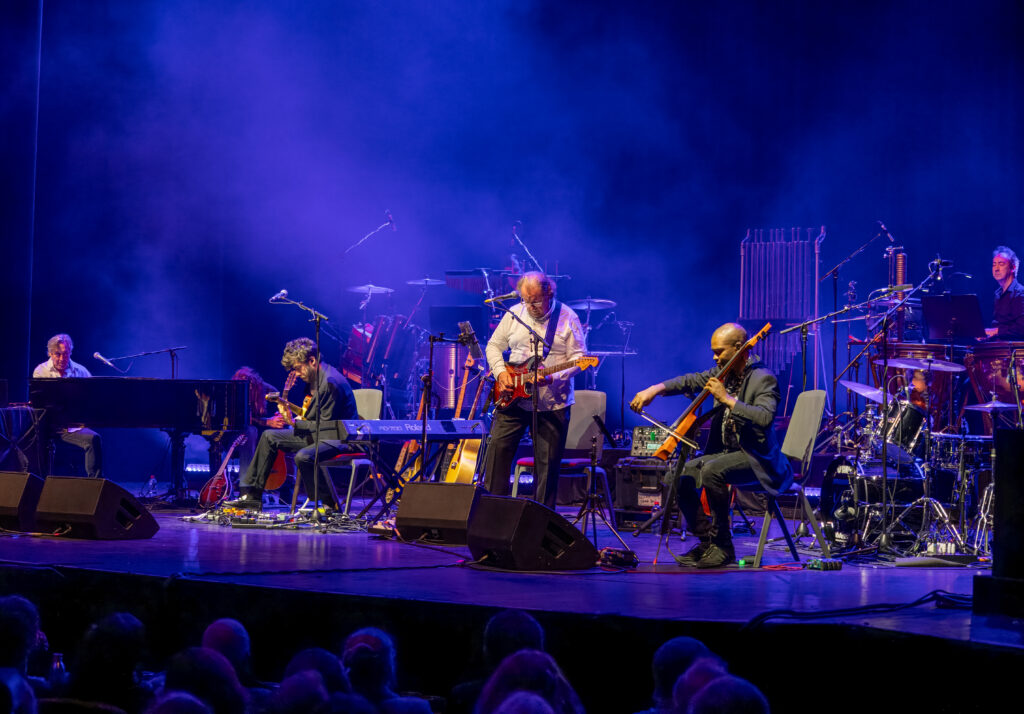
Photo credit: David Harris
How did you approach shaping the show, both in terms of what to include and how to reimagine it for live performance?
I made the choice because, from the outset it was very clear that people adore Mike’s music and his legacy. I have been his Musical Director right from Tubular Bells II through to Tubular Bells III, the Millennium, and ultimately Mike’s performance at the 2012 London Olympics, so I’ve seen how his music touches people. I wanted to do a concert, but obviously it’s impossible to play all three pieces because it would be too long, so I’ve taken what I judged to be some of the most beautiful, exciting and dramatic elements from both Tubular Bells II and III. Moonlight Shadow, you could play anywhere in the world, any time, and it just brings a smile to anybody’s face.
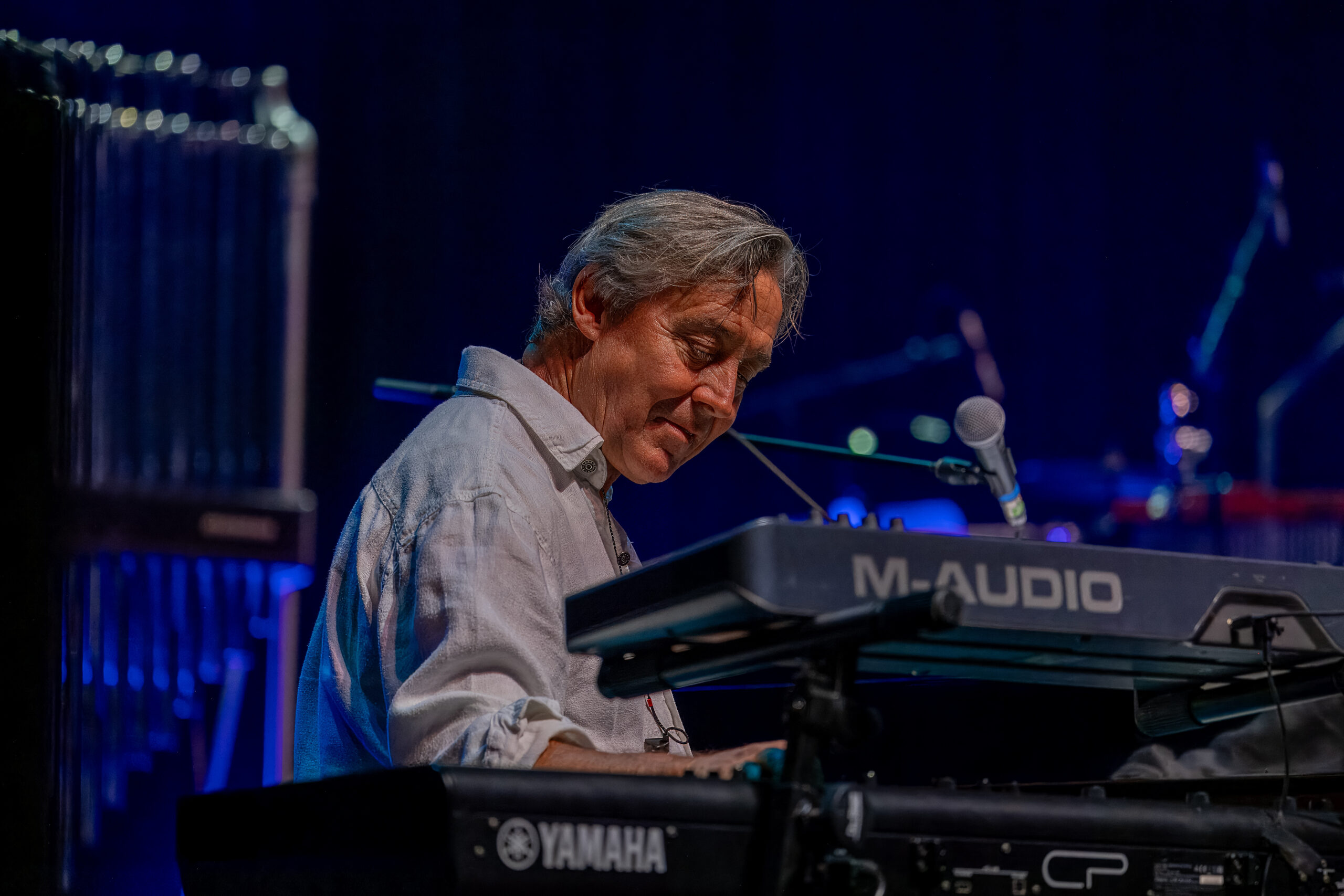
I was given permission by Mike to re-imagine his work, so with my band of eight, I have constructed his music. I now use a cello and classical vocalist to enhance and show off the beautiful melodies, as well as an expansive percussion section to really bring out the dramatic quality of Mike’s compositions. The guitar parts, for example, are fiendish. As part of living with Mike’s music over the years, you can see that his guitar playing has improved and improved – and these musicians love to show off their skills.
The reimagining of all Mike’s work is a very careful process. I make sure that every note is true to Mike’s original composition – so, for example, with Tubular Bells, the guitar parts are essentially the same because they’re played on a guitar, but I’ve embellished the overall sound to make it far more cinematic. Ultimately, for new audiences, it gives a timeless quality to his work. And when you consider that the whole concert is performed live by these eight musicians, and Tubular Bells itself is 50 minutes long without a break, it allows the audience to really go on a journey. Not to mention a bagful of memories for those who remember his work.
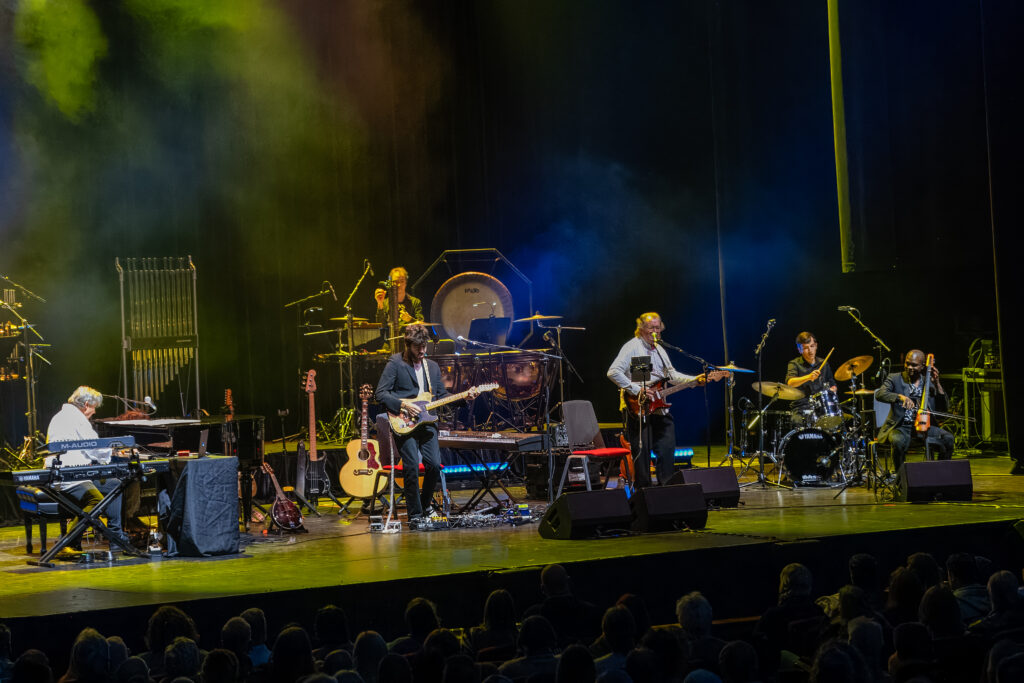
Photo credit: David Harris
At this point, what does Tubular Bells mean to you, personally?
Because the music is so extensive – on the scale of a classical concert – you never get tired of it. I certainly don’t. There are so many high points, sections of deep, intense emotion and drama, and just to hear the impact it has on the audience is incredible – whether it be the end of Tubular Bells III, which was performed at the 2012 London Olympics.
For someone coming to this show who might only know Tubular Bells from The Exorcist, what should they expect from the full experience?
So many people have come to the shows over the years who only knew the beginning of Tubular Bells, but there is a reason it was successful then and remains so now: once you’ve started, you are strapped in for the journey of your life. So many twists and turns, so many different styles and genres – from sublime ambience to heavy rock to stirring folk melody to moments of utter beauty. There’s something there for everyone. Everybody always says the same thing: that the concert is an altogether expansive experience – and truly unique, to have real musicians actually playing.
Tubular Bells in Concert tour dates
3 June: Hamer Hall, Melbourne
5 June: Adelaide Entertainment Centre, Adelaide
6 June: His Majesty’s Theatre, Perth
10 June: QPAC, Brisbane
11 June: Civic Theatre, Newcastle
12 June: Canberra Theatre, Canberra
13 June: Sydney Opera House, Sydney
Tickets via davidroywilliams.com.