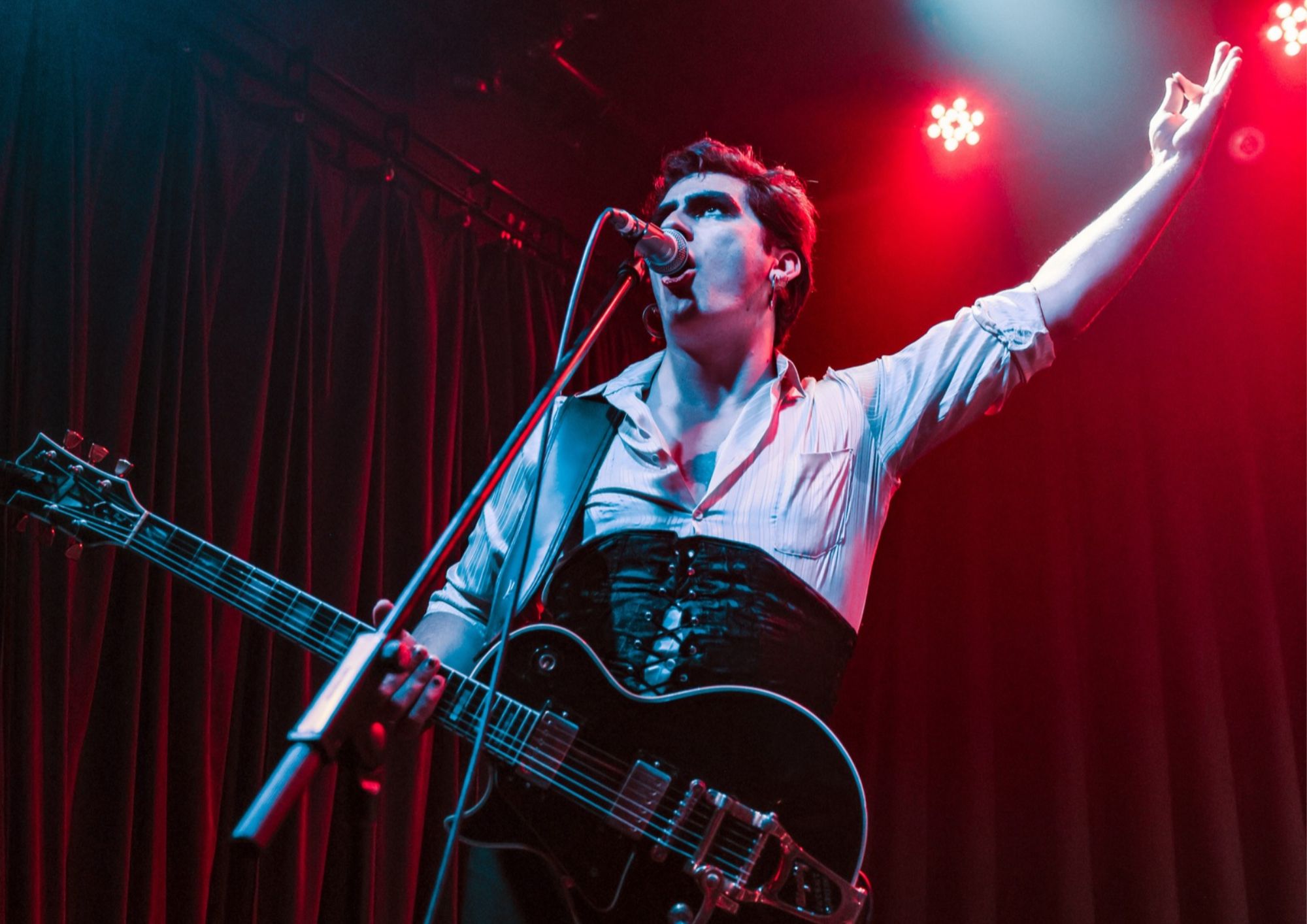
We chat with Australia's premier glam rocker, George Carroll Wilson, about the gear behind his new Pollyman single "Walking In Circles".
Marc Bolan and Mick Ronson rolled into one with a dash of Dr. Frank-N-Furter thrown in for good measure, George Carroll Wilson, the man behind Pollyman, is Australia’s very own glam rock superstar in the making.
Not only a spectacular performer, Wilson is also a bonafide musical wizard, capable of playing just about any instrument you can poke a stick at and mixing his own releases to boot.
So with his new single “Walking In Circles” on the horizon, we had a chat with George about his influences, band, gear and the process behind his new release.
What can you tell us about the mixing and production process for “Walking In Circles”?
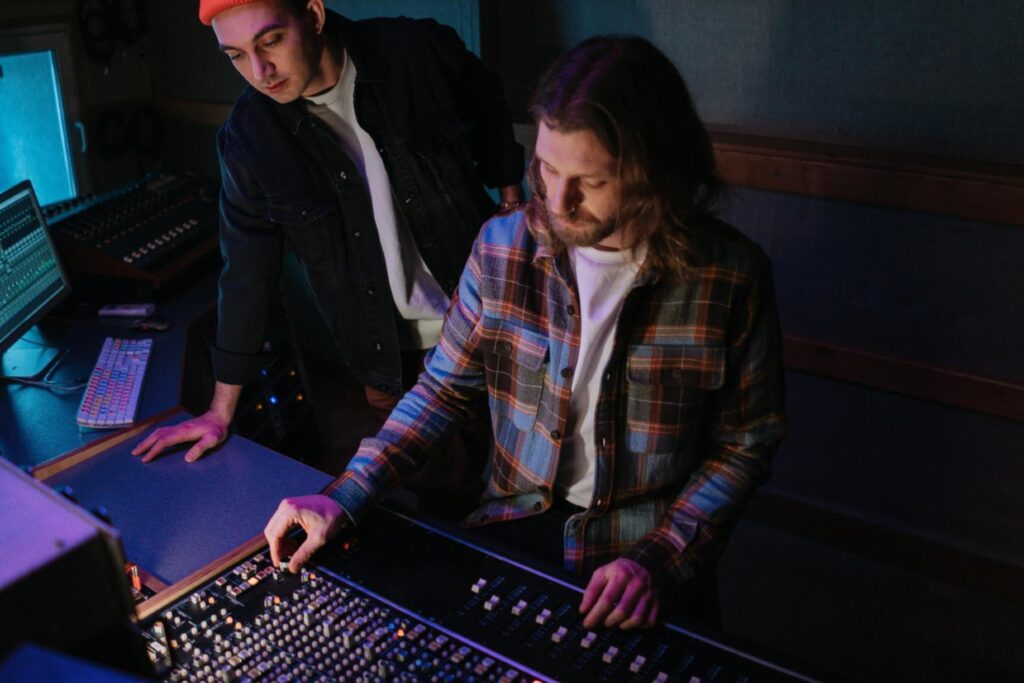
For the first time in earnest, I mixed that track and every other one on the new album myself. What started as a way to send Wally Kempton of Cheersquad Records a rough idea of the songs quickly turned into an obsession that lasted the better part of a year, as I learned how to mix properly (using GarageBand, of course) and how to make it sound like the music in my head. That meant endless revisions, happy accidents, an entire do-over at one stage, and listening and listening until the songs felt complete.
It’s funny going back to something recorded a long time ago. It’s almost like having a conversation with my younger self, but between the two of us I’m really happy with what I’ve done and eager to share it.
Were there any specific sonic influences on this track?
Definitely Big Star, a dollop of David Bowie and a few other good old-fashioned rock and roll influences. I was getting really into power pop and Australian alternative around this time too, so there’s a good amount of Teenage Fanclub, some Semisonic maybe, and You Am I in there as well. The lead sound is absolutely Mick Ronson, with the cocked wah overdriven sound I’ve loved for years. Mixing wise, this one took care of itself, as we got great guitar sounds in the studio and the drums are good and thumpin’ (thanks to brother Fenn), so my job was just to get the levels sitting right and tame the top end a little, as the Marshall I was playing through packed a mean punch.
Image Credit: Andrew Gearing
Was there one piece of gear that defined the sound of this song?
Absolutely my Gibson SG Junior. It was the first guitar I bought with my own money (shoutout Savers) and the thing that made me feel like being a guitarist frontman was something I could do. When I first started Pollyman, the lineup was just guitar, vocals and drums, but the SG Junior, with just one P90 in the bridge, packs a major wallop. Punchy, mean, direct; I don’t use it much these days but I love what it did for this song.
Let’s talk about your live rig! What guitars, pedals and amps are you currently running?
I play a 1978 Gibson Les Paul Custom that belonged to my dad for a short time. Rick Steward at Echotone re-fretted it and fitted it out with Orpheus T-Top style humbuckers and a gold Bigsby, just to really keep things subtle.
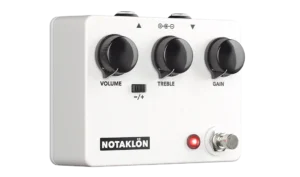
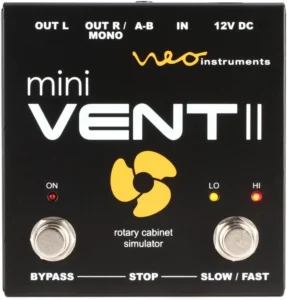
On the board I start with a Swamp Industries splitter pedal to enable my bizarre left-handed tendencies, then a Korg Pitchblack tuner and a Neo Mini Vent II, which is without a doubt the best Leslie emulation pedal I’ve ever heard. Then it’s a limited edition blue sparkle Cry Baby wah into an Elektrika OC75 Fuzz, a glorious recreation of the original Tone Bender MK1 and the secret to Mick Ronson’s lead sound. After the fuzz is the JHS Notaklön, one of the funniest and best overdrives I’ve ever owned, then a Boss Super Chorus, a Way Huge Echo-Puss analog delay, the tiny Ibanez TRMINI Tremolo and finally the JHS 3 Series Reverb, which just gets the job done (and handles a coat of nail polish well).
I favour Fender amps when I can get my hands on one, but my own live amp is a Peavey Bandit 112, a solid state rocker that’s built like a tank. I tailored some gold grill cloth and added gold knobs to unite my guitar and amp, as I always say you can never have too much gold, until you do.
Am I right in thinking you play left-handed and strung upside down? Why not the Hendrix method or a true leftie?
You are right indeed! A lot of blues players have played like that, Elizabeth Cotten and Albert King among them.
Your guess as to why I do it is as good as mine in all honesty. I had a working theory for a while that when I started noodling around on guitar at the age of maybe 5 or 6, and looked at pictures of guitarists like Ace Frehley or Angus Young, their guitars always pointed to the right of the picture. Ever the mimic I tried copying their style by holding the guitar in a way that mirrored theirs, but in fact was in a left handed fashion. That theory was blown out of the water though when I found a photo of myself at about 18 months old, holding a toy ukulele the very same way I play now.
I grew up in an extremely musical household, most of the guitars were strung right-handed, and my parents were never the type to say “that’s not how you do that”, so I just kept playing that way.
I think it gives my rhythm playing an edge alongside right-handed players like Rebecca and Aaron in Pollyman, as their downstrokes are my upstrokes and vice versa.
There’s a strong glam influence on your music and presentation. Do visuals factor into your gear choices?
Absolutely! Any guitarist who says they don’t care how their gear looks is lying.
What drew me to my Les Paul is the striking gold accents against a jet black body. When I was getting the pickups replaced, I made sure to reattach the gold covers just to max out the glam, and then I started finding stage clothes to match, as colour plays a huge part in the Pollyman aesthetic. Pedals have to fit strict criteria too. A few years ago I noticed almost all the pedals on my board were blue or green, so I started a project called Blue Board. Now any new pedal has to be the same, unless it’s white, in which case I just paint it myself!
Your live band has another electric guitarist and a 12-string acoustic player. Do you think much about carving out each player’s place in the mix?
Playing in a band previously with three, sometimes four guitars, was a really good education. I’ve always loved an electric rhythm part doubled with acoustic, as the tones are so distinct there’s no risk of clashing. If one part is clean, the other should be dirty; if one guitar is playing high, the other plays low; if one sound is warm, the other can be bright. I try to have tones, parts and dynamics figured out before we get on stage, so a soundie just needs to get the levels right.
You also play drums in your brother’s band Fenn Wilson & The Weather. What can you tell us about your kit, and is drumming as important to you as fronting Pollyman?
A few years ago I wanted to buy a Gretsch kit a guy was selling on Facebook Marketplace, but I mulled over the money for too long and he sold it. He offered me an early 2000s Mapex Pro M kit instead, sized 24″, 18″, 16″ and 13″. Once I set it up I was staggered by how thunderous it sounded, and I’ve loved it ever since. My snare is a 1966 Ludwig Supraphonic, which happens to share a birthday with Adam Sandler, and my cymbals are a hodgepodge of Zildjian, Dream and Paiste.
Drumming is my first love and will be my last. Few things bring me more joy than playing drums with a band. It was on the drums that I learned to write music, play with people and the importance of groove, feel, intention and discipline, which has held me in good stead on any instrument I try my hand at.
Lastly, what’s the one piece of gear you can’t live without right now?
Headphones, specifically the brutalised Bose QuietComforts that have been in the family longer than they’re probably meant to. They’ve let me study songs, learn parts and listen out for good and bad mixes, and they were essential in mixing my album, as I don’t have much in the way of nice studio monitors.
“Walking In Circles” is set for release on the 30th of October
You can learn more about Pollyman’s upcoming single launch here