From bedroom producer to nature-based sampling, Moss McGregor is finding that the best sounds are hiding in plain sight.
Sticks and stones may break your bones, but did you know they can make great electronic music as well? Magandjin (Brisbane) based producer Moss McGregor – better known mononymously as Moss – is currently in the throes of his most ambitious musical project yet.
Grounded sees him getting out amongst acres of bushland, and finding interesting sounds within nature to then transfer over to Ableton Live and create sample packs – not just for him, but for any beatmakers out there hoping for something quite literally off the beaten track.
Catch up on all the latest features and interviews here.
“In the past, my process has been very clinical and surgical – I’m definitely a perfectionist,” says McGregor. “Over the last year, I’ve been working on breaking out of that. Sampling nature has been really like inviting a kind of unpredictable chaos – whether it’s wind noise, clicks and pops, or even the cicadas, that’s gonna come into all the recordings. It can be humbling, but it’s also a really cool process.” As an example of how it’s not as simple as pressing record and letting the magic happen, McGregor details which microphones he’s been using in order to capture material for his sample packs.
“I started off using a Rode NT-USB, which was plugged directly into my laptop,” he says. “I was out there throwing rocks into the dirt, and dirt was splashing on my laptop. After that, I knew I needed to get a mobile mic and an interface for these recordings. I got an Olympus [LS-100], which is a lot like a Zoom, and I’ve used that ever since. I’ve also been using a contact mic recently [a JrF C-Series Pro+], made by this artist Jez Riley French, as well as a dynamic Yamaha YDM707.”
Kicking off the project last month, McGregor has since found himself snapping twigs, tapping bark and even miking up his namesake around the property. All in the pursuit of the kind of unique sounds that you simply can’t get from a regular instrument. Being experimental, by definition, has of course meant a lot of trial and error on McGregor’s behalf: “You’re shooting in the dark, really,” he says. “I’ll put the contact mic on trees to listen to their groans, for instance. Trouble is, when there’s no wind, you don’t get any groans; you might be waiting a couple of hours just to capture something worthwhile. You’re a witness to the sound, but that initial sound takes time. I’m not trying to focus too much on getting the right levels – as long as I’m not clipping, I’m not fussed.”
View this post on Instagram
Once he’s back inside the house and in his studio with the audio to work through, McGregor takes the day’s findings into Ableton Live and begins the arduous but rewarding process of digitally manipulating them through extensive editing sessions. “There’s a lot that needs to
be done in terms of saturation and driving the sound,” says McGregor. “I’ll run the recordings through Amp, Overdrive and then Compression. I use Soothe as well, in order to take out any frequencies that are a bit too piercing. The same goes for iZotope RX, which I use to take out any unwanted noise or clicks. A lot of what I’m doing is to add harmonics and EQ, to bring out what I want to focus on in the sound. It all depends on the idea, and what I’m making for the day.”
Insofar as the desired effect is concerned, McGregor describes his sample packs for Grounded as “to make this weird hybrid of electric and raw acoustic.” “I want to twist it and distort it as much as possible,” he says. “It’s cool to see how I can manipulate the recordings – I hit rocks together to add a transient to a kick drum, and I threw rocks at the ground and recorded their impacts to stretch out into 808s. I’ve made hyperpop drums with sticks and basslines out of trees. You’ve got to try and get out of the box every time.”
McGregor is sharing his findings on Grounded every week across his social media accounts, as well as releasing the sample packs on his Patreon page. Despite being in the throes of a time where he believes social media has made it “draining to be a creative,” McGregor has been excited to see how people have responded to his nature-based findings and the subsequent beats he’s made out of them. Whether it’s students taking his Liveschool masterclass and forging their own sounds (“some of them were really cooking,” he adds), or simply some kind words from peers and supporters on his page, he believes that community is key when it comes to creativity and composition.
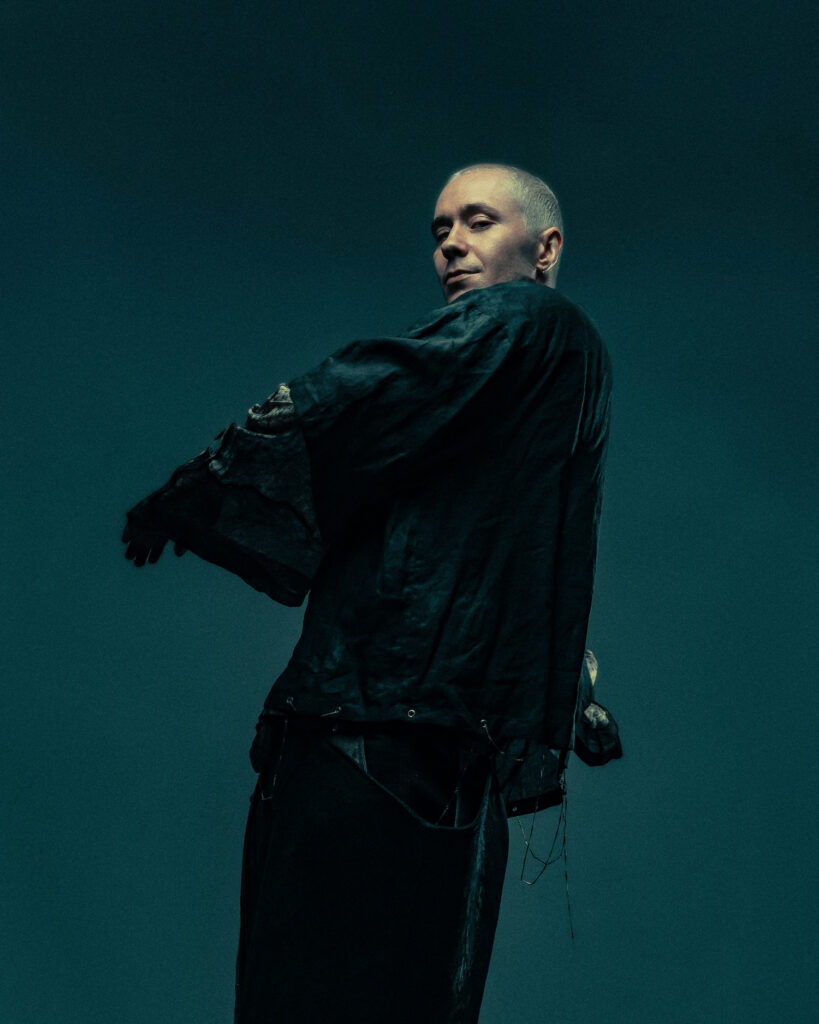
Photo credit: Billy Zammit
“Being a bedroom producer in this day and age can be very isolating,” he says. “You’re sitting in your room alone, throwing sounds at a wall. Having a community of like-minded people you can bounce those ideas off or draw inspiration from, it’s just going to be a benefit tenfold.
When I was at Liveschool teaching, the community focus there really impacted and improved a lot of people’s production skills. Creativity is a thing that transcends words, and sharing that with other people helps inform your own creativity and builds it too. I think it’s vital to have a community around these kinds of things, and that’s why I’m out here trying to create my own.”
Listen to Moss here, and find his sample packs at Ableton’s Live School.