Anyone who has coordinated a big wireless show knows the drill – hours of frequency calculation, racks of RF cabling, guard bands between every channel, and boosters and splitters everywhere.
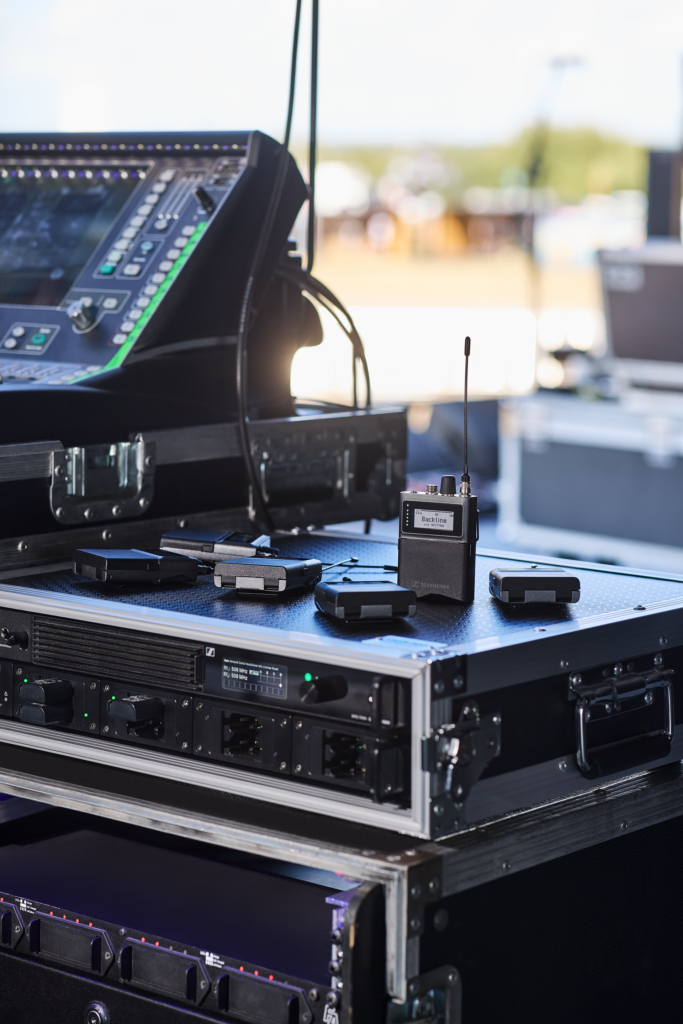
Sennheiser’s Spectera is built to simplify the whole process without losing an ounce of quality. Billed as the world’s first wideband, bidirectional wireless ecosystem, Spectera runs an entire production through a single wideband RF channel and uses a bidirectional bodypack, all managed from one 1U rack unit.
Spectera is aimed at the pointy end of live production – the RF coordinators, monitor engineers and system techs on touring concerts, broadcast, musical theatres and big houses of worship, who are often juggling dozens of wireless channels at once. If that’s you, Spectera is designed to take a huge chunk of hassle out of your day.
Catch up on all the latest features here.
Underpinning Spectera is Sennheiser’s WMAS (Wireless Multichannel Audio System), designed for reliable, low-latency two-way communication across many channels. Where a traditional wireless rig carves the radio spectrum into dozens of narrow slices, one for each mic or in-ear pack, WMAS uses one wide slice and fits everything inside it. That single 6 or 8 MHz carrier does the job of a whole rack of narrowband channels.
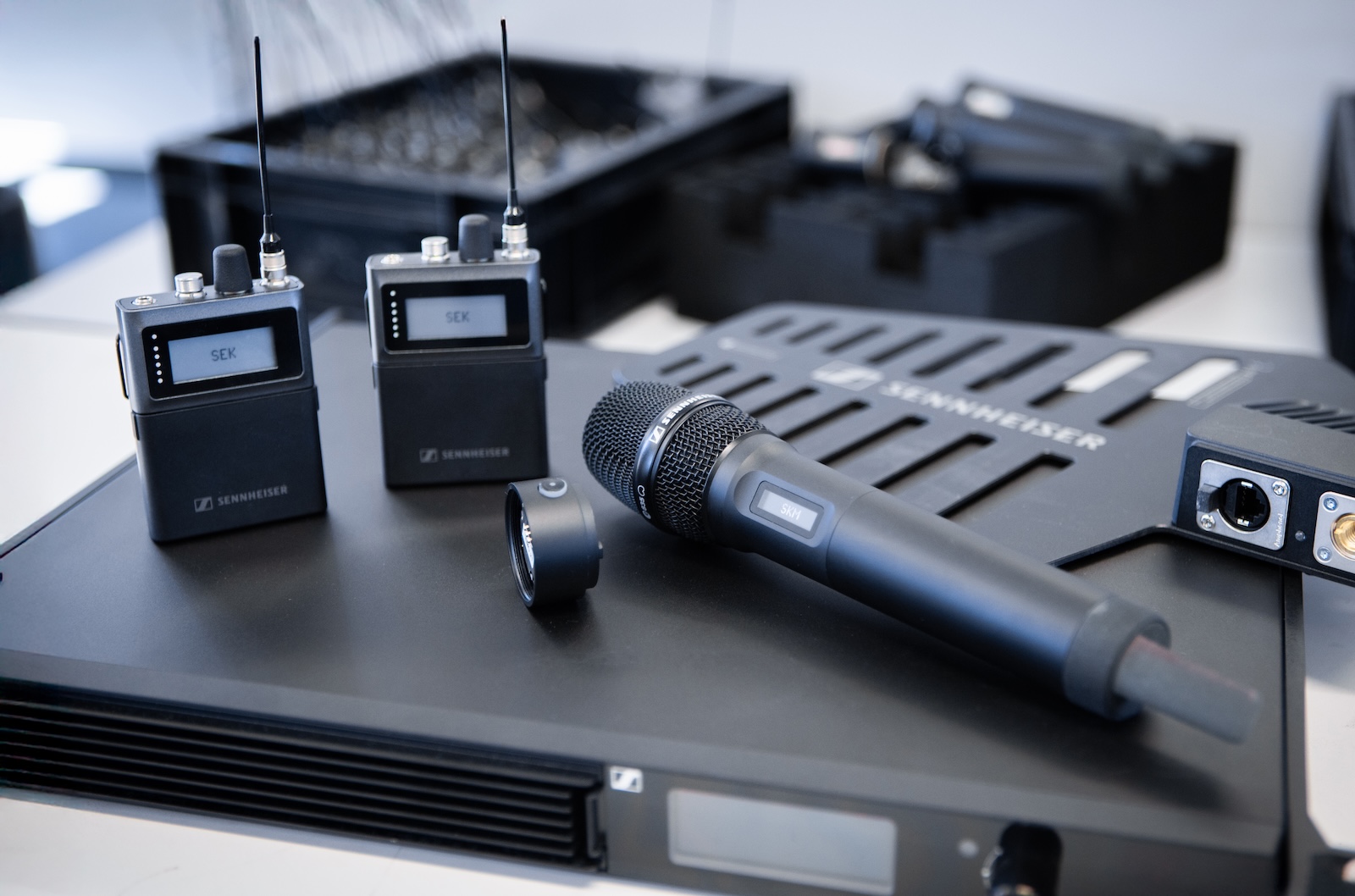
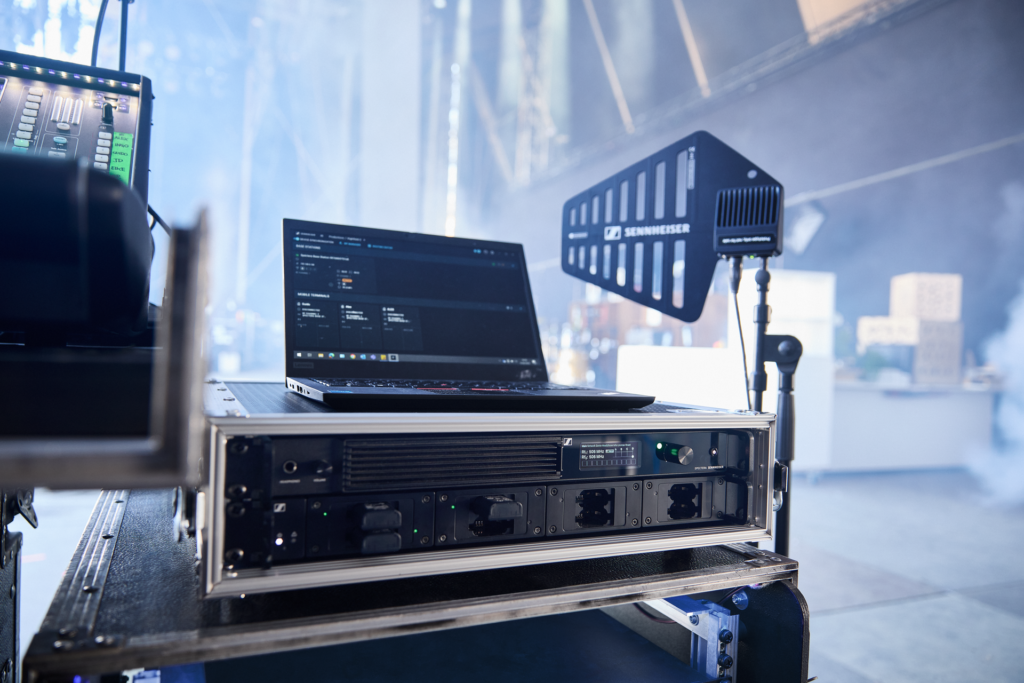
A single 19-inch, 1U Base Station delivers up to 64 channels – 32 in and 32 out – across two independent wideband carriers, replacing a rack of separate mic receivers and IEM transmitters. A rig might run 32 mic or line channels alongside 16 stereo in-ear mixes, or 32 channels of interruptible foldback – the talkback feeds crew and presenters rely on. Redundant power supply, primary and secondary Dante and optional MADI give it full backup for live work.
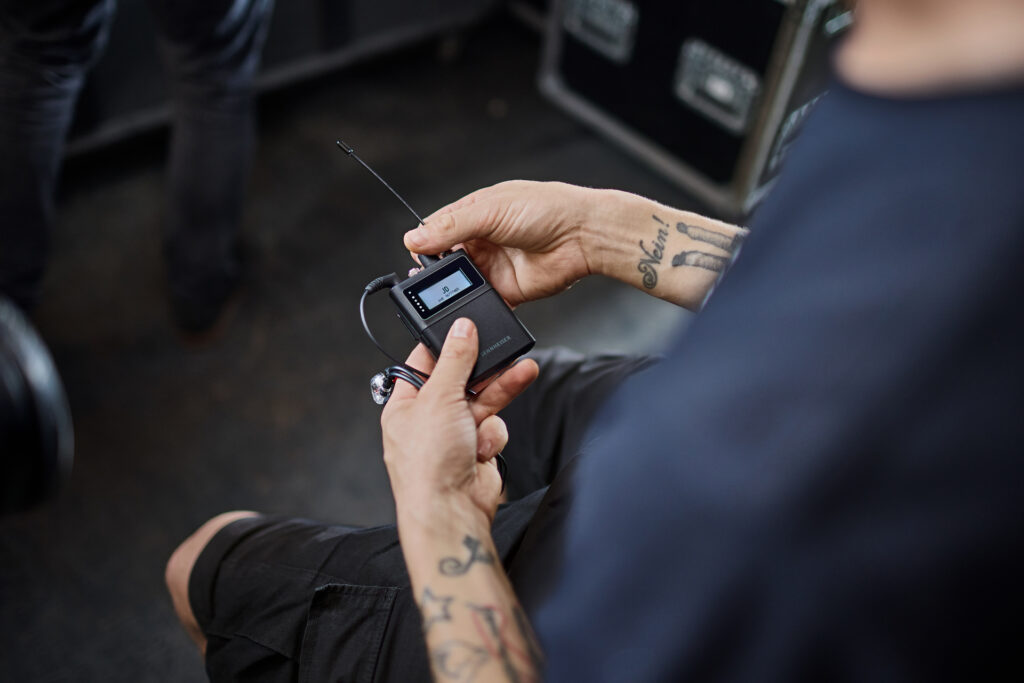
Each SEK bodypack talks in both directions at once, handling a mic or line input and an in-ear feed over the same RF channel, so a performer isn’t wearing a separate transmitter and receiver. A 3-pin input takes a lavalier or headset mic, instrument cables plug in for guitar or bass, and there’s a 3.5mm headphone output with an impedance matching headphone amp on board.
The DAD transceiving antennas pull the same trick, carrying mic, IEM and control data together. Each one runs back to the Base Station over a single length of standard network cable (Cat5e or above) carrying power and data on the one line. Because the RF components live in the antennas rather than the Base Station, there’s no need for the boosters, splitters, combiners or coaxial cable a narrowband rig would demand, and up to four antennas can be connected for redundancy, wider coverage or range extension and spectrum scanning.
The link runs both ways, so every device reports back, letting engineers set IEM and mic levels, watch RF health and battery status and check the spectrum for interference, all from the console. That spectrum sensing runs continuously, even on the channel Spectera is using itself, and AES-256 encryption keeps both audio and control data locked down over the air.
The 11 Audio Link Modes let the operator trade off latency, audio quality, channel count and range for each link, with in-ear latency as low as 0.7 milliseconds on stereo.
For an RF team, the frequency calculations, RF cabling and power-level maths that eat into a narrowband setup largely disappear. Its light footprint on the spectrum also makes it easier to reuse the same frequency block, between neighbouring theatres, say, or across a broadcast complex. More mics or IEMs can be used on the fly, and adjusted without tearing anything down.
Sennheiser’s brand-neutral tool SoundBase takes care of production setup, operation and control with the added bonus of coordinating RF across both wideband and narrowband wireless in one place – so your Spectera rig and traditional Sennheiser gear can be run side by side. For a single unit or a quick turnaround, the browser-based Spectera WebUI does much of the same from a phone, tablet or computer.
Sennheiser has made it clear Spectera is a moving target. Since it began shipping in April last year, it’s been shaped by customer feedback and expanded steadily.
A module for Bitfocus Companion and Buttons has arrived, bringing stream-deck-style tactile control and cross-industry integration. A new Spectera API also opens the system to multi-vendor control, alongside partners like SoundBase and Sonoros.
An SKM handheld transmitter ships in September, with a lightweight anodised aluminium body, OLED display and the standard Sennheiser capsule interface that takes both Sennheiser and Neumann heads. A Command adapter is an additional option to buy, adding a programmable talkback channel so a reporter or performer can speak to the crew, and the same talkback function is coming to the SEK bodypack through a newly announced COM button, sold as a separate accessory.
Broadcast integration arrives before the end of the year, through a Merging ZMAN module that brings the Base Station in line with the SMPTE ST 2110-30 standard, and an Engineer Mode due later in the year will let an engineer cue up to 16 IEM mixes at once.
Spectera proved itself as the future of wireless earlier in the year. At Eurovision 2026 in Vienna, Sennheiser mounted its largest Spectera deployment yet – the first time the system has run at the world’s biggest live music broadcast as an official audio supplier. With fifteen countries, up to six performers on stage at once and 45-second resets between acts, the arena is about as RF-hostile as live production gets. The team ran four base stations across four TV channels, backed by round-the-clock RF scanning and spare units behind every failure point. Most acts worked through a rotation of handhelds and separate in-ear packs, but for the handful of performers who did use the two-way bodypacks, a single unit handled both mic and monitor.
Spectera is more a platform than a single product, and one Sennheiser is still building out. Its promise is simple: one rack unit, one RF channel and less setup.
For local enquiries, head here.