We take a closer look at the guitars, amplification and effects that have defined Sam Prekop's sound across his career with The Sea and Cake and as a solo artist.
Born in London in 1964 and raised in Chicago, Sam Prekop studied at the Kansas City Art Institute before returning to the the city that would ultimately shape his career.
Prekop’s first band, Shrimp Boat, ran from 1988 to 1993. When it disbanded, Prekop and Claridge formed The Sea and Cake, recruiting guitarist Archer Prewitt from the Coctails and John McEntire, then of Tortoise. The band’s name came from a wilful reinterpretation of “The C in Cake”, a Gastr del Sol song – a nod to McEntire, who had been a member of that group.
Their sound was subtle, groove-driven and rooted in jazz-influenced chord progressions, bossa nova rhythms and Prekop’s breathy, stream-of-consciousness vocals – enough of a contrast to Mojo describing the overall effect as “a uniquely inventive blend of lilting pop and obtuse art-rock.” From The Fawn (1997) onwards, they began folding electronic textures into the mix. Claridge left following Runner (2012), and the current lineup is Prekop, Prewitt and McEntire. Their most recent Sea and Cake album is Any Day (2018).
Read up on all the latest features and columns here.
Guitars
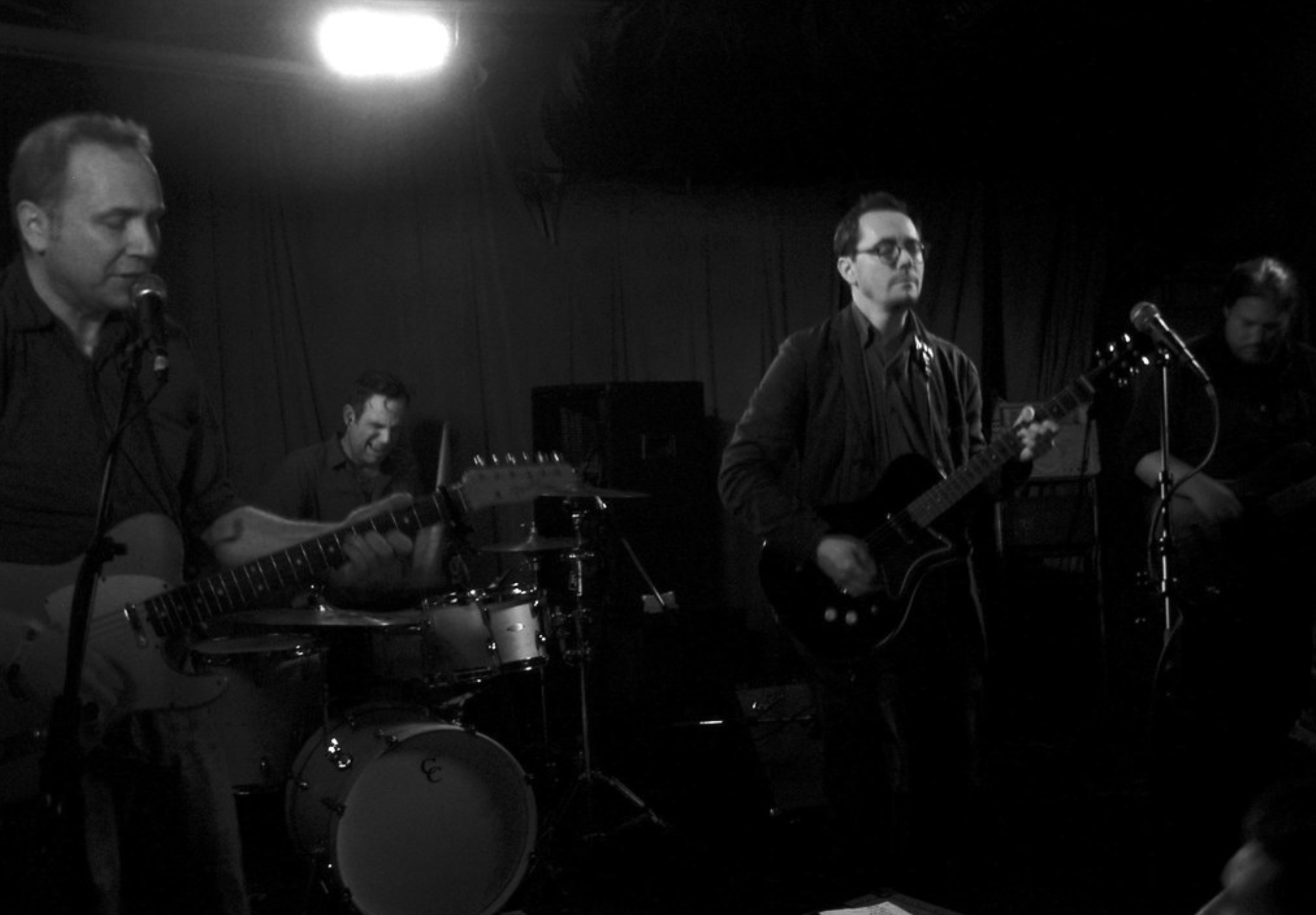
Prekop’s primary electric guitars are a Fender Telecaster and a Gibson ES-175. The Telecaster has been seen in live settings with the band, notably in a KCRW session alongside Prewitt on a Danelectro. The Gibson ES-175 appeared across his debut solo album live performances, documented at a 2000 show at Chicago’s Double Door.
For writing, Prekop reaches for a well-worn Martin 000-17, a small-body mahogany acoustic. “So I started writing on my acoustic. It’s a pretty old beat up Martin 000-17. It’s a Mahogany, small body kind of deal. And so I write a lot on that,” he’s said. “I’ve never played it live and I don’t plan on it – too many problems involved with drums and stuff.”
Amplification
His amp is a Victoria 45410 Tweed, built by Victoria Amp Company in Chicago and modelled on a 1959 Fender Bassman. “I use a Fender Bassman amp – but it’s not actually a Fender,” Prekop has explained. “It’s made by Victoria Amp Company out of Chicago… I’ve been using that for a long time as well, at least 10 or so years.” The Victoria’s headroom gives him clean, unforced tone at any volume.
Effects
“I’m not big on changing my sound per song very much,” Prekop has said, and the board reflects that.
He runs a BearFoot FX Honey Bee Overdrive for subtle colour rather than any real drive, alongside a BJFE Sea Blue EQ. both designed by Norwegian builder Björn Juhl before he went on to design pedals for Mad Professor. “I have a few BJFEE pedals, from Norway. Björn Juhl made them, he went on to design Mad Professor pedals. I have one that’s a very subtle overdrive I use all the time called the Honey Bee. And a BJFE EQ pedal (Sea Blue EQ) that’s amazing,” Prekop has said.
For delay, he runs a Mad Professor Deep Blue Delay, also from Juhl’s catalogue. “I also have a Mad Professor Deep Blue delay pedal I use for a little color,” he’s noted.
A Himmelstrutz Fetto Nord 70 sits on the board for when he needs more grit – used on the Sea and Cake track Color The Mountain. “On that I use this Swedish Himmelstrutz Fetto Nord 70 distortion pedal I’ve had a long time. But I don’t use it much,” he’s said.
Solo work and modular synthesis
Prekop’s solo self-titled debut (1999) was produced by Jim O’Rourke with contributions from bassist Josh Abrams, drummer Chad Taylor and Archer Prewitt, and described as “soft and breezy, with tinges of Brazilian pop.”
From Old Punch Card (2010) onwards, his solo albums have been built almost entirely around modular synthesis. The Republic (2015) was created alongside an art installation by David Hartt, with all nine tracks sharing the same title. Comma (2020) combined modular synthesizer with drum machine and additional synthesis. His most recent release, Open Close (2025), was inspired by live performances with ambient musician Laraaji.