From the iconic OC-2 to the feature-packed OC-5, Boss has spent four decades refining the octave pedal into an essential tool for guitarists and bassists.
Boss’s range of octave pedals set the gold standard for octave effects, used extensively by guitar and bass players alike. The effect is used to subtly beef up a sound, or overtly turn it into a square-wave-like sound before distortion or fuzz for a synth-style sound.
The most modern incarnation is the OC-5, having been released in 2020. It follows the decades-long dominance of the original OC-2 from 1982. All incarnations of this pedal feature controls to add lower octaves to your playing, with blending available to either add more or less of your dry signal to the mix. A little octave is commonly used alongside fuzz and distortion, with some famous users including Royal Blood’s Mike Kerr and Muse’s Chris Wolstenholme, and a myriad of doom guitar players using it for unworldly heavy tones when dimmed into a ferocious fuzz pedal.
Catch up on all the latest features here.
Many funk and soul players would add an octave to help settle their basses into a mix, the low end keeping their tone thumpin’ as they groove along with the beat of a kick drum. The Boss pedals are highly regarded for their accurate tracking, i.e. how quickly the synthesised sound is produced in real time after you play a note, and as such have remained on pedalboards for years.
OC-2
The original OC-2 was released in 1982 and features controls to add a synthesized note either one octave or two octaves below the source input— or both! It features ‘OCT 2’, ‘OCT 1’ and ‘Direct Level’ controls, with a single input and output.
The Direct Level allows you to retain your clean, unprocessed signal while the other two controls mix in either one octave below your input, or two octaves below for super sub low end.
OC-3
The OC-3 Super Octave was released in 2003 after the OC-2 was discontinued after two decades in 2002. The OC-3 builds on everything the OC-2 offered, though with the success of the OC-2 in bass communities, the OC-3 added a bass-specific input. The inputs can’t be used simultaneously, but instead the bass input is optimised for both low-end frequencies and more accurate tracking on a bass.
The OC-3 also had different tracking modes, switchable between the original OC-2 modes for devotees, as well as a Drive mode and a Polyphonic Octave mode. The drive mode, as the name suggests, adds drive to the synthesized low notes, while the Polyphonic mode enables players to synthesize low octaves to chords and multiple notes at once. The original OC-2 struggled with synthesizing multiple notes at once, and the OC-3 added this feature. Besides this, the OC-3 Super Octave featured Direct Level, Oct 1 and Oct 2 controls.
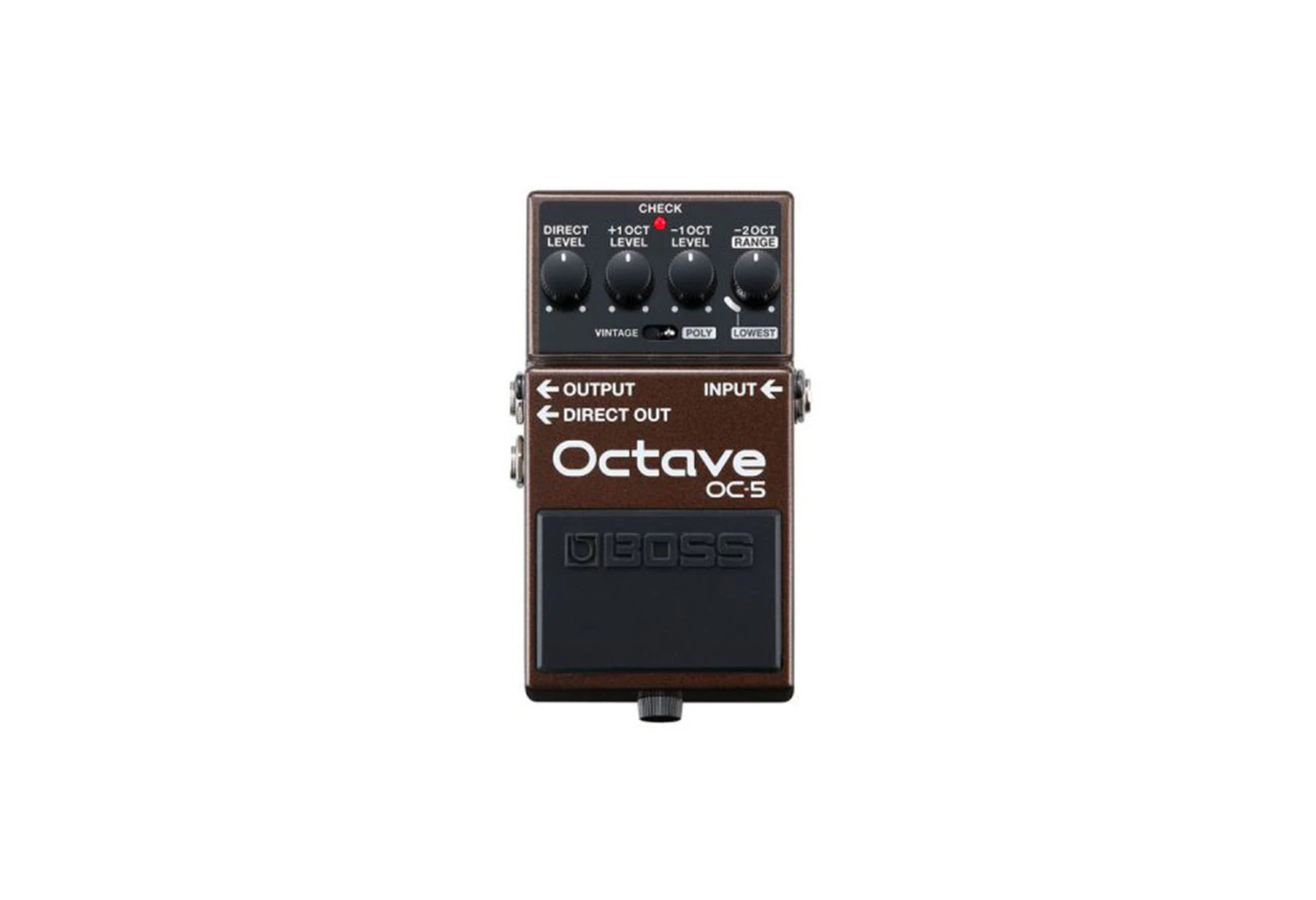
OC-5
Numerically skipping the OC-4, the OC-5 was released in 2020 and combines all the best octave control and packs it into a tidy, Boss compact pedal-sized package. Featuring the original circuitry, available via the ‘Vintage’ setting, as well as mix knobs for a single octave down and two octaves down. The Poly setting is also available, but the OC-5 adds an upper octave as well into the mix. This provides a metallic, more synth-like sound, providing articulation or a detailed crunch when the octave effect is dimmed into distortion or fuzz. The OC-5 also includes a single input, though a ‘Guitar/Bass’ switch is available depending on what you’re using. The OC-5 is the culmination of decades of octave effects, proudly serving as Boss’s flagship octave… for now.
Beyond the OC range of pedals, Boss’s range extends to various pitch shifting effects, multi-overtune and harmonisers.
The PS-6 harmonist is a multi-tool in the world of pitching. Pitch Shift, Detune, S-Bend and Harmoniser modes offer a whole heap of tools for the creative guitarist. The S-Bend mode serves up dive-bomb style sounds, probably most recognisably used in the intro to The Black Keys “Lonely Boy” The Harmoniser mode is available via either Major/Minor settings, while the Detune and Pitch Shift settings can be used for harmony or detuning your guitar entirely.
The MO-2 Multi Overtone pedal extends on the Detune settings, allowing you to blend in the detuned sound for a chorus-y magic, with adjustable Tone control and a Mix knob between your dry and effected guitar.
For more dedicated detuning, the XS-1 Poly Shifter is a go-to, featuring controls to blend in as much detune as you want, with adjustable semitone, octave and latch/toggle settings available for the footswitch.
Boss is reigning pedal royalty, much of this reigning from the 80s, the original OC-2 being at the forefront of all of it. Famously used for a handful of choice guitar and bass players, the evolution of the OC-2 through to the modern OC-5 speaks to Boss’s commitment to both improving their own designs, as well as keeping their ear to the ground regarding their use by players. The addition of the bass input, as well as an additional upper octave, elevates the OC-5, all the while respecting those who know and love the original OC-2, even if more progressive pedals have ‘improved’ on the original. But hey, if it ain’t broke, don’t fix it – just augment it!