From a broken console channel in the 1960s to germanium and silicon transistors, fuzz pedals have shaped some of the most iconic sounds in music history.
Fuzz is a specific type of distortion, one used extensively in both gratuitous ways and those who enjoy its more subtle uses (see: boring, dull, unimaginative). The sound of a fuzz is more overt than simple distortion or overdrive, which, while definitely their own unique sound, can often be mixed up and are harder to identify.
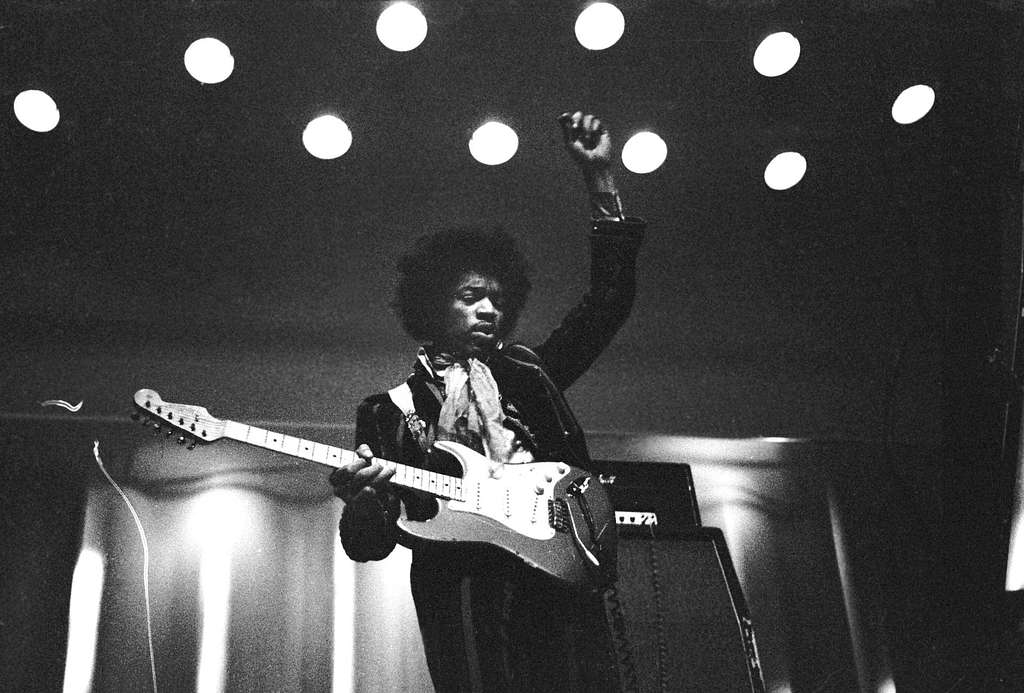
Fuzz, however, offers a unique sonic identity, and while it is technically a form of distortion, the extreme nature of the clipping forces the signal to be distorted so severely that it resembles a square wave. Every frequency is squashed, squished, compressed, attenuated and amplified together, creating incredibly consistent sustain and body. While squeezing sounds together like this can sometimes ruin dynamic, musicality, nuance and character, fuzz seems to serve to augment all of this. Okay, we’ll admit that maybe some dynamic is lost, but what is gained has been used by the likes of Josh Homme, Jimi Hendrix and Boris’ Wata – the fuzz has turned a broken recording console channel into a worldwide favourite, leaving nothing in its wake.
Catch up on all the latest features here.
Famously, the fuzz effect we know and love is thanks to a broken console channel on a Marty Robbins session in the early 60s. A miswired transformer on the recording console caused the playback of the bass guitar, a Danelectro UB-2 six-string, to have a uniquely clipped, distorted and decidedly “fuzzy” sound. The distorted tone made the record, the sound made history, but the channel was quickly fixed and couldn’t be replicated. That was until the release of the Maestro Fuzz-Tone FZ-1 pedal, one of the earliest known stomp-box style effects for guitar and bass. The FZ-1 is well known as the fuzz used on The Rolling Stones’ “Satisfaction”.
The decades that’ve followed have spawned many a unique take on that original fuzz. More modern options like the ZVex Fuzz Factory offer a more hands-on approach, with five dedicated controls covering volume, gate, compression, drive, and stability, while some classic designs like the Fuzz Face offer simpler, two-knob approaches. The Big Muff from Electro-Harmonix (EHX) has been used by the likes of Kurt Cobain and Dave Gilmour, and EHX’s range of Big Muffs extends far beyond the original. Early “Russian” models, built physically and aesthetically like a tank, fetch wild prices on eBay and Reverb, though the tone itself might just be worth it. The original Big Muff features controls for Sustain, Volume and Tone, the Tone serving as a high-end roll-off.
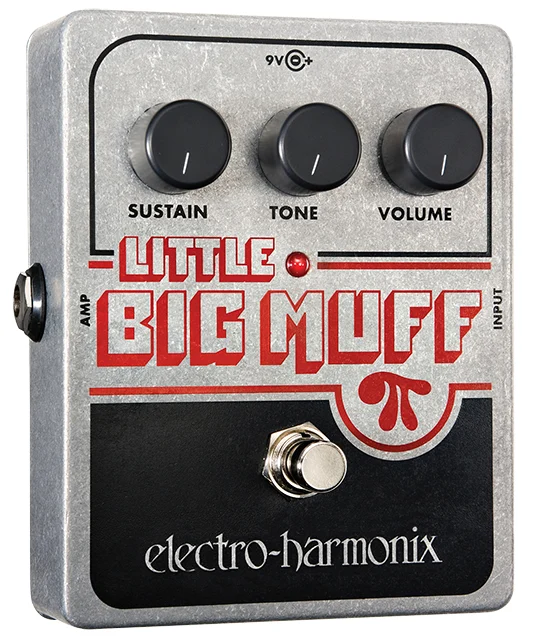
Electro-Harmonix Little Big Muff
One of the most famous fuzz pedals is the Fuzz Face, used by Hendrix. The Fuzz Face is iconically round in shape and housed in either red or mottled blue, respectively, depending on your choice of germanium or silicon transistors for clipping.
Different transistors allow a signal to pass through in their own way, due to the material they’re made from and how conducive they are to sound. Fuzzes generally contain either silicon or germanium transistors that clip the signal, and fuzz, being such an extreme version of clipping exaggerates their properties.
Germanium, a metalloid, results in a warmer, more organic sound, while still retaining the ferocious quality of fuzz. Silicon is also a metalloid, but results in a more focused, tighter sound, and as such are more common in modern fuzz pedals. The wild nature of germanium transistors can be tough to wrangle, so silicon transistors are often used because of reliability, consistency and more dynamic results.
Some fuzz pedals also boast asymmetrical clipping, where the circuit features different types or odd numbers of diodes, resulting in the positive and negative peaks being clipped (and therefore distorted) differently. Traditionally, clipping happens at equal value to the positive and negative peaks of a soundwave. Symmetrical clipping, as the name suggests, offers more balanced clipping across your entire signal, with all frequencies clipping in more even amounts. Asymmetrical can be a little tougher to dial in, though it can offer a more unique sound. The sound clips at different points in the soundwave for different frequencies, ultimately culminating in something a little more responsive to playing, while highlighting and augmenting different areas of the frequency spectrum. This makes it more likely to take on character depending on player, guitar and picking intensity, and as such drastically affects the tone that’ll carry on to your amplifier – or next pedal!
Fuzz is, as its name suggests, a wild beast to be tamed. Created accidentally in the 60s, its extreme sound has inspired countless iconic songs, as well as a growing range of pedals that continue to borrow from those original designs and sounds, bringing modern technology and innovation into the fold.
Different transistors produce different sounds, the original fuzz sound coming from a broken transformer in a tube-based console channel, so the components themselves don’t dictate whether something is or isn’t fuzz. What is the in-your-face, hard-clipping design, one that squeezes signal until every frequency falls into line, resulting in harmonic richness, sustain and increasingly un-guitar-like sounds, depending on how far you push it. Compress, contort, distort and effect your guitar or bass to your heart’s content!