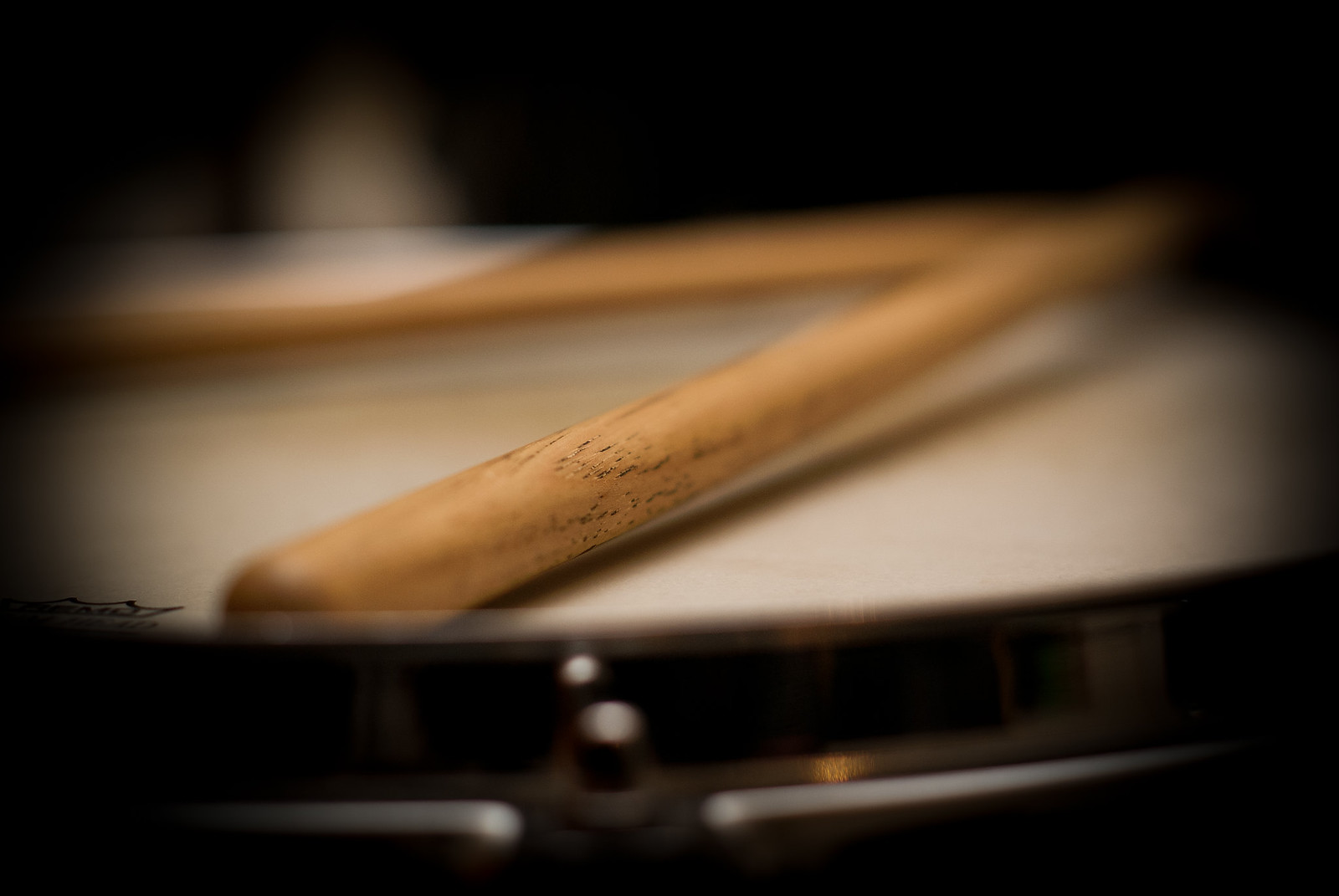
The right stick isn't a one-fits-all, but one that matches your playing style, the music you're making, and the feel you want in your hands.
Drumsticks often look more or less the same: long, tapered and wooden. But the differences between them – diameter, length, taper, tip shape, material – have an enormous effect on how the stick feels in your hand, how it responds off the drum, and how it sounds against a cymbal. Choosing the right pair is less about brand loyalty and more about understanding what each variable actually does.
Read up on all the latest interviews, features and columns here.
Stick sizing: what the numbers mean
Drumsticks are typically labelled with a number-letter combination – for example, 5A, 7A, 5B, 2B and so on. Both the number and letter relate to the stick’s diameter. The number sets the broad size, with lower numbers indicating thicker sticks (a 2B is thicker than a 5A, and 5A is thicker than 7A). The letter then modifies the stick further – a 5B is thicker and heavier than a 5A, despite sharing the same number. In plain words, B is thicker than A.
A 5A is the most common all-purpose stick, with a medium diameter, medium length, suitable for rock, pop, jazz, and most studio work. A 5B is slightly thicker and heavier, giving you more weight behind each hit – often preferred for harder rock and metal. A 7A is lighter and thinner, common in jazz and lighter playing styles. A 2B is heavier still, and popular for practice, as the extra weight builds wrist strength).
Beyond the standard sizing, manufacturers offer signature sticks designed around individual drummers’ preferences – often with non-standard dimensions that don’t fit the number-letter convention at all.
Length and diameter
Length affects reach and leverage. A longer stick gives you more reach across the kit and slightly more whip in your strokes, but it can feel unwieldy if it’s longer than what your grip and stroke technique are used to. Standard drumsticks sit around 16 inches, with most options ranging between 15 and 17.5 inches. Some signature models stretch beyond that – Vic Firth‘s Questlove signature is 17 inches, while Alex Van Halen’s signature is 17.75 inches.
Diameter affects how the stick feels in your hand and how much sound it produces. Thicker sticks deliver more volume and a fuller tone, but take more energy to move. Thinner sticks are faster and more responsive, but can feel insubstantial against louder volumes or heavier drums. It all depends what feels right to you, and what sound you’re after.
Tip shape
The tip is where the stick meets the cymbal or drum, and its shape directly affects the sound.
- Round tips produce a focused, bright cymbal sound and clean articulation on drums.
- Oval tips are the most common, offering the widest spectrum of sound and a balanced response across the kit.
- Acorn tips give a fuller, richer, darker sound, often preferred for jazz and rock.
- Barrel tips have a wide contact area, producing a louder, punchier sound.
- Teardrop tips produce a warm sound with focused low tones.
Smaller contact areas (round, smaller oval) produce brighter, more articulate sounds. Larger contact areas (barrel, acorn) produce fatter, fuller sounds.
Wood vs nylon tips
Nylon tips are moulded onto the end of the stick and produce a brighter, more cutting cymbal sound. They also last considerably longer than wooden tips, which can chip or splinter over time. The trade-off is that nylon tips can occasionally separate from the stick after heavy use, though they can usually be glued back on.
Wood tips deliver a warmer, softer sound and tend to feel bouncier off the drum. Most jazz and acoustic players favour wood for its mellower tone on cymbals and consistency on toms. Rock, metal, and electronic drummers often choose nylon for cutting brightness and the stick’s durability.
Taper
The taper is the section of the stick where it narrows from the shoulder down toward the tip. A long taper shifts the balance point back toward your hand, creating a lighter, more rebound-friendly feel, ideal for fast playing and intricate work. A short taper keeps weight toward the tip, giving you a front-heavy feel with more power and durability, but less natural rebound.
This is one of the most underrated stick variables. Two sticks with identical diameter and length can feel completely different depending on how they’re tapered.
Wood type
The wood itself shapes feel, weight, and durability.
- Hickory is the most common. It’s dense, durable and offers good shock absorption. It’s the default for most players because it balances strength and flex.
- Maple is lighter and faster, with more flex and a softer sound. It’s popular for jazz and lighter playing, but breaks more easily than hickory due to its lower density.
- Oak is the heaviest and densest, with the longest lifespan, but the least shock absorption – you’ll feel every hit in your wrists.
Some manufacturers also offer sticks made from synthetic materials like aluminium or fibreglass, designed for extreme durability or specific feel characteristics.
Finding your stick
There’s no stick that is universally “right”. If you’re just starting out, a 5A hickory with an oval wood tip is a safe starting point. The right pair for you will come down to the music you play, the volume you play at, and the feel you’ve developed through hours of playing. It’s worth trying out several different sizes and taper styles before settling on a regular pair – and don’t be afraid to keep multiple pairs around for different gigs and styles (sticks break, and can also fly out of your hands).
Happy drumming!