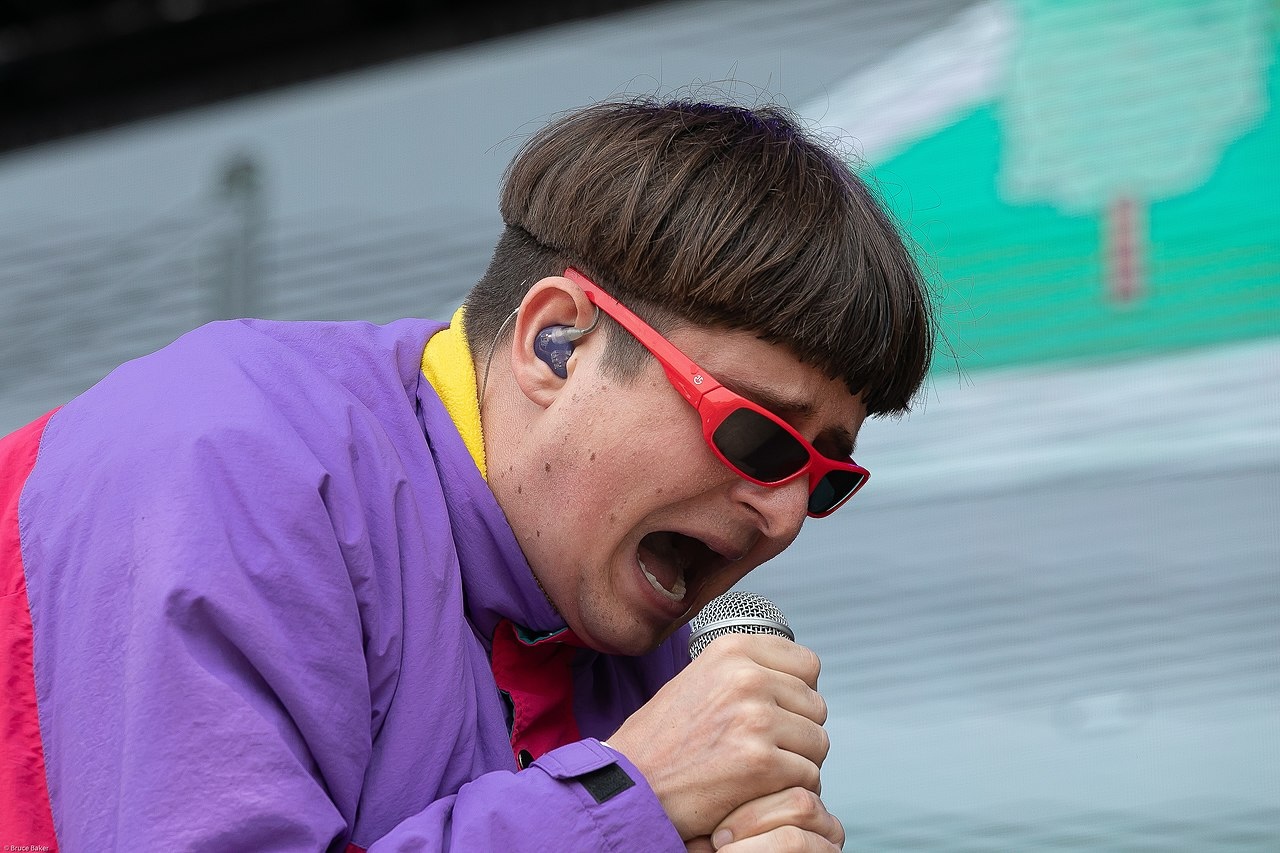
A tribute gear rundown to the late Oliver Tree.
Eight pairs of underwear. A toothbrush. Two pairs of pants. And a complete recording studio.
That was the backpack. That was the whole operation. When Oliver Tree walked away from Atlantic Records, he didn’t lock into another record deal handshake, or book studio time to produce his next record. Instead, he asked “How do I make memories out of it?”. The answer was a plane ticket. Then another. Eighty countries, seven continents, two years, one bag on his back. The result was Love You Madly Hate You Badly, released independently on April 24, 2026, under his own Alien Boy Records label. It was also the last album he would ever make.
Oliver Tree Nickell died on June 14, 2026, in a helicopter crash in Rio de Janeiro, aged 32, just weeks into the world tour he had waited his whole career to play. This is a look at how he made the record.
Read up on all the latest interviews, features and columns here.
His way or no way
Tree wrote and produced the entire album himself. No co-writers, no outside producers, no studio engineers. Just him, a laptop, and wherever he happened to be sitting that week. He had spent hundreds of thousands of dollars on studios before and decided he was done with that. This time the budget went on the journey instead.
He was candid about what that decision cost him. “I’ll be honest with you guys, that takes way too fucking long,” he said in an interview, laughing. “I see why people don’t do this. It’s a nightmare.” Then, almost immediately, he said it was the most inspiring thing he had ever done. That he loved the freedom. That he remembered every crazy thing that happened along the way and every beautiful person he met.
The rig
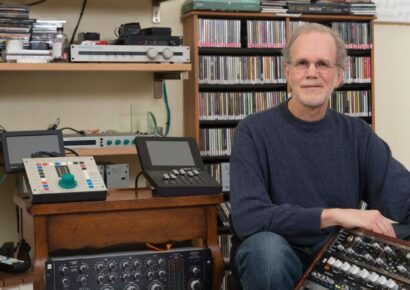
What is striking about the setup is how deliberately he built it. Every piece of gear is compact, lightweight, and purpose-built for travel. He went deep into the Akai ecosystem and stayed there.
Akai MPK Mini MKII, Special Edition Red is the centrepiece. A 25-key mini controller with eight MPC-style drum pads, a thumbstick and arpeggiator, all under a kilogram. The special edition red finish is a small but very Oliver Tree detail. This is the controller bedroom producers learn on. It retails for well under $200.
Akai LPK25 Controller Keyboard sits alongside it, twenty-five keys, USB bus-powered, lighter than most paperback books. Pure keys, nothing else, fast to grab and fast to play. Together the two controllers cover serious musical ground for the price of a single studio session hour.
Akai Professional LPD8 Wireless Drum Pad Controller brings eight pads, eight knobs, and Bluetooth, no cables required. In the kinds of locations Tree was recording in, one less cable is one less thing to lose or forget.
Akai Professional MIDImix completes the system. Sixteen faders, twenty-four knobs, deep Ableton integration, bus-powered via USB. The kind of hands-on mix control engineers normally need a full-sized console to achieve, sitting flat in a backpack.
Ableton Live tied it all together. The entire Akai lineup maps to Ableton with minimal setup; perfect for mashing together sounds, melodies, and beats with next to zero creative friction.
A second hand audio interface for around $150 and a microphone for around $100 round out the rig. Models unconfirmed. Tree did not agonise over either. He found ones that worked and moved on.
The world as an instrument
Tree did not just record music in these places. He recorded the places themselves, capturing field recordings everywhere he went: Antarctic wind, Emperor Penguins, the resonance of ancient European spaces, the noise of cities across eighty countries. He then fed those recordings into Ableton and transformed them into synth sounds, bending raw environmental audio into something melodic and entirely his own.
Diplo, who joined Tree on the Antarctic leg of the journey, wrote on Instagram after his death: “He was a monumental, endless fountain of creativity. His confidence was on a biblical level, and he could back it up.” He added: “I don’t think we’ll ever have another human like this again. No rules. No apologies. He was 1000% himself.”
The last word
His family have since launched Dr. Oliver Tree’s Extremely Epic Grant For Baby Geniuses, fulfilling his final wish to redirect his estate and future royalties back into the creative community. The grant funds young creators in music, film, installation, and performance art, covering gear rental and production costs but not equipment purchases or formal education. The grant is expected to run for fifty to one hundred years.
He spent two years making a record with a backpack full of budget gear, asking himself how to make memories out of it, and then going out and doing exactly that. He treated every album like it could be his last, noting openly that you could die at any moment. In a way none of us could have anticipated, it was.
Rest easy, Oliver Tree. 1993–2026.