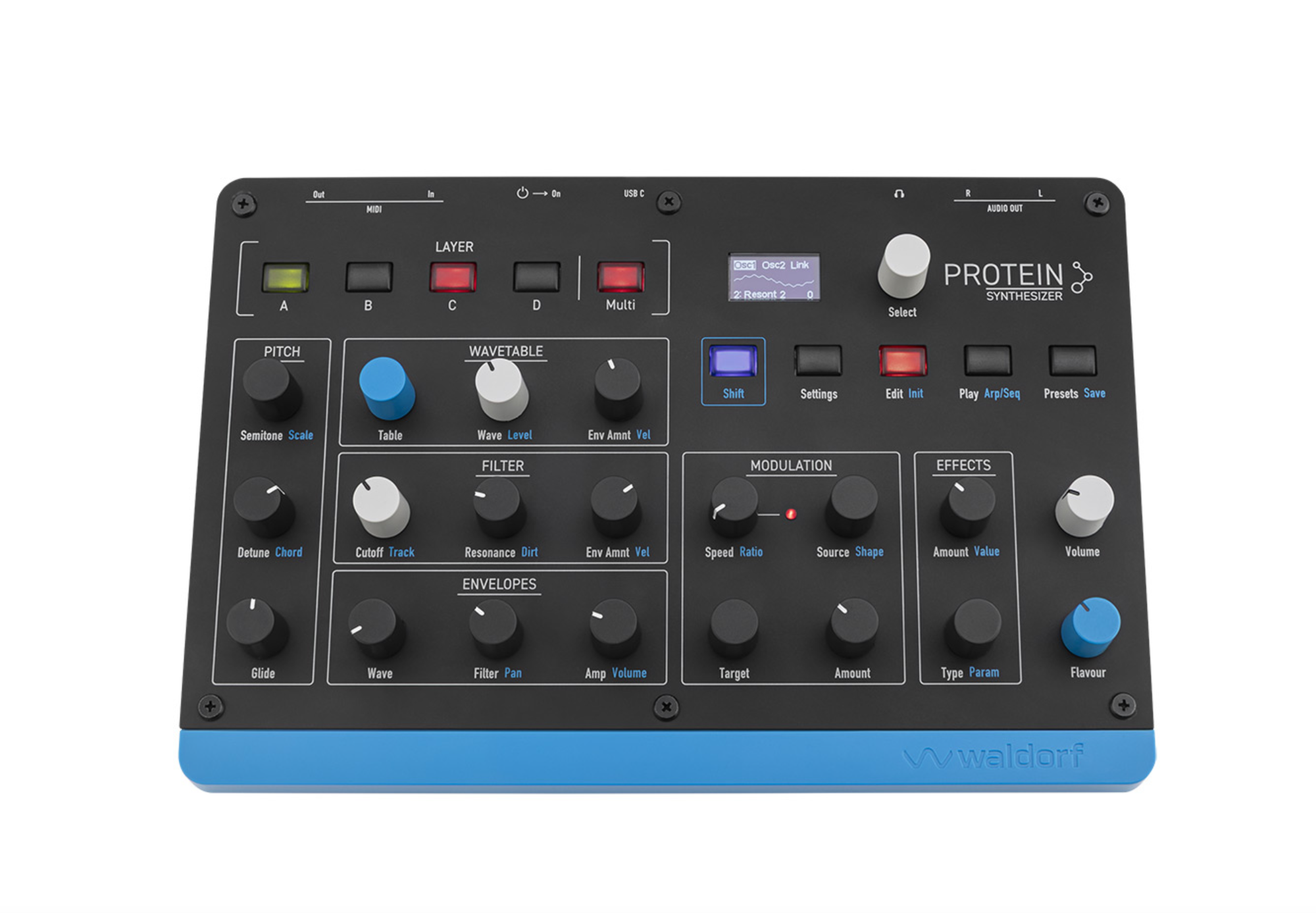
The compact 8-voice synth combines original Microwave 1 ASIC oscillators with modern features from the Iridium at an accessible price point.
Waldorf has launched Protein, a compact desktop wavetable synthesizer that bridges the company’s vintage Microwave heritage with contemporary production features. Arriving in Australian stores mid-December, the 8-voice polyphonic synth is built around the original Microwave 1 ASIC oscillators—the same gritty, 8-bit quantized chips that defined Waldorf’s wavetable sound in the early ’90s.
Catch up on all the latest news here.
The original oscillators run at a 250kHz sample rate, delivering the aliased, characterful tone that made the Microwave a studio staple. It’s an intentionally lo-fi approach that stands apart from the ultra-clean digital synthesis dominating modern plugin and hardware design. Waldorf has preserved that vintage fingerprint while borrowing features from their flagship Iridium, including a more refined arpeggiator, step sequencer, chord mode, and a diverse effects section.
The 8-voice architecture allows organisation into up to four layers for complex sonic arrangements, round-robin modes, or polytimbral operation via MIDI channel splits. A “Load Layer” feature lets you quickly create new sounds by recombining existing layers from the preset collection—useful for hybrid patches that pull from multiple sonic sources without starting from scratch.
Over 150 factory presets ship with Protein, and storage capacity extends to 250 user presets for your own creations. Each layer includes an 8-slot modulation matrix, and polyphonic aftertouch modulation support adds expressive control for players using compatible controllers.
Waldorf has also included a mysterious “Flavour” knob designed to keep digital sounds more lively. Details on what it actually does remain a little cryptic, but if it follows Waldorf’s usual approach to character controls, expect subtle harmonic movement or modulation that adds organic variation to otherwise static digital waveforms.
Physical dimensions keep Protein compact at 252 x 170 x 48mm and weighing just 0.9kg—small enough to slip into a backpack or sit comfortably on a crowded desktop. Despite the affordable entry point, Waldorf hasn’t skimped on the sound engine that made their wavetable synths legendary.
For producers and synthesists who’ve been priced out of Waldorf’s higher-tier offerings or want a dedicated hardware wavetable module without the complexity of larger systems, Protein delivers classic Waldorf character in a focused, accessible package. It’s positioned as the most affordable entry into Waldorf’s wavetable universe, bringing that distinctive sound to users who might otherwise stick with software emulations.
Waldorf Protein arrives in Australian stores mid-December.
Here here for more information, and here for local enquiries.